12 citations
,
January 2018 in “PubMed” Y-27632 helps hair follicle stem cells grow and keep their abilities.
11 citations
,
February 2023 in “British Journal of Pharmacology” Isoxazole 9 (ISX9) may help regrow hair by activating certain cell signals.
11 citations
,
August 2021 in “Aging” Collagen and TGF-β2 help maintain hair cell shape and youthfulness.
 6 citations
,
June 2022 in “Dermatologic Therapy”
6 citations
,
June 2022 in “Dermatologic Therapy” Honokiol from Magnolia plants may be beneficial for treating various skin conditions and promoting hair growth.
 6 citations
,
February 2022 in “Journal of immunology research”
6 citations
,
February 2022 in “Journal of immunology research” Exosomes from fat-derived stem cells can potentially improve hair growth and could be a new treatment for immune-related hair loss.
3 citations
,
March 2024 in “Viruses” γδ T cells are essential for wound healing after poxvirus infection.
 1 citations
,
February 2023 in “ACS Biomaterials Science & Engineering”
1 citations
,
February 2023 in “ACS Biomaterials Science & Engineering” The new microwell device helps grow more hair stem cells that can regenerate hair.
 1 citations
,
June 2017 in “PLOS ONE”
1 citations
,
June 2017 in “PLOS ONE” Host cells are crucial for the maturation of reconstructed hair follicles.
June 2026 in “Advanced Science” New cryomicroneedles can improve hair growth and regeneration.
January 2026 in “Lab on a Chip” Organoids and hair-on-chip technologies show promise for hair regeneration but face clinical challenges.
 April 2025 in “Journal of Pharmaceutical Investigation”
 Low-dose rapamycin microdepots can help regrow hair by activating certain cell processes.
 November 2024 in “Fermentation”
 Fermented ginsenosides from kimchi bacteria may promote hair growth better than finasteride.
 April 2024 in “Materials today bio”
 The CuCS/Cur wound dressing helps regenerate nerves and heal deep skin burns by rebuilding hair follicles.
 November 2023 in “Nature Communications”
 Cells lacking the Bax protein can outcompete others, leading to better tissue repair and hair growth.
 November 2023 in “Translational Medicine Communications”
 Derinat may improve hair growth and quality of life in hair loss patients by reducing oxidative stress.
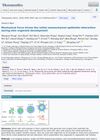 January 2023 in “Theranostics”
 Mechanical force is important for the first contact between skin cells and hair growth in mini-organs.
ISX9 helps regrow hair by activating a specific cell signaling pathway.
 June 2022 in “Scientific Reports”
 Prevelex, a polyampholyte, can create a cell-repellent coating on microdevices, which can be useful in biomedical applications like hair follicle regeneration.
October 2022 in “Experimental Dermatology” New technologies show promise for better hair regeneration and treatments.
August 2022 in “Precision Clinical Medicine” JAM-A helps hair regrowth in alopecia areata by protecting VCAN in skin cells.
56 citations
,
September 2010 in “Veterinary pathology” Certain mouse strains develop a skin condition similar to a human hair loss disease due to genetic defects.
19 citations
,
July 2020 in “EBioMedicine” A gene variant increases the risk of a type of hair loss by affecting hair protein production.
 16 citations
,
July 2016 in “Journal of Dermatological Science”
16 citations
,
July 2016 in “Journal of Dermatological Science” Regenerated hairs can regain their color if the wound occurs during a certain stage of hair growth, and this process is helped by specific skin cells and proteins.
7 citations
,
August 2020 in “Genes” Different genes are active in dogs' hair growth and skin, similar to humans, which helps understand dog skin and hair diseases and can relate to human conditions.
 June 2022 in “Pflügers Archiv - European Journal of Physiology”
 The enzyme sEH is important for hair growth and its inhibition could help treat hair loss.
 September 2016 in “Journal of dermatological science”
 Epidermal stem cells use integrin β1 and α6 as markers and CD271+ cells help maintain skin health and heal wounds.
 24 citations
,
August 2011 in “Experimental Dermatology”
24 citations
,
August 2011 in “Experimental Dermatology” The flap assay grows the most natural hair but takes the longest, the chamber assay is hard work but gives dense, normal hair, and the patch assay is quick but creates poorly oriented hair with some issues.
 10 citations
,
June 2007 in “Journal of Oral and Maxillofacial Surgery”
10 citations
,
June 2007 in “Journal of Oral and Maxillofacial Surgery” A man's rare tumor caused unusual nerve-related symptoms that improved after surgery.
 9 citations
,
September 2009 in “The Prostate”
9 citations
,
September 2009 in “The Prostate” Finasteride doesn't improve survival in LNCaP tumor model during off-cycle of therapy.
 3 citations
,
February 2021 in “Experimental dermatology”
3 citations
,
February 2021 in “Experimental dermatology” Dermal papilla microtissues could be useful for initial hair growth drug testing.