9 citations
,
February 2024 in “Indian Dermatology Online Journal” New imaging technologies improve skin diagnosis but face cost and training challenges.
180 citations
,
February 2023 in “Journal of Chemical Information and Modeling” Chemistry42 effectively creates and optimizes new molecules for drug discovery.
 6 citations
,
September 2025 in “Scientific Reports”
6 citations
,
September 2025 in “Scientific Reports” Machine learning can accurately diagnose PCOS non-invasively using clinical and ultrasound features.
 74 citations
,
January 2020 in “IEEE Access”
74 citations
,
January 2020 in “IEEE Access” ScalpEye accurately diagnoses scalp issues like dandruff and hair loss.
 January 2018 in “Communications in computer and information science”
 Researchers developed a computer system to automatically diagnose hair loss by analyzing scalp images.
 46 citations
,
July 2007 in “Journal of comparative neurology”
46 citations
,
July 2007 in “Journal of comparative neurology” Manatee whiskers are specially adapted for touch in water.
 14 citations
,
July 2021 in “Biomedicines”
14 citations
,
July 2021 in “Biomedicines” Platelet-rich treatments can help improve wound healing and tissue repair.
 February 2026 in “Dermatology and Therapy”
 AI can improve hair disorder diagnosis and treatment but can't replace doctors yet.
 January 2023 in “Book of Abstracts”
 COVID-19 can cause different types of hair loss, with telogen effluvium being the most common.
 3 citations
,
March 2020 in “International Journal of Molecular Sciences”
3 citations
,
March 2020 in “International Journal of Molecular Sciences” Thymosin β4 helps increase hair growth in Cashmere goats.
 December 2025 in “Nature Communications”
 Club-like receptors detect light touch but not whisking.
 29 citations
,
June 2017 in “Journal of Inherited Metabolic Disease”
29 citations
,
June 2017 in “Journal of Inherited Metabolic Disease” High-content screening is useful for finding new treatments for rare diseases and has led to FDA-approved drugs.
 1 citations
,
July 2021 in “Current Issues in Molecular Biology”
1 citations
,
July 2021 in “Current Issues in Molecular Biology” Father's finasteride use may affect son's fertility and testicular function.
 82 citations
,
August 2006 in “Pharmacology, Biochemistry and Behavior”
82 citations
,
August 2006 in “Pharmacology, Biochemistry and Behavior” Certain steroids in the brain affect mood and symptoms of depression, and treatments targeting these steroids show promise for improving these symptoms.
 January 2026 in “Frontiers in Molecular Biosciences”
 A new method helps diagnose alopecia areata using specific gene markers and could guide targeted treatments.
 July 2025 in “E-methodology”
 AI can improve hair care but needs legal clarity and is not widely used in Poland yet.
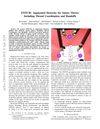 April 2024 in “arXiv (Cornell University)”
 STITCH improves suture accuracy and efficiency, especially with human help.
 March 2026 in “International Journal of Science Strategic Management and Technology”
 WomenCare helps predict PCOD risk in women to encourage early medical consultation.
 62 citations
,
February 2016 in “ACS Applied Materials & Interfaces”
62 citations
,
February 2016 in “ACS Applied Materials & Interfaces” Technique creates 3D cell spheroids for hair-follicle regeneration.
 May 2026 in “Scientific Reports”
 Overexpression of LRIG3 in skin causes hair loss.
New methods efficiently isolate dermal papilla cells from hair follicles, preserving their characteristics better than traditional methods.
 December 2023 in “bioRxiv (Cold Spring Harbor Laboratory)”
 Different types of inactive melanocyte stem cells exist with unique characteristics and potential to develop into other cells.

Researchers found a genetic link for hereditary hair loss but need more analysis to identify the exact gene.
 November 2025 in “Scientific Reports”
 AI improves accuracy and consistency in diagnosing male pattern hair loss.
 26 citations
,
April 2011 in “Skin Research and Technology”
26 citations
,
April 2011 in “Skin Research and Technology” In vivo confocal scanning laser microscopy is an effective, non-invasive way to study and measure new hair growth after skin injury in mice.
 10 citations
,
August 2014 in “PLoS ONE”
10 citations
,
August 2014 in “PLoS ONE” Hair follicles can help diagnose traumatic brain injury quickly and non-invasively.

Technology enhances human design thinking, creating new possibilities.

Technology expands design thinking possibilities, requiring a hybrid, reflective approach.
CD4 T cells need IFN-γ to cause hair loss in alopecia areata.
 January 2023 in “Research Square (Research Square)”
 IGF2BP3 gene is up-regulated in keloid patients, suggesting potential targets for treatment.