5 citations
,
March 2019 in “Scandinavian journal of rheumatology” Doctors should consider comedonic discoid lupus erythematosus to avoid misdiagnosis.
 February 2024 in “Infection and drug resistance”
 Tinea capitis in a child was caused by a fungus from cats, highlighting the need for accurate diagnosis and treatment.
 20 citations
,
October 2016 in “Veterinary dermatology”
20 citations
,
October 2016 in “Veterinary dermatology” Dogs with generalized discoid lupus erythematosus have similar symptoms to humans and need continuous treatment.
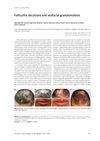 January 2018 in “Advances in Dermatology and Allergology”
 Treatment with dapsone, topical corticosteroids, and antibiotics improved the man's skin conditions.
41 citations
,
January 1992 in “Journal of medical genetics” The study found that males with KFSD had severe skin and eye symptoms, while female carriers had milder symptoms.
16 citations
,
January 1995 in “Dermatology” The treatment for alopecia areata with diphenylcyclopropenone was unsuccessful.
21 citations
,
August 2002 in “British Journal of Ophthalmology” Intralesional cidofovir may be a viable alternative treatment for SCC.
July 2026 in “Cosmoderma” Trichoscopy can identify specific hair patterns in tinea capitis before and after treatment.
 5 citations
,
January 2015 in “Dermatology”
5 citations
,
January 2015 in “Dermatology” The report suggests that the same underlying issue in blood vessel support may cause angiokeratomas on both the scrotum and eyelids.
April 2026 in “International Journal of Agriculture and Food Science” Early diagnosis and treatment can effectively manage mite infestations in goats.
1 citations
,
January 2026 in “JDDG Journal der Deutschen Dermatologischen Gesellschaft” LC-OCT can help diagnose different types of scarring alopecia.
35 citations
,
March 2010 in “British journal of dermatology/British journal of dermatology, Supplement” The study showed that mouse eyelashes can be used to study eyelash growth and that bimatoprost makes them longer and more numerous.
 August 2022 in “Case reports in medicine”
 Long eyelashes in a patient were an unusual sign of systemic lupus erythematosus.
1 citations
,
June 2018 in “Archives of Disease in Childhood Education & Practice” The girl's hair started regrowing after 6 weeks of treatment.
 2 citations
,
April 2021 in “Naukovì gorizonti”
2 citations
,
April 2021 in “Naukovì gorizonti” Effective treatment significantly improves pododermatitis in dogs, reducing symptoms and extending remission.
1 citations
,
January 1987 in “Veterinary Dermatology” Topical 0.1% tacrolimus improved a rare ear condition in cats.
 2 citations
,
February 2009 in “Clinical and Experimental Dermatology”
2 citations
,
February 2009 in “Clinical and Experimental Dermatology” A man had rare skin tumors with bone formation and cholesterol deposits.
 October 2023 in “Indian dermatology online journal”
 The young woman has a benign, hereditary skin condition with no signs of a more serious syndrome.
 August 2024 in “Journal of Marine Medical Society”
 Dermoscopy helps diagnose skin issues and warns against unqualified treatments.
November 2021 in “Clinical, cosmetic and investigational dermatology” An elderly woman with cancer improved after treatment for a rare skin condition with coiled hairs.
 November 2018 in “Skin appendage disorders”
 The document concludes that a woman has both Frontal Fibrosing Alopecia and Lichen Simplex Chronicus, a previously unreported combination of conditions.
1 citations
,
January 2026 in “Journal of the European Academy of Dermatology and Venereology” Vermeer likely omitted eyebrows for style, not due to hair loss.
November 2025 in “Indian Journal of Dermatology” Early diagnosis and multidisciplinary care are crucial for improving the quality of life in patients with ectodermal dysplasia.
29 citations
,
February 1989 in “Journal of Cutaneous Pathology” A unique hair tumor with a rippled pattern was identified, showing incomplete differentiation and unusual cell arrangements.
 June 2023 in “JAAD case reports”
 A rare scalp condition, cutis verticis gyrata, was found in a woman with primary scarring alopecia.
 December 2014 in “Bangladesh Journal of Veterinary Medicine”
 Ectoparasites cause skin issues in Egyptian lesser blind mole rats, affecting their population.
 January 2026 in “Forum Dermatologicum”
 Hair loss can be caused by cancer, treatments, or skin conditions, and trichoscopy helps diagnose it.
 17 citations
,
June 2011 in “The journal of investigative dermatology/Journal of investigative dermatology”
17 citations
,
June 2011 in “The journal of investigative dermatology/Journal of investigative dermatology” The G60S Connexin43 mutation causes hair growth issues and poor hair quality in mice, similar to human ODDD patients.
1 citations
,
April 2016 in “Journal of the American Academy of Dermatology” Autoimmune conditions can be linked to trichoepitheliomas, with treatment focusing on cosmetic concerns.