 January 2025 in “International Journal of Dermatology Venereology and Leprosy Sciences”
 Current treatments for alopecia areata can help hair grow but don't cure the disease.
 January 2025 in “Journal of the American Academy of Dermatology”
 Low-dose oral minoxidil alone is effective for treating hair loss, but combining it with dutasteride or finasteride may offer better results.
 1 citations
,
February 2022 in “JAMA Dermatology”
1 citations
,
February 2022 in “JAMA Dermatology” Minoxidil and finasteride are FDA-approved treatments for male hair loss, but off-label use of oral minoxidil, dutasteride, and higher doses of finasteride and minoxidil is increasing.
 22 citations
,
March 2000 in “Clinics in Dermatology”
22 citations
,
March 2000 in “Clinics in Dermatology” Many treatments for hair loss lack proper testing and FDA approval, so their effectiveness is uncertain.
 October 2021 in “Cosmoderma”
 Hair loss can be managed with treatments like minoxidil, finasteride, and others, but there are still gaps in effectiveness and off-label usage is increasing.
 1 citations
,
October 2018 in “InTech eBooks”
1 citations
,
October 2018 in “InTech eBooks” Only minoxidil and finasteride are FDA-approved for hair loss, with other treatments available but less effective or with side effects.
 March 2024 in “Facial plastic surgery clinics of North America”
 Finasteride and minoxidil are approved treatments for hair loss, and hair transplants can be effective but require careful patient selection.
 28 citations
,
May 2013 in “The Journal of Steroid Biochemistry and Molecular Biology”
28 citations
,
May 2013 in “The Journal of Steroid Biochemistry and Molecular Biology” Testosterone therapy can improve sexual desire and function in postmenopausal women but should be used cautiously and not based solely on testosterone levels.
1 citations
,
January 2024 in “Journal of Feline Medicine and Surgery Open Reports” Fluralaner topical spot-on successfully treated a cat's hair shedding and scales caused by Demodex gatoi.
 1 citations
,
October 2023 in “Dermatology and therapy”
1 citations
,
October 2023 in “Dermatology and therapy” Some treatments for severe hair loss work but often have side effects, with baricitinib showing the most promise.
 1 citations
,
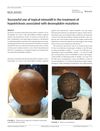
August 2019 in “Pediatric dermatology”
1 citations
,
August 2019 in “Pediatric dermatology” Topical minoxidil helped an 8-year-old boy with a genetic hair disorder grow hair.
January 2026 in “Medicina” JAK inhibitors show promise for treating various skin disorders effectively and safely.
Minoxidil can slow hair loss and promote regrowth but won't fully restore hair.
 October 2022 in “The Egyptian Journal of Hospital Medicine”
 Topical corticosteroids are the preferred first treatment for children with Alopecia Areata.
 September 2020 in “Acta Scientific Cancer Biology”
 Personalized treatment based on detailed tumor analysis successfully managed and reduced the patient's aggressive hair follicle cancer.
 35 citations
,
May 2012 in “Expert Opinion on Pharmacotherapy”
35 citations
,
May 2012 in “Expert Opinion on Pharmacotherapy” The document concludes that there are various treatments for different types of alopecia, but more research is needed for evidence-based treatments.
21 citations
,
March 2018 in “JEADV. Journal of the European Academy of Dermatology and Venereology/Journal of the European Academy of Dermatology and Venereology” 5-alpha-reductase inhibitors may help stabilize or slow down hair loss in some frontal fibrosing alopecia patients, but more research is needed to confirm their effectiveness and safety.
 17 citations
,
August 2015 in “Expert Opinion on Pharmacotherapy”
17 citations
,
August 2015 in “Expert Opinion on Pharmacotherapy” The document concludes that oral finasteride and topical minoxidil are effective for genetic hair loss, while other treatments for different types of hair loss show promise but need more research.
 4 citations
,
January 2022 in “Dermatologic Therapy”
4 citations
,
January 2022 in “Dermatologic Therapy” Tofacitinib was found to be a safe and effective treatment for hair regrowth in patients with alopecia areata.
 1 citations
,
July 2024 in “Journal of the European Academy of Dermatology and Venereology”
1 citations
,
July 2024 in “Journal of the European Academy of Dermatology and Venereology” Oral dutasteride is effective and safe for treating frontal fibrosing alopecia.
 1 citations
,
January 2023 in “Research Square (Research Square)”
1 citations
,
January 2023 in “Research Square (Research Square)” A woman's vitiligo improved with tofacitinib treatment, and her skin color remained even after stopping the medication, but there are concerns about cancer risk.
 September 2022 in “Hair transplant forum international”
 JAK inhibitors like baricitinib are a new FDA-approved treatment for alopecia areata, but safety data is incomplete.
 7 citations
,
April 2012 in “Clinical investigation”
7 citations
,
April 2012 in “Clinical investigation” Transdermal testosterone can improve sexual desire in postmenopausal women but lacks long-term safety data and is not FDA-approved for this use.
 6 citations
,
April 2016 in “PubMed”
6 citations
,
April 2016 in “PubMed” The review found that women using hair loss drugs like finasteride and dutasteride rarely reported sexual side effects.
 January 2025 in “Expert Opinion on Pharmacotherapy”
 Dutasteride is more effective than finasteride for hair loss but may affect male fertility and should be used cautiously.
January 2025 in “Voprosy praktičeskoj pediatrii” Janus kinase inhibitors show promise for treating alopecia areata in children.
 June 2026 in “JAAD reviews.”
 Low-dose oral minoxidil may help with various hair loss types, but more research is needed.
 November 2025 in “Open Repository of the University of Porto (University of Porto)”
 Minoxidil and spironolactone can improve hair growth, but responses vary and side effects are common.
January 2002 in “Analecta malacitana: Revista de la Sección de Filología de la Facultad de Filosofía y Letras” Minoxidil is a popular hair growth treatment, but how it works isn't fully understood.
 July 2023 in “JAAD International”
 Two drugs, finasteride and minoxidil, are approved for hair loss treatment, but new therapies are being developed.