 September 2017 in “Journal of Investigative Dermatology”
 Blue light helps hair growth by affecting specific proteins in hair follicle cells.
6 citations
,
January 2010 in “Journal of Biochemical and Molecular Toxicology” The ID2 gene can help distinguish between sensitizers and irritants in skin cells.
65 citations
,
March 2004 in “Journal of Clinical Investigation” Inhibiting ornithine decarboxylase may help prevent certain skin cancers.
January 2008 in “한국미용학회지” Chamaecyparis obtusa oil effectively stimulates hair growth.
 September 2012 in “Faculty Opinions – Post-Publication Peer Review of the Biomedical Literature”
 Scientists successfully created fully functional hair follicles using bioengineering methods and stem cells.
21 citations
,
June 2016 in “PloS one” Zebrafish need MYC and FGF to regenerate inner ear hair cells.
April 2020 in “DOAJ (DOAJ: Directory of Open Access Journals)” Olive oil helps Malassezia globosa overgrow, worsening atopic dermatitis in mice.
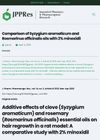 March 2026 in “Journal of Pharmacy & Pharmacognosy Research”
 Clove and rosemary oils together promote hair regrowth better than minoxidil.
 January 2022 in “Journal of Cutaneous and Aesthetic Surgery”
 Using truncal anesthesia on the supraorbital nerve reduces pain in hair loss treatments and improves patient comfort.
19 citations
,
November 2014 in “Journal of Comparative Physiology A” Spider joint hair sensilla are adapted to sense movement during walking.
 27 citations
,
August 2015 in “Experimental Dermatology”
27 citations
,
August 2015 in “Experimental Dermatology” Certain electric currents can promote hair growth by activating specific cell pathways.
66 citations
,
February 2007 in “The journal of investigative dermatology/Journal of investigative dermatology” Adenosine may promote hair growth by increasing FGF-7 levels in dermal papilla cells.
 5 citations
,
March 2019 in “Experimental dermatology”
5 citations
,
March 2019 in “Experimental dermatology” Activating TLR3 may help produce retinoic acid, important for tissue regeneration.
 July 2025 in “ACS Pharmacology & Translational Science”
 Maslinic acid from olive extracts promotes hair growth like minoxidil.
3 citations
,
July 2021 in “bioRxiv (Cold Spring Harbor Laboratory)” Zebrafish regenerate sensory hair cells through three phases, offering insights for potential mammal applications.
9 citations
,
December 2014 in “Daehan miyong hakoeji” Peppermint oil promotes hair growth and fights bacteria better than minoxidil.
 23 citations
,
January 2016 in “Contact Dermatitis”
23 citations
,
January 2016 in “Contact Dermatitis” Allergies to some essential oils may not be found with standard fragrance tests.
23 citations
,
February 2019 in “International Journal of Molecular Sciences” Activin B can boost hair growth by promoting cell proliferation and cell cycle progression.
 3 citations
,
May 2020 in “Journal of The European Academy of Dermatology and Venereology”
3 citations
,
May 2020 in “Journal of The European Academy of Dermatology and Venereology” Topical booster improves hair loss treatment effectiveness.
 September 2022 in “Tạp chí Y Dược học Cần Thơ”
 Grapefruit peel essential oil with Gleditsia sinensis extract can make hair grow faster and longer in mice.
December 2014 in “대한미용학회지” 3% peppermint oil promotes hair growth and has strong antibacterial properties.
7 citations
,
September 2021 in “Antimicrobial Agents and Chemotherapy” Olorofim effectively treats fungal skin infections.
 April 2018 in “Journal of Investigative Dermatology”
 Sensitive scalp has higher pH, more redness, abnormal sebum, and altered bacterial makeup.
 1 citations
,
May 2022 in “Голова и шея.”
1 citations
,
May 2022 in “Голова и шея.” Nasal septum injury in rats changes behavior and affects the nervous system.

Meis2 is essential for touch sensation and proper nerve connection to touch receptors in certain skin areas of mice.
 2 citations
,
January 2002 in “The Journal of Korean Medicine Ophthalmology and Otolaryngology and Dermatology”
2 citations
,
January 2002 in “The Journal of Korean Medicine Ophthalmology and Otolaryngology and Dermatology” Sophora flavescens extract helps hair grow and prevents acne.
Neurosteroids help regulate oxytocin levels, especially during stress and pregnancy, to protect against premature labor.

Hair feels different when touched and rubs together in various ways.
January 2006 in “Zhongguo bijiao yixue zazhi” A new method efficiently isolates and cultures rat hair follicle cells.
January 2008 in “Journal of Practical Medical Techniques” Microencapsulated cells can regenerate hair follicles in rat ears.