 7 citations
,
August 2022 in “Journal of Nanobiotechnology”
7 citations
,
August 2022 in “Journal of Nanobiotechnology” Advancements in nanoformulations for CRISPR-Cas9 genome editing can respond to specific triggers for controlled gene editing, showing promise in treating incurable diseases, but challenges like precision and system design complexity still need to be addressed.
30 citations
,
November 2024 in “ACS Materials Au” Microneedles are promising for disease monitoring and drug delivery due to their minimal invasiveness and versatility.
1 citations
,
October 2023 in “BMC Genomics” miRNAs in the Dlk1-Gtl2 region may improve lamb fur quality.
4 citations
,
July 2025 in “Annals of the New York Academy of Sciences” Combining skeletal and molecular anthropology improves identifying human remains.
 July 2026 in “Diagnostics”
 Integrating various skin imaging technologies improves diagnosis and treatment in dermatology.
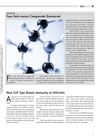 December 2011 in “Asia-Pacific biotech news”
 In 2011, there were major scientific breakthroughs in cancer treatment, immunity, Parkinson's, virus simulation, schizophrenia, hair growth, lung cancer, and medical grafts.
January 2019 in “Cell & developmental biology” 3D cultivation and prenatal stem cell exosomes improve stem cell treatment results, especially for hair loss and age-related issues.
 January 2019 in “The Review of Laser Engineering”
 Multiphoton excitation microscopy is a promising tool for deep tissue imaging and clinical applications.
 11 citations
,
December 2018 in “Bone”
11 citations
,
December 2018 in “Bone” Removing a methyl group from the ITGAV gene speeds up bone formation in a specific type of bone disease model.

Researchers developed a method to identify and measure different animal hair fibers in textiles, successfully distinguishing materials like cashmere from cheaper fibers.
 37 citations
,
July 2016 in “Current Opinion in Cell Biology”
37 citations
,
July 2016 in “Current Opinion in Cell Biology” Live imaging has advanced our understanding of stem cell behavior and raised new research questions.
1 citations
,
February 2023 in “Pharmaceutics” Cell proteomic footprinting enhances cancer vaccine quality by ensuring correct antigen composition.
 November 2022 in “The journal of investigative dermatology/Journal of investigative dermatology”
 New imaging technology can show up to 40 different markers in hair loss tissue, helping to understand hair disease better.
8 citations
,
March 2023 in “International Wound Journal” IGF2BP3 and other m6A-related genes are linked to keloid formation and could be potential treatment targets.
5 citations
,
February 2019 in “bioRxiv (Cold Spring Harbor Laboratory)” 3D cell cultures produce extracellular vesicles similar to those in the body.
January 2026 in “Archives of Dermatological Research”  July 2022 in “The journal of investigative dermatology/Journal of investigative dermatology”
 Scientists created a detailed map of gene activity in different parts of human hair follicles.
A comprehensive human skin cell atlas was created to better understand skin biology and disease.

A machine-learning test using hair can help detect autism early in infants.
August 2024 in “STAR Protocols” The document provides a detailed method for analyzing gene expression in skin samples with hair follicles.
 November 2022 in “The journal of investigative dermatology/Journal of investigative dermatology”
 Researchers made a detailed map of gene activity for different parts of human hair follicles to help create targeted hair disorder treatments.
 June 2021 in “bioRxiv (Cold Spring Harbor Laboratory)”
 Gene therapy in mice increased lifespan and improved health without causing cancer.
November 2024 in “Journal of Investigative Dermatology” Microfluidic models improve testing for aging, wound healing, and oral tissue, reducing animal testing.
August 2024 in “Clinical & experimental pathology” Forensic DNA phenotyping can now predict more physical traits and ancestry from DNA, but further improvements are needed.
 April 2023 in “Journal of Investigative Dermatology”
 The research updated the skin cell profile, finding new skin cell markers and showing fibroblasts' key role in skin health.
 April 2017 in “Journal of Investigative Dermatology”
 Found new possible treatments for hair loss.
 5 citations
,
September 2016 in “Security science and technology”
5 citations
,
September 2016 in “Security science and technology” DNA can predict physical traits like eye and hair color accurately, especially in Europeans, but predicting other traits and in diverse populations needs more research.
5 citations
,
July 2025 in “Nutrients” Nanotechnology can improve food safety, nutrition, and health, but safety and regulation challenges need addressing.
 February 2026 in “Bioengineering”
 EV-based therapies are advancing but need to overcome challenges for full potential.
 5 citations
,
November 2022 in “Genetics selection evolution”
5 citations
,
November 2022 in “Genetics selection evolution” Low-coverage sequencing is a cost-effective way to find genetic factors affecting rabbit wool traits.