
Combining platelet-rich plasma with other treatments may improve hair growth in androgenetic alopecia.
January 2026 in “Revista Colombiana de Ciencias Químico Farmacéuticas” Combining Minoxidil and finasteride is more effective for hair growth but may cause side effects.
 January 2026 in “Magazine Portal Bibliotech Digital (Universidad Nacional de Colombia)”
 Minoxidil and finasteride effectively treat hair loss but may cause side effects; combining them improves results.
March 2025 in “International Journal of Trichology” Low-dose oral minoxidil is safe for the heart.
 October 2024 in “JEADV Clinical Practice”
 UK dermatologists commonly use corticosteroids and minoxidil to treat hair loss conditions.
 September 2022 in “Polish Hyperbaric Research”
 Some treatments for hair loss, like finasteride, biotin, and minoxidil, can be effective, but their success varies by individual case.
 August 2022 in “IntechOpen eBooks”
 The best treatment for Frontal Fibrosing Alopecia and Lichen Planopilaris combines oral and topical medications to reduce symptoms and stop hair loss.
 January 2018 in “Surgical and Cosmetic Dermatology”
 Finasteride and dutasteride are effective for male hair loss and enlarged prostate but may cause reversible sexual side effects.
March 2023 in “Anais Brasileiros De Dermatologia” Topical minoxidil is the best-supported treatment for female hair loss, but personalized plans are needed.
 January 2022 in “Clinical Cases in Dermatology”
 Androgenetic alopecia, a common hair loss condition, can be treated with topical minoxidil, oral finasteride, or oral spironolactone, and new treatments like platelet-rich plasma, low-level laser therapy, and janus-kinase inhibitors are being explored.
December 2025 in “Medicine - Programa de Formación Médica Continuada Acreditado” Recent advancements in hair loss treatments include new therapies and insights for different types of alopecia.
 August 2024 in “Journal of Cosmetic Dermatology”
 Injectable treatments can effectively and safely improve hair growth in adults with androgenetic alopecia.
 September 2023 in “Forum Dermatologicum”
 Various treatments for common hair loss in men and women are effective, but should be tailored to individual needs and potential side effects.
 April 2023 in “Dermatologica Sinica”
 Sex hormones affect hair growth and loss, and treatments for related hair diseases include various medications, hair transplantation, and light therapy.
 June 2020 in “Medicina estética (Madrid)”
 Female pattern hair loss is common and should be treated early to prevent worsening, with Minoxidil being the main approved treatment.
 1 citations
,
June 2020 in “Actas Dermo-Sifiliográficas”
1 citations
,
June 2020 in “Actas Dermo-Sifiliográficas” RF-mesotherapy with dutasteride may be a promising alternative treatment for hair loss.
 September 2025 in “International Journal of Innovative Technologies in Social Science”
 Low-dose oral minoxidil is effective and safe for hair loss, but more research is needed.

The new gel for hair loss is safe, effective, and reduces side effects.
August 2023 in “Journal of Investigative Dermatology” Dutasteride may help treat frontal fibrosing alopecia.

Oral Minoxidil could be a safe and effective alternative treatment for various non-androgenic alopecias.
 151 citations
,
May 2014 in “American Journal of Clinical Dermatology”
151 citations
,
May 2014 in “American Journal of Clinical Dermatology” Effective treatments for male pattern baldness include oral finasteride and topical minoxidil, while topical minoxidil is best for female pattern baldness.
 October 2018 in “InTech eBooks”
 The most effective treatments for hair loss are minoxidil, finasteride, PRP, and hair transplants, with steroids and immunosuppressants for autoimmune types.
 26 citations
,
June 2018 in “Australasian Journal of Dermatology”
26 citations
,
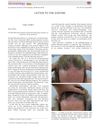
June 2018 in “Australasian Journal of Dermatology” Stopping sunscreen use on the forehead led to hair regrowth in a woman with frontal fibrosing alopecia.
6 citations
,
May 2024 in “JAAD Case Reports” Topical ruxolitinib cream may help treat frontal fibrosing alopecia.
 March 2014 in “Journal of The American Academy of Dermatology”
 The new topical product combined with finasteride significantly increased hair thickness without side effects.
 March 2014 in “Journal of The American Academy of Dermatology”
 Mycophenolic acid may help hair growth, a combination treatment improves hair thickness in male hair loss, and early treatment of frontal fibrosing alopecia is important.
The new treatment regimen was effective in promoting significant hair growth in all 15 male patients with androgenic alopecia.
 198 citations
,
October 2011 in “Journal der Deutschen Dermatologischen Gesellschaft”
198 citations
,
October 2011 in “Journal der Deutschen Dermatologischen Gesellschaft” Use minoxidil for hair loss; finasteride and dutasteride for men, dutasteride for women.
 16 citations
,
August 2014 in “Archives of Pharmacal Research”
16 citations
,
August 2014 in “Archives of Pharmacal Research” Special nanoparticles increased skin absorption of hair loss treatments with fewer side effects.
 14 citations
,
August 2013 in “Facial Plastic Surgery Clinics of North America”
14 citations
,
August 2013 in “Facial Plastic Surgery Clinics of North America” Some nonsurgical hair loss treatments are effective, especially if started early.