 13 citations
,
March 2002 in “Pediatric Dermatology”
13 citations
,
March 2002 in “Pediatric Dermatology” A child was initially wrongly diagnosed with a fungal scalp infection but actually had a non-scarring hair loss condition called Temporal Triangular Alopecia.
 4 citations
,
March 2023 in “Current Oncology”
4 citations
,
March 2023 in “Current Oncology” Scalp cooling is the only FDA-approved method to prevent hair loss from chemotherapy, but other treatments like minoxidil and PRP are being tested.
 1 citations
,
January 2015 in “Springer eBooks”
1 citations
,
January 2015 in “Springer eBooks” Chemotherapy can cause skin side effects that affect patients' lives, but they can be managed to avoid interrupting cancer treatment.
 July 2025 in “International Journal of Pharmaceutical Sciences Review and Research”
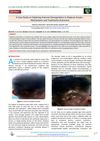
 Individualized treatment and psychological support improved the patient's quality of life and appearance despite medication side effects.
 August 2023 in “JAAD international”
 Pediatric dermatologists have varied preferences for treating alopecia areata in children, with no standard FDA-approved treatments and some using JAK inhibitors despite risks.
 June 2023 in “Drugs & Therapy Perspectives”
 New treatments for male pattern hair loss look promising, but established treatments are still the main option.
Alternative treatments with nutrients, minerals, and vitamins are being explored for safer hair loss management.
 January 2022 in “Clinical dermatology open access journal”
 Early-stage Alopecia Areata was effectively treated in less than six months.
May 2015 in “Cancer research” After chemotherapy for early breast cancer, 33.4% of patients had long-term significant hair loss, with some hair regrowth over time, but treatments for hair loss were largely ineffective.
 July 2014 in “Disease-a-Month”
 The document gives treatment advice for various skin conditions, like using metronidazole for perioral dermatitis and minoxidil for hair loss.

CG2001 is safe, well-tolerated, and a promising treatment for hair loss with fewer side effects.

CG2001 is safe and well-tolerated for treating hair loss in men.
August 2025 in “Clinical and Experimental Dermatology” Alopecia areata treatments often don't lead to lasting improvement.
 January 2025 in “Biomedical Engineering Letters”
 MXD@CP could be a promising new topical treatment for hair loss.
 April 2023 in “Journal of Pakistan Medical Association”
 Baricitinib is effective in promoting hair growth in severe alopecia areata.
 April 2017 in “Australasian Journal of Dermatology”
 The session covered updates on skin treatments, including radiotherapy, imiquimod, acitretin, JAK inhibitors, and strategies for managing rosacea and preventing surgical infections.
 April 2011 in “The FASEB Journal”
 Aralia continentalis root extract may help with hair growth.
 1 citations
,
February 2017 in “MOJ bioequivalence & bioavailability”
1 citations
,
February 2017 in “MOJ bioequivalence & bioavailability” Treating hair loss effectively may require a multi-sided approach, using different treatments together, and topical treatments could be more effective and safer than oral ones.
 May 2023 in “JAAD international”
 Minoxidil-dutasteride tattooing can potentially help regrow hair, especially in men who already have some thin hair.
 February 2024 in “Actas Dermo-Sifiliográficas”
 Dermatologists recommend oral dutasteride for male hair loss, low-dose oral minoxidil for female hair loss, and a multidisciplinary approach for young patients, with caution during pregnancy.
 13 citations
,
February 2022 in “JAMA Dermatology”
13 citations
,
February 2022 in “JAMA Dermatology” Dutasteride is the most effective hair loss treatment after 24 weeks, but finasteride leads to the most hair growth after 48 weeks.
 14 citations
,
January 2014 in “International Journal of Dermatology”
14 citations
,
January 2014 in “International Journal of Dermatology” Minoxidil with Korean red ginseng improves hair density and thickness more than minoxidil alone.
 December 2022 in “Journal of Education, Health and Sport”
 COVID-19 can cause hair loss, often treated effectively with a combination of supplements and topical treatments.
 May 2024 in “Journal of biomaterials science. Polymer ed.”
 The three-layer microneedle system effectively delivers minoxidil into the skin, showing potential as a safe and efficient treatment for hair loss.
 July 2023 in “Journal of Drug Delivery Science and Technology”
 Finasteride niosomes were developed and found to be effective in treating hair loss, with better results than commercial minoxidil, and could be a promising topical treatment for hair loss.
31 citations
,
January 1987 in “Dermatology” Minoxidil helps hair regrowth in severe alopecia areata by changing immune cell behavior.
7 citations
,
August 2024 in “JAAD reviews.” Minoxidil can cause unwanted hair growth, so personalized care and support are important.
 September 2023 in “Authorea (Authorea)”
 Certain peptides, caffeine, taurine, and an iron complex may improve hair regrowth when used with minoxidil and finasteride for hair loss.
January 2006 in “Fudan University Journal of Medical Sciences” Finasteride is more effective than 3% minoxidil for treating hair loss in Chinese men.
 October 2025 in “JEADV Clinical Practice”
 Minoxidil may help hair regrowth in traction alopecia, but changing hair habits is the main treatment.