 10 citations
,
October 2016 in “Journal of Biomolecular NMR”
10 citations
,
October 2016 in “Journal of Biomolecular NMR” Solid-state NMR can effectively study keratin structure and treatment effects in fur.
January 2019 in “Florida International University Digital Commons (Florida International University)” TOF-SIMS improved chemical mapping in cells, confirming gunshot residue, tracking anti-tumor drugs, and identifying molecules in mosquitoes and wounds.
5 citations
,
March 2019 in “Quantitative Imaging in Medicine and Surgery” Endoscopic imaging can improve tracking of stem cells in the body.
13 citations
,
August 2005 in “Journal of Investigative Dermatology Symposium Proceedings” Mutations in the DSG4 gene cause fragile, sparse hair in humans, mice, and rats.
9 citations
,
April 2022 in “Cell Communication and Signaling” High S100A4 levels worsen glioblastoma by promoting blood vessel growth.
 37 citations
,
September 2003 in “Journal of Medicinal Chemistry”
37 citations
,
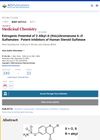
September 2003 in “Journal of Medicinal Chemistry” A substance called Compound 2g can strongly block STS (a hormone-related enzyme) without affecting estrogen levels, making it potentially good for treating breast cancer.
5 citations
,
January 2011 in “International Journal of Cosmetic Science” 1,2,3,4-tetrahydroquinoline compounds are great for stable, pure blue hair dye.
 April 2018 in “Journal of Investigative Dermatology”
 Stabilizing HIF1A in hair follicles increases glycolysis, which may help reduce oxidative stress and support hair growth.
15 citations
,
July 2000 in “The journal of investigative dermatology/Journal of investigative dermatology” Fluorescence can effectively measure acne treatment progress.

SH-SY5Y cell lysate is effective for diagnosing Satoyoshi syndrome.
34 citations
,
February 2012 in “International Journal of Dermatology” Dermatoscopy can help identify hydroquinone-induced skin issues, avoiding invasive biopsies.
7 citations
,
August 2008 in “Immunogenetics” A gene mutation in mice causes increased mast cells and disorganized hair follicles in their skin.
 9 citations
,
June 1947 in “Analytical Chemistry”
9 citations
,
June 1947 in “Analytical Chemistry” Cold waving solutions quickly reduce cystine to cysteine in hair.
2 citations
,
June 2020 in “Journal of Investigative Dermatology” 3D imaging of skin biopsies offers better accuracy but is time-consuming and can't clear melanin.
12 citations
,
November 2004 in “Photochemistry and Photobiology” Superoxide dismutase (SOD) can prevent hair graying in mice.
 111 citations
,
August 2002 in “Journal of Medicinal Chemistry”
111 citations
,
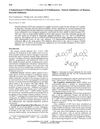
August 2002 in “Journal of Medicinal Chemistry” New compounds were made that block an enzyme linked to breast cancer better than existing treatments.
2 citations
,
December 2024 in “Microscopy Research and Technique” A new laser-based microscope can clearly image biological structures without labels.
5 citations
,
January 2019 in “Methods in molecular biology” Multiphoton microscopy can effectively image live cells in cornea, skin, and hair follicles over time.
September 2016 in “Journal of Dermatological Science” Polarizing light microscopy can easily and reliably diagnose congenital keratinizing disorders like Netherton syndrome.
8 citations
,
September 2011 in “Scanning” Multiphoton microscopy effectively images mouse skin layers and structures.
 2 citations
,
January 2015 in “Sen'i Gakkaishi”
2 citations
,
January 2015 in “Sen'i Gakkaishi” Washing permed hair after using thioglycolic acid helps reform strong bonds, making hair stronger.
August 2020 in “OPAL (Open@LaTrobe) (La Trobe University)” 9 citations
,
July 2014 in “PubMed” Different S100 proteins have specific roles in various parts of the hair follicle.
1 citations
,
January 1989 Four antibodies were developed to help study hair follicle cell differentiation.

Quickly fix tissue in formalin after excision to preserve it.
 17 citations
,
December 2004 in “Bioorganic & Medicinal Chemistry Letters”
17 citations
,
December 2004 in “Bioorganic & Medicinal Chemistry Letters” Scientists found new, better-working inhibitors for a hormone-related enzyme.
 14 citations
,
November 1963 in “The journal of investigative dermatology/Journal of investigative dermatology”
14 citations
,
November 1963 in “The journal of investigative dermatology/Journal of investigative dermatology” Pathologic tissues have more soluble proteins than normal tissues.
October 2024 in “UNESP Institutional Repository (São Paulo State University)” Straightening and dyeing damage hair structure.
 January 2023 in “Han'gug mi'saengmul saengmyeong gong haghoeji/Han-guk misaengmul saengmyeong gonghak hoeji”
 NOC-4 extract promotes black hair and hair growth effectively.
32 citations
,
July 2003 in “Histochemistry and Cell Biology”