
Minoxidil is the only approved cream for hair loss, but new treatments are being looked into.
 May 2024 in “Anais brasileiros de dermatologia/Anais Brasileiros de Dermatologia”
 Oral minoxidil 7.5 mg for hair loss increases heart rate but not blood pressure.
December 2025 in “Journal of Pharmacy And Bioallied Sciences” Trichoscopy effectively shows early positive effects of minoxidil in male pattern hair loss, improving patient satisfaction.
 October 2017 in “World Academy of Science, Engineering and Technology, International Journal of Medical and Health Sciences”
 Combination therapy with higher concentrations of minoxidil can lead to rapid hair growth in pattern baldness with no significant side effects.
2 citations
,
March 2009 in “Journal of Clinical Dermatology” Topical 5% minoxidil is safe and effective for treating hair loss in Korean men.
 August 2025 in “Journal of Cosmetic Dermatology”
 5% topical minoxidil can significantly improve hair growth in children with Marie Unna hereditary hypotrichosis.
1 citations
,
March 2017 in “PubMed” Topical minoxidil did not significantly regrow hair in alopecia areata patients after 3 months.
 May 2026 in “Zenodo (CERN European Organization for Nuclear Research)”
 Minoxidil can help grow facial hair, but it's not officially approved for everyone.
 6 citations
,
October 1979 in “Chest”
6 citations
,
October 1979 in “Chest” Minoxidil lowers blood pressure without worsening lung pressure but can cause increased hair growth.
 September 2024 in “Journal of the American Academy of Dermatology”
 Low-dose oral minoxidil helps hair regrowth in COVID-19-related hair loss with few side effects.
 May 2026 in “Zenodo (CERN European Organization for Nuclear Research)”
 Minoxidil may help facial hair grow, but more research is needed.
 4 citations
,
March 2017 in “PubMed”
4 citations
,
March 2017 in “PubMed” Increasing the dosage of minoxidil can help hair regrowth in women who didn't respond to the standard treatment.
 October 2024 in “International Journal of Pharmaceutical Sciences Review and Research”
 A 5% minoxidil spray could effectively treat male baldness with fewer side effects and better patient comfort.
 19 citations
,
November 2017 in “Journal of Pharmaceutical Sciences”
19 citations
,
November 2017 in “Journal of Pharmaceutical Sciences” A new gel containing minoxidil can treat hair loss effectively, potentially reducing side effects and improving treatment.
 July 2012 in “Reactions Weekly”
 Minoxidil use was linked to a rare eye condition that improved after stopping the treatment.
 January 2025 in “Journal of Drugs in Dermatology”
 Oral minoxidil is easier to use and more satisfying for hair loss treatment than topical minoxidil.
 8 citations
,
January 2020 in “Journal of Cutaneous Medicine and Surgery”
8 citations
,
January 2020 in “Journal of Cutaneous Medicine and Surgery” Oral minoxidil may improve hair loss in men and women, but has some side effects.
 July 2024 in “International Journal of Dermatology Venereology and Leprosy Sciences”
 Minoxidil can help regrow hair in people with alopecia areata.
 January 2025 in “Acta Dermatovenerologica Alpina Pannonica et Adriatica”
 Oral minoxidil boosts hair growth and reduces shedding in androgenetic alopecia.
May 2023 in “Hair transplant forum international” Oral minoxidil shows promise for hair growth but needs more research on dosing and side effects.
 May 2023 in “International Journal of Trichology”
 A witch-hazel-based 5% minoxidil solution is effective and safe for women with hair loss who didn't respond to regular minoxidil, especially if they're sensitive to propylene glycol.
October 2013 in “Evidence-Based Practice” Minoxidil is effective and safe for female hair loss, with the 5% foam having the fewest side effects.
 February 2023 in “International Journal of Pharmaceutics”
 A new version of minoxidil, a hair loss treatment, was made using nanotechnology. This version, called minoxidil cubosomes, works better and causes fewer skin reactions than the old version. It also penetrates and stays in the skin better, promoting hair regrowth. It's safe and could be a good alternative to current treatments.
 95 citations
,
December 1980 in “The New England Journal of Medicine”
95 citations
,
December 1980 in “The New England Journal of Medicine” Minoxidil helped bald patient regrow hair.
 11 citations
,
January 1980 in “Southern Medical Journal”
11 citations
,
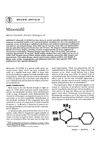
January 1980 in “Southern Medical Journal” Minoxidil effectively treats severe hypertension but has notable side effects.

Topical minoxidil significantly boosts nail growth and is safe.
January 2017 in “Faculty of 1000 Research Ltd” Oral minoxidil reduced hair shedding in women with chronic telogen effluvium.
5 citations
,
April 2022 in “Pharmaceutics” Minoxidil nanoparticles significantly boost hair growth in mice compared to regular minoxidil.
 13 citations
,
June 2016 in “Dermatologic Therapy”
13 citations
,
June 2016 in “Dermatologic Therapy” Minoxidil works better when applied on a damp scalp than a dry one.