 February 2022 in “Research Square (Research Square)”
 High TSPEAR levels in colorectal cancer predict worse outcomes.
 42 citations
,
February 1998 in “The Journal of Steroid Biochemistry and Molecular Biology”
42 citations
,
February 1998 in “The Journal of Steroid Biochemistry and Molecular Biology” PNU 157706 is a more effective treatment than finasteride for conditions caused by DHT, like enlarged prostate and hair loss.
 April 2023 in “Journal of Investigative Dermatology”
 SOX2 helps reduce wound size and pressure ulcer formation by suppressing oxidative stress and increasing antioxidant activity in mice.
 April 2017 in “Journal of Investigative Dermatology”
 Eating a lot of fat increases PKCβ and inflammation in skin fat cells, which affects skin and hair health.
 86 citations
,
February 2009 in “Journal of Neuroscience”
86 citations
,
February 2009 in “Journal of Neuroscience” Pregnancy increases certain GABAA receptors in rat brains, influenced by steroid levels.
2 citations
,
July 2025 in “Acta Pharmacologica Sinica” Isoginkgetin reduces inflammation in cells by blocking NF-κB activation.
 7 citations
,
February 2019 in “Journal of pharmacological sciences”
7 citations
,
February 2019 in “Journal of pharmacological sciences” Bazhengsan reduces inflammation and tissue growth in chronic prostatitis.
118 citations
,
June 1993 in “Journal of Biological Chemistry” Human and mouse TGase3 enzymes are similar but differ near the activation site, crucial for their function in skin and hair development.
45 citations
,
January 2021 in “Drug Delivery” MM-CEP/NLCs could effectively treat lung inflammation.
 4 citations
,
October 2022 in “International Journal of Molecular Sciences”
4 citations
,
October 2022 in “International Journal of Molecular Sciences” Thy-1 protein helps improve blood flow and wound healing in the skin.
July 2022 in “British Journal of Dermatology” 1 citations
,
January 2025 in “Proceedings of the National Academy of Sciences” LPAR6 has a unique way of binding and activating, which helps in designing treatments for hair loss and cancer.
 10 citations
,
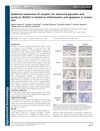
November 2015 in “Experimental Dermatology”
10 citations
,
November 2015 in “Experimental Dermatology” Skin RAGE levels are linked to inflammation and cell death.
July 2025 in “Journal of Investigative Dermatology” Reducing PEDF may help treat hair loss.
10 citations
,
July 2023 in “Pharmaceutics” Activating PKM2 and Wnt/β-catenin signaling speeds up wound healing.
305 citations
,
March 2008 in “AJP Endocrinology and Metabolism” SSAT is a key enzyme affecting cell growth and metabolism, with potential but risky use in disease treatment.
July 2024 in “Journal of Investigative Dermatology” Combining certain treatments, including FOL005, may improve healing of difficult wounds.
June 2025 in “Food Science & Nutrition” Peimine helps heal skin wounds by activating a specific cell signaling pathway.
March 2026 in “Drug Testing and Analysis” PTeCA is a reliable marker for detecting oxidative hair treatments.
8 citations
,
July 1977 in “Lipids” High levels of certain fats in rapeseed oil can reduce the skin's ability to produce prostaglandin E2 and cause hair loss and skin issues in rats.
August 2015 in “Han'gug dongmul jawon gwahag hoeji/Han-guk dongmul jawon gwahak hoeji/Journal of animal science and technology” TRα and CRABPII genes change their activity levels during goat fetal skin development.
66 citations
,
October 1999 in “Annals of the New York Academy of Sciences” The Skin POMC System affects hair growth and skin responses to stress.
 24 citations
,
November 2019 in “Experimental Dermatology”
24 citations
,
November 2019 in “Experimental Dermatology” PPAR-γ is important for healthy hair and its problems, and more research on PPAR-γ treatments is needed.
 June 2022 in “bioRxiv (Cold Spring Harbor Laboratory)”
 A specific molecular switch, driven by MAPK/ERK signaling, helps spiny mice heal wounds by regenerating skin instead of forming scars.
3 citations
,
September 2024 in “Animal Cells and Systems” Sargassum horneri extract speeds up burn healing and reduces inflammation.
1 citations
,
January 2018 Sphingosine 1-phosphate and its receptor S1PR3 are key in controlling mechanical pain.
70 citations
,
December 2008 in “Cancer Research” CXCR2 in skin cells promotes tumor growth.
38 citations
,
March 1997 in “Journal of interferon & cytokine research” IL-1β inhibits human hair follicle growth.
 87 citations
,
September 2019 in “Nature Communications”
87 citations
,
September 2019 in “Nature Communications” SOX11 and SOX4 help skin cells act like embryonic cells to heal wounds in mice.
13 citations
,
September 2014 in “BMC Complementary and Alternative Medicine” Tanshinone IIA helps protect skin tissue from low oxygen damage by boosting certain cell markers.