Loss of the p53 gene alone causes tumors, and losing both p53 and Rb genes speeds up aggressive skin cancer.
1 citations
,
July 2025 in “Scientific Reports” CD133+ cells are crucial for hair growth.
December 2025 in “Animals” TGFBR1 slows down cell growth in fine-wool sheep hair follicles.
January 2026 in “Non-coding RNA Research” Exosomal miRNA-218-5p promotes hair growth and development.
 August 2023 in “British journal of dermatology/British journal of dermatology, Supplement”
 Rubbing or pressing on the face can cause small bumps, and changing posture along with certain creams can improve them.
14 citations
,
August 2004 in “Veterinary Dermatology” The horse had a rare type of hair loss caused by immune cells attacking hair follicles.
8 citations
,
August 1970 in “JAMA” Excessive vitamin A can cause symptoms that mimic serious brain conditions.
August 2023 in “Journal of Investigative Dermatology” Senescent melanocytes in nevus skin boost hair growth.
 January 2025 in “Dermatology Review”
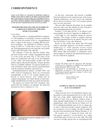
 Giant keratoacanthoma can look like squamous cell carcinoma, requiring careful diagnosis and surgical removal.
 9 citations
,
January 2005 in “Pediatric Dermatology”
9 citations
,
January 2005 in “Pediatric Dermatology” Fox Fordyce disease can occur in prepubertal girls and may be underdiagnosed.
 February 2026 in “International Journal of Homoeopathic Sciences”
 Plica Polonica is a rare hair disorder causing severe matting, managed by detangling or cutting, and prevented with regular hair care.
 19 citations
,
July 1993 in “The journal of investigative dermatology/Journal of investigative dermatology”
19 citations
,
July 1993 in “The journal of investigative dermatology/Journal of investigative dermatology” Dermal-epidermal interactions are crucial for hair growth and maintenance.
 1 citations
,
October 2022 in “Dermatology practical & conceptual”
1 citations
,
October 2022 in “Dermatology practical & conceptual” Isolated patchy heterochromia with pili annulati can occur without other health issues.
January 2006 in “Chinese Journal of Dermatology” Mesenchymal cells are essential for hair follicle stem cell growth.
2 citations
,
March 1994 in “Oncology Reports” Keratoacanthomas and squamous cell carcinomas have similar keratin patterns, making them hard to tell apart.
7 citations
,
May 1988 in “International Journal of Dermatology” The patient's hair has unique structural differences with alternating bright and dark bands.
19 citations
,
July 1994 in “International Journal of Dermatology” A 9-year-old boy had a calcium deposit nodule on his earlobe.
December 2020 in “American Journal of Transplantation” Early recognition and treatment of VATS in transplant patients improve outcomes.
 102 citations
,
August 2008 in “Genes & Development”
102 citations
,
August 2008 in “Genes & Development” Laminin-511 is crucial for early hair growth and maintaining important hair development signals.
 May 2018 in “European Journal of Dermatology”
 The first Japanese family with Marie Unna hereditary hypotrichosis showed hair condition improvement in a child and highlighted the risk of misdiagnosis.
7 citations
,
July 2006 in “Journal of cutaneous pathology” A 21-year-old had a rare developmental anomaly with a misplaced sebaceous gland in a hair follicle.
53 citations
,
September 2013 in “Journal of Investigative Dermatology” Hair follicle cells help protect against immune attacks by regulating T-cell activity.
 March 2019 in “Nasza Dermatologia Online”
 A rare scalp condition with hair loss was correctly diagnosed and treated, leading to hair regrowth.
60 citations
,
August 2005 in “Endocrinology” αMSH may help regulate immune responses in hair follicles and its disruption could lead to hair loss.
 13 citations
,
September 2019 in “EBioMedicine”
13 citations
,
September 2019 in “EBioMedicine” sPLA2-IIA increases growth in hair follicle stem cells and cancer cells, suggesting it could be targeted for hair growth and cancer treatment.
 1 citations
,
January 2018 in “Acta dermato-venereologica”
1 citations
,
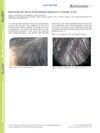
January 2018 in “Acta dermato-venereologica” A teenager's hair with alternating white and dark bands, known as Pili annulati, is a genetic condition that is usually harmless and often considered attractive.
 December 2023 in “Scientific Reports”
 Scientists created cell lines from balding patients and found that cells from the front of the scalp are more affected by hormones that cause hair loss than those from the back.
13 citations
,
February 1980 in “Journal of Cutaneous Pathology” Rubbing seborrheic keratoses causes specific skin changes and may link them to hair follicles.
 10 citations
,
January 2016 in “Dermatology”
10 citations
,
January 2016 in “Dermatology” People with myotonic dystrophy type 1 tend to develop basal cell carcinoma at a younger age but not more frequently than others.
 September 1997 in “Journal of The European Academy of Dermatology and Venereology”
 Skin lymphoproliferative disorders are hard to diagnose and often linked to systemic diseases, but most have a good prognosis with accurate diagnosis.