 April 2021 in “Elsevier eBooks”
 The document's conclusion cannot be provided because the document is not accessible or understandable.
 15 citations
,
January 2011 in “Annals of Dermatology”
15 citations
,
January 2011 in “Annals of Dermatology” The study concluded that neonatal occipital alopecia is common, not caused by physical friction, and usually resolves on its own without treatment.
 1 citations
,
September 2016 in “Indian Journal of Plastic Surgery”
1 citations
,
September 2016 in “Indian Journal of Plastic Surgery” The new hair follicle harvesting technique improves hair transplant results and makes the procedure quicker and easier to learn.
 8 citations
,
December 1996 in “Dermatologic Surgery”
8 citations
,
December 1996 in “Dermatologic Surgery” Both ASR I and ASR II are effective scalp reduction techniques, with ASR I creating finer scars and ASR II removing more bald area and reducing stretch-back.
 4 citations
,
January 2008 in “Facial Plastic Surgery”
4 citations
,
January 2008 in “Facial Plastic Surgery” Improve skin paddle appearance after head and neck reconstruction using tissue expansion, rearrangement, and flaps.
 November 2001 in “Dermatologic Surgery”
 Galea fixation is a safe and effective way to remove bald scalp with minimal scarring and reduced stretch-back.
9 citations
,
June 2019 in “Plastic & Reconstructive Surgery Global Open” The procedure safely and effectively lifted the lateral brow, improving appearance with minimal complications.
1 citations
,
June 2023 in “JPRAS Open” The hole technique is faster and effective for hair transplant site creation.
 August 1998 in “Dermatologic Surgery”
 Follicular unit hair transplantation is better than Miniflap Hair Restoration due to less scarring and more natural results.
13 citations
,
October 2001 in “British Journal of Ophthalmology” Prophylactic pilocarpine may not prevent angle closure in the other eye.
 1 citations
,
October 2021 in “PubMed”
1 citations
,
October 2021 in “PubMed” A woman had temporary hair loss after scalp surgery, which is a rare but self-healing condition that surgeons should recognize to avoid wrong treatment.
 23 citations
,
September 2014 in “JEADV. Journal of the European Academy of Dermatology and Venereology/Journal of the European Academy of Dermatology and Venereology”
23 citations
,
September 2014 in “JEADV. Journal of the European Academy of Dermatology and Venereology/Journal of the European Academy of Dermatology and Venereology” Laser treatments are the most effective for porokeratotic adnexal ostial nevus.
 4 citations
,
November 2015 in “Aesthetic Plastic Surgery”
4 citations
,
November 2015 in “Aesthetic Plastic Surgery” Using tissue expanders for scalp reconstruction in patients with extensive Aplasia Cutis Congenita is effective and has minimal complications.
1 citations
,
January 1997 in “European journal of plastic surgery” Tissue expansion can fix scalp issues from hair implants.
 12 citations
,
September 2012 in “Plastic and Reconstructive Surgery”
12 citations
,
September 2012 in “Plastic and Reconstructive Surgery” Adding de-epithelialization to the follicular isolation technique improves hair transplant results for eyebrows and eyelashes.
 5 citations
,
September 1994 in “The Journal of Dermatologic Surgery and Oncology”
5 citations
,
September 1994 in “The Journal of Dermatologic Surgery and Oncology” Scalp lifting surgery can safely and effectively reduce baldness if done with careful planning and proper technique.
 6 citations
,
July 2011 in “Journal of Plastic Reconstructive and Aesthetic Surgery”
6 citations
,
July 2011 in “Journal of Plastic Reconstructive and Aesthetic Surgery” Eyebrow reconstruction using hair follicle grafts was successful in a man with a benign hereditary disorder affecting his eyebrows.
July 2025 in “Dermatologic Surgery”  April 2020 in “JOJ dermatology & cosmetics”
 New eyebrow transplant method from Taiwan gives good results without lasers or tattoos.
February 2013 in “Journal of the American Academy of Dermatology” 1 citations
,
October 2023 in “The Laryngoscope” The procedure effectively removes forehead osteomas with minimal scarring and no complications.
 January 2022 in “Consultant”
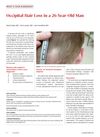
 The man's occipital hair loss was due to temporal triangular alopecia, not alopecia areata.
 4 citations
,
December 1992 in “The American Journal of Cosmetic Surgery”
4 citations
,
December 1992 in “The American Journal of Cosmetic Surgery” The modified S pattern for scalp reduction is effective for removing more bald scalp and hiding scars in hair restoration.
16 citations
,
August 2014 in “PubMed” 34 citations
,
July 2003 in “Archives of Facial Plastic Surgery” Proper incision techniques can make face-lift scars less noticeable.
 July 2002 in “Dermatologic Surgery”
 Understanding the scalp's five-layer structure is crucial for better surgical outcomes and fewer complications.
February 2023 in “Journal of the European Academy of Dermatology and Venereology”  March 2026 in “Frontiers in Medicine”
 Diffuse unpatterned alopecia can affect donor areas, but treatment with finasteride and minoxidil can improve hair density.
 14 citations
,
May 2014 in “Archives of plastic surgery”
14 citations
,
May 2014 in “Archives of plastic surgery” The position of the parietal whorl can predict safe donor areas for hair transplants in Korean men with male pattern baldness.
 25 citations
,
November 2008 in “Ophthalmic Plastic and Reconstructive Surgery”
25 citations
,
November 2008 in “Ophthalmic Plastic and Reconstructive Surgery” Radiofrequency and scalpel incisions have similar clinical outcomes for upper eyelid surgery.