 3 citations
,
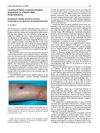
March 2012 in “Actas Dermo-Sifiliográficas”
3 citations
,
March 2012 in “Actas Dermo-Sifiliográficas” An elderly man with skin amyloidosis and abnormal blood proteins was monitored without finding widespread disease after 18 months.
 October 2025 in “Research Square (Research Square)”
 Enhancing blood vessel interactions with hair cells may help treat hair loss and skin aging.
15 citations
,
November 2020 in “Development” Stem cells in the eye have different roles and behaviors, helping maintain and repair the eye's surface.
 1 citations
,
August 2023 in “bioRxiv (Cold Spring Harbor Laboratory)”
1 citations
,
August 2023 in “bioRxiv (Cold Spring Harbor Laboratory)” The research created a detailed map of skin cells, showing that certain cells in basal cell carcinoma may come from hair follicles and could help the cancer grow.
215 citations
,
September 2003 in “Journal of Biological Chemistry” Vitamin D receptor and hairless protein are essential for hair growth.
16 citations
,
July 2019 in “Biochemical and Biophysical Research Communications” CD36-expressing dermal sheath cells help form blood vessels in hair follicles, aiding hair growth.
 September 2020 in “Faculty Opinions – Post-Publication Peer Review of the Biomedical Literature”
 Lymphatic vessels and hair follicles interact and may influence hair growth.
109 citations
,
November 2011 in “Nature Neuroscience”  September 2017 in “Journal of Investigative Dermatology”
 Hair follicle cells change their DNA packaging during growth cycles and when grown in the lab.
 81 citations
,
January 2006 in “Journal of cellular physiology”
81 citations
,
January 2006 in “Journal of cellular physiology” Mice without the vitamin D receptor gene lose hair due to disrupted hair follicle cycles.
37 citations
,
May 2018 in “Developmental Biology” Adult neural crest-derived cells can become multipotent and aid tissue repair when stressed or injured.

Proper niche formation in Drosophila requires Slit-Robo signaling for cell migration.
1 citations
,
November 2024 in “Veterinary Dermatology” The cat's hair loss was linked to a type of cancer.
 January 2025 in “Dermatology Practical & Conceptual”
 Perinevoid alopecia can be effectively treated with non-invasive corticosteroids.
1 citations
,
August 2016 in “Journal of Investigative Dermatology” Vδ1+ T-cells in the skin contribute to hair loss in alopecia areata and could be targeted for treatment.
4 citations
,
January 2013 in “Genetics and Molecular Research” VEGF and microvessel density are closely linked and peak during specific hair growth phases in cashmere goats.
 14 citations
,
January 2016 in “Experimental and molecular pathology”
14 citations
,
January 2016 in “Experimental and molecular pathology” Giving immune serum from vaccinated mice to mice without T cells prevents infection and tumor growth.
3 citations
,
October 1994 in “Medical Molecular Morphology” The lower part of rat vibrissa hair gets more blood and is well-protected for growth.
February 2014 in “PubMed” Modified rat hair follicle stem cells can help create artificial hair follicles, blood vessels, and skin.
 May 2020 in “Research Square (Research Square)”
 Human stem cells can turn into functional eye cells that might help treat retinal diseases.
2 citations
,
February 2022 in “Genomics” Researchers discovered new cell types in goat hair follicles that could help understand hair regrowth and human hair loss.
April 2015 in “MOJ Cell Science & Report” Rat hair follicle stem cells can be used to improve blood vessel growth in engineered skin.

Platelet-rich plasma treatment helped heal gangrene in a young woman.
 April 2025 in “Cellular and Molecular Biology”
 Human dermal stem/progenitor cells can divide and differentiate more than hair follicle dermal papilla cells.
10 citations
,
January 2020 in “Acta Neurobiologiae Experimentalis” Valproic acid and crocin together boost cell growth and may help treat nerve injuries.
52 citations
,
June 1991 in “Journal of Virology” The hamster polyomavirus middle T antigen is linked to tumors in hamsters and associates with a specific tyrosine kinase.
 91 citations
,
March 2011 in “Stem Cell Reviews and Reports”
91 citations
,
March 2011 in “Stem Cell Reviews and Reports” Human epidermal neural crest stem cells can become bone and skin pigment cells, making them useful for therapies.

CaBP1 and 2 are necessary for maintaining calcium currents and hearing in inner ear cells.
 January 2024 in “Theranostics”
 HDAC6 helps keep ovarian follicles dormant, extending female fertility.
 May 2022 in “Dermatologic therapy”
 Combining PRP with follicular transplantation improves vitiligo treatment better than follicular transplantation alone.