 June 2025 in “Clinical Cosmetic and Investigational Dermatology”
 Combining corticosteroids and minoxidil can quickly regrow hair lost from radiation.
 September 2022 in “JAAD Case Reports”
 COVID-19 may worsen hair loss in people with a certain type of scarring alopecia, but early treatment can help improve symptoms and hair regrowth.
January 2022 in “Clinical Cases in Dermatology” A 12-year-old boy has a rare, harmless hair loss on his chin with no need for treatment.
 184 citations
,
February 2015 in “EBioMedicine”
184 citations
,
February 2015 in “EBioMedicine” A patient with Alopecia Areata had complete hair regrowth after using the drug baricitinib.
32 citations
,
August 2016 in “Journal of the American Academy of Dermatology” Temporal triangular alopecia is a non-scarring hair loss in children, often linked to other health conditions.
 28 citations
,
November 2020 in “Journal of Controlled Release”
28 citations
,
November 2020 in “Journal of Controlled Release” A new hair loss treatment uses tiny needles to deliver a drug-loaded lipid carrier, promoting hair growth more effectively than current treatments.
 17 citations
,
January 2010 in “International journal of trichology”
17 citations
,
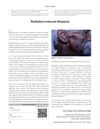
January 2010 in “International journal of trichology” A man experienced hair loss from radiotherapy, which can be temporary or permanent depending on radiation dose, with potential treatments available.
13 citations
,
November 2022 in “Biomaterials Science” The microneedle patch effectively promotes hair regrowth by delivering miR-218.
1 citations
,
January 2016 in “Dermatology Online Journal” Triangular temporal alopecia can occur in adults and should be correctly identified to prevent misdiagnosis.
1 citations
,
October 2015 in “Joint bone spine” Membership in a self-help organization is linked to being better informed and having a higher education, but it doesn't clearly affect disease outcomes.
1 citations
,
August 2010 in “Optometry and Vision Science” A 4-year-old boy's vision and hair loss were likely caused by inflammation.
 1 citations
,
September 2007 in “European journal of paediatric neurology”
1 citations
,
September 2007 in “European journal of paediatric neurology” Low dose valproic acid treatment caused hair loss in a young patient.
 April 2026 in “International Journal of Homoeopathic Sciences”
 Homoeopathic treatment using Opium helped regrow beard hair by addressing mental symptoms.
November 2025 in “Contact Dermatitis” Avoiding salicylates improved skin issues and stabilized hair loss in a woman with frontal fibrosing alopecia.

Tofacitinib effectively regrows hair in alopecia universalis triggered by a virus.
 January 2025 in “Indian Journal of Paediatric Dermatology”
 Biopsy is crucial to correctly diagnose granuloma annulare, which can mimic other conditions like alopecia mucinosa.
 September 2024 in “Acta Medica Philippina”
 Radiation from a medical procedure caused temporary hair loss, but hair regrew with treatment.
July 2021 in “Journal of dermatology & dermatologic surgery” IMTA can help regrow hair in severe alopecia areata when JAK inhibitors don't work well.
 January 2021 in “Journal of Cutaneous and Aesthetic Surgery”
 Follicular unit extraction successfully restored hair growth in a leprosy patient without disease relapse.
 January 2018 in “Figshare”
 Horizontal sections of scalp biopsies are useful for telling the difference between Androgenetic Alopecia and Alopecia Areata.
 January 2015 in “Przegla̧d dermatologiczny”
 308 nm excimer light therapy may help hair regrowth in alopecia areata with delayed results and no serious side effects.
Low level laser therapy effectively treats alopecia areata on the scalp.
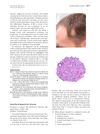
The man has Temporal Triangular Alopecia, a stable, non-scarring hair loss condition best treated with hair transplantation.
July 2004 in “TSpace (University of Toronto)” A rare case showed alopecia areata and lichen planus occurring together in one person.
 March 1985 in “Inpharma (Balgowlah)”
 Minoxidil helps 32% of patients with hereditary baldness regrow hair.
44 citations
,
December 2005 in “Journal of Investigative Dermatology” Certain genetic markers, especially the MICA gene, are linked to alopecia areata.
 36 citations
,
May 2011 in “Dermatologic therapy”
36 citations
,
May 2011 in “Dermatologic therapy” No treatments fully cure or prevent alopecia areata; some help but have side effects or need more research.
 33 citations
,
August 1973 in “American Heart Journal”
33 citations
,
August 1973 in “American Heart Journal” Propranolol can cause reversible hair loss.
 17 citations
,
December 2001 in “Dermatologic therapy”
17 citations
,
December 2001 in “Dermatologic therapy” Different treatments for alopecia areata have unpredictable results and varying success rates.
1 citations
,
November 2023 in “Indian Journal of Dermatology” A 6-year-old Asian boy has a rare scalp condition causing hair loss and thickening, with unclear causes and no effective treatment.