Search
for
Sort by
Research
750-780 / 1000+ results
research Hair removal using a long-pulsed alexandrite laser.
The long-pulsed alexandrite laser is effective for hair reduction, particularly for light-skinned individuals with dark hair, but caution is needed for darker skin.

research Differences in cell subsets between sun-exposed and unexposed skin: preliminary single-cell sequencing and biological analysis from a single case
Sun-exposed skin shows different cell activity and gene expression, suggesting targets to prevent skin aging and cancer.
research A Porcine Model for the Development and Testing of Preoperative Skin Preparations
Povidone iodine reduced skin bacteria more than chlorhexidine gluconate, but neither met FDA reduction standards.
research Proteolysis‐Targeting Chimera (PROTAC): Current Applications and Future Directions
PROTACs offer new ways to treat hard-to-target diseases, with promising drugs for cancer in advanced trials.
research Identical p53 gene mutation in malignant proliferating trichilemmal tumour of the scalp and small cell carcinoma of the common bile duct: the necessity for therapeutic caution?
Identical p53 gene mutations in different cancers suggest the need for careful treatment.
research Confocal Laser Scanning Microscopy as a Tool for the Investigation of Skin Drug Delivery Systems and Diagnosis of Skin Disorders
Confocal Laser Scanning Microscopy (CLSM) is a useful tool for studying how drugs interact with skin and diagnosing skin disorders, despite some limitations.
research Polystyrene-b-poly (acrylic acid) nanovesicles coated by modified chitosans for encapsulation of minoxidil
Minoxidil can be effectively encapsulated in coated nanovesicles for potential drug delivery.
research Association of Early Clinical Response to Laser Rejuvenation of Photoaged Skin with Increased Lipid Metabolism and Restoration of Skin Barrier Function
research Surgical pearl: Modified hypodermic needle and its cap for guarded prick incision
The modified needle is safer for procedures by reducing injury risk.
research THE USE OF AUTORADIOGRAPHY TO STUDY THE LOCALIZATION OF GERMICIDES IN SKIN
Germicides mostly stay on the skin's surface, but some penetrate deeper depending on the product used.

research My Clinical Experience with Needle and Laser SMP Devices
The document's conclusion cannot be provided because the content is not available.
research Topical Administration of 15‐Deoxy‐Δ12,14‐Prostaglandin J2 Using a Nonionic Cream: Effect on UVB‐Induced Skin Oxidative, Inflammatory, and Histopathological Modifications in Mice
15d‐PGJ2 cream protects against UVB-induced skin damage in mice.

research Evaluation of efficacy, safety, and reversibility of combination regimen of cyproterone acetate and testosterone buciclate in bonnet monkey
The right dosage of CPA and TB can work as a safe and reversible male contraceptive in monkeys.

research A multicentre trial of the epilation efficacy of a new, large spot size, constant spectrum emission IPL device
The IPL device is safe, effective, and has high patient satisfaction for hair removal.
research LB1154 Rising antimicrobial resistance in chronic wounds
DACC-based dressings are more effective than silver-based ones for treating chronic wounds with antimicrobial resistance.

research Standardized Informed Consent Form for Clinicians Administering Platelet-Rich Plasma
A standardized consent form for PRP injections improves patient trust and legal protection.

research This sector needs laser protection supervisors
Clinics using lasers should have trained laser safety supervisors to reduce accidents and possibly lower insurance costs.

research Antibody-Capped Mesoporous Nanoscopic Materials: Design of a Probe for the Selective Chromo-Fluorogenic Detection of Finasteride
Probe detects finasteride with high selectivity and low detection limit.
research Formulation and Characterization of a Polyherbal Sunscreen Containing Camellia sinensis, Vitis vinifera, and Silybum marianum Extracts
The F4 polyherbal sunscreen is a promising natural alternative with effective UV protection and antioxidant benefits.

research LB1681 Risk of merkel cell carcinoma progression after treatment discontinuation in patients with an objective response to anti-PD-(L)1 immunotherapy
Longer immunotherapy treatment may improve outcomes for Merkel cell carcinoma patients.
research Adapalene–benzoyl peroxide, a unique fixed-dose combination topical gel for the treatment of acne vulgaris: a transatlantic, randomized, double-blind, controlled study in 1670 patients
The adapalene-benzoyl peroxide gel works better and faster for acne treatment than using either ingredient alone, with manageable side effects.
research A pilot study for triple combination therapy with a low-fluence 1064 nm Q-switched Nd:YAG laser, hydroquinone cream and oral tranexamic acid for recalcitrant Riehl’s Melanosis
The combination therapy significantly improved Riehl’s melanosis in patients without serious side effects.
research Protein Kinase C δ Overexpressing Transgenic Mice Are Resistant to Chemically but not to UV Radiation–Induced Development of Squamous Cell Carcinomas: A Possible Link to Specific Cytokines and Cyclooxygenase-2
Mice with extra PKCδ resist chemical-induced skin cancer but not UV-induced.
research Latanoprost
research Basement Membranes in Experimentally Induced Skin Tumors
research In Vivo and In Vitro Evaluation of PTeCA (1H‐Pyrrole‐2,3,4,5‐Tetracarboxylic Acid) in Hair Matrix as a Marker for Oxidative Cosmetic Treatment
PTeCA is a reliable marker for detecting oxidative hair treatments.
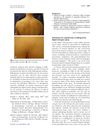
research Subcutaneous emphysema resulting from liquid nitrogen spray
Liquid nitrogen spray caused a temporary, harmless swelling under the skin in an elderly woman.

research Postinflammatory hyperpigmentation: a common but troubling condition
Postinflammatory hyperpigmentation causes dark skin patches and needs personalized treatment.