October 2024 in “Skin Appendage Disorders” Higher FABP4 levels may indicate more severe alopecia areata.
February 1989 in “PubMed” A genetic hair protein variant is more common in Japanese people and is inherited.
January 2022 in “Indian dermatology online journal” Pigmented papules on the ear can be a rare skin condition called cutaneous amyloidosis, treatable with topical tretinoin.
3 citations
,
January 2013 in “Dermatology” New genetic mutations causing hair loss were found in a Chinese family.
3 citations
,
October 2024 in “Animals” An allele of the KRTAP13-2 gene may improve wool quality in sheep.
 1 citations
,
May 2003 in “Archives of Pathology & Laboratory Medicine”
1 citations
,
May 2003 in “Archives of Pathology & Laboratory Medicine” The boy had trichotillomania, causing hair loss, and treatment focused on habit reversal and support.
1 citations
,
April 2025 in “BMC Veterinary Research” PSAT1 is key for hair growth and stem cell function in cashmere goats.
 2 citations
,
November 2022 in “IP Indian journal of clinical and experimental dermatology”
2 citations
,
November 2022 in “IP Indian journal of clinical and experimental dermatology” Dermoscopic and histopathological features combined can help diagnose Pityriasis versicolor.
1 citations
,
February 1989 in “PubMed” Electrophoresis can effectively analyze hair proteins for forensic use, even after cosmetic treatments and up to 2 years of weathering.
Children with Parry Romberg Syndrome had successful facial fat-grafting surgeries after disease stabilization with no complications.
36 citations
,
July 1988 in “Archives of Dermatological Research” Pili annulati is caused by a protein metabolism disorder affecting hair structure.
 4 citations
,
December 2013 in “The Journal of Dermatology”
4 citations
,
December 2013 in “The Journal of Dermatology” A new mutation in the K6b gene caused a girl's late-appearing nail condition.
5 citations
,
November 1979 in “PubMed” A hereditary condition causes hair loss and twisted hair in some family members.
56 citations
,
June 2010 in “Clinical and experimental dermatology” Coudability hairs are useful markers for alopecia areata activity.
4 citations
,
July 2006 in “British journal of dermatology/British journal of dermatology, Supplement” Testosterone increases hair follicle cell growth when beard or axillary skin cells are present together.
 January 1961 in “The Journal of Anthropological Society of Nippon”
 Hair form in mixed-blood families varies due to hereditary twist-knots and pigment formation.
February 2024 in “Zagazig University Medical Journal” TCF7L2 gene polymorphism is linked to alopecia areata, but it doesn't affect the success of PRP or conventional treatments.
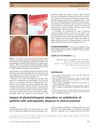 July 2014 in “Journal of Dermatology”
 Educating patients on phototrichogram increased satisfaction in androgenetic alopecia treatment.
 7 citations
,
December 2015 in “International Journal of Dermatology”
7 citations
,
December 2015 in “International Journal of Dermatology” New and known mutations in the hairless gene cause a hair loss condition called Atrichia with papular lesions.
February 2013 in “Pediatrics in Review” The girl's symptoms suggest a complex condition that's hard to diagnose despite normal test results.
 August 2018 in “Journal of The American Academy of Dermatology”
 Children with alopecia areata should only get thyroid screening if they have Down syndrome, a family history of thyroid disease, atopy, or signs of thyroid problems.
4 citations
,
March 2024 in “Forensic Sciences Research” Forensic DNA phenotyping faces challenges like inconsistent terms and limited genetic knowledge.
21 citations
,
January 2010 in “International journal of trichology” Trichoscopy can diagnose monilethrix, a genetic hair defect causing hair thinning and loss.
October 2024 in “Dermatology Practical & Conceptual” Trichoscopy effectively diagnoses eyebrow hair loss in certain conditions.
1 citations
,
May 2021 in “Clinical Nuclear Medicine” Platelet-rich plasma therapy can increase FDG uptake in the scalp.
 11 citations
,
January 1987 in “Electrophoresis”
11 citations
,
January 1987 in “Electrophoresis” Keratin proteins are consistent across different hair types from the same person.
The document describes a rare case of IFAP syndrome, a genetic condition with symptoms of hair loss, light sensitivity, and scaly skin.
 July 2022 in “World Journal of Advanced Research and Reviews”
 Piptadeniastrum africanum and Cordia plathytyrsa can increase testosterone without major metabolic changes, but may affect triglycerides and creatinine.
 January 2026 in “International Journal of Dermatology Research”
 Early recognition of loose anagen hair syndrome is important to prevent misdiagnosis and unnecessary treatments.
35 citations
,
July 2010 in “The FEBS journal” The study found a specific peptide that helps detect TGase 3 activity in skin and hair follicles.