 1 citations
,
September 2022 in “Sudan Journal of Medical Sciences”
1 citations
,
September 2022 in “Sudan Journal of Medical Sciences” Danoprevir, remdesivir, and saridegib may effectively inhibit SARS-CoV-2.
 April 2023 in “Journal of Investigative Dermatology”
 The specific skin disease variant p.(Arg2000Trp) in plectin can cause a wide range of symptoms, which should be considered when diagnosing patients.
3 citations
,
March 2024 in “iScience” Long-lived proteins may predict age-related diseases.
 53 citations
,
January 2011 in “Diabetes”
53 citations
,
January 2011 in “Diabetes” People with PCNT mutations often develop severe insulin resistance and early-onset diabetes during childhood or adolescence.
 1 citations
,
July 1973 in “British Journal of Dermatology”
1 citations
,
July 1973 in “British Journal of Dermatology” The document concludes that secondary syphilis cases are increasing and often misdiagnosed, pityriasis rubra pilaris can be distinguished from psoriasis by skin cell features, and different skin layers produce specific components during skin repair.
15 citations
,
November 2024 in “Materials” PHAs are promising biodegradable materials for medical and dental uses.
 20 citations
,
March 2013 in “Journal of Lipid Research”
20 citations
,
March 2013 in “Journal of Lipid Research” The research explains how a human enzyme binds and processes its substrate, which could relate to its role in biological functions and hair loss.
5 citations
,
May 2022 in “Lara D. Veeken” A rare genetic condition can mimic symptoms of other diseases, making diagnosis challenging.
 8 citations
,
June 2012 in “PloS one”
8 citations
,
June 2012 in “PloS one” Mutations in Plcd1 and Plcd3 together cause severe hair loss in mice.
 94 citations
,
July 2020 in “European Journal of Human Genetics”
94 citations
,
July 2020 in “European Journal of Human Genetics” The guidelines ensure accurate genetic testing and reporting for 21-hydroxylase deficiency.
9 citations
,
January 2021 in “BioMed research international” Human hair-derived particles can effectively carry and release the cancer drug Paclitaxel in a pH-sensitive manner, potentially targeting cancer cells while sparing healthy ones.
 38 citations
,
February 2012 in “British Journal of Dermatology”
38 citations
,
February 2012 in “British Journal of Dermatology” AR/EDA2R gene linked to early-onset female hair loss, but 20p11 gene not involved.
188 citations
,
June 1998 in “Molecular cell” Researchers created a mouse with the same mutation as humans with trichothiodystrophy, showing similar symptoms and confirming the condition is due to defects in DNA repair and gene activity.
PDGF signaling is crucial for cell development, wound healing, and fluid regulation in the body.
5 citations
,
September 1989 in “Pediatric dermatology” Persistent papular plaques on children's faces need better understanding and treatment.
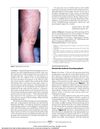 10 citations
,
June 2011 in “Archives of Dermatology”
10 citations
,
June 2011 in “Archives of Dermatology” Finasteride caused blisters on hands and feet.
4 citations
,
December 2016 in “Blood” A new gene mutation may cause cyclic thrombocytopenia by affecting platelet production.
74 citations
,
September 2003 in “The Journal of Immunology” Activating PKCα in skin causes cell death and inflammation through different pathways.
October 2022 in “Amplla Editora eBooks”  18 citations
,
October 2017 in “Drug Design Development and Therapy”
18 citations
,
October 2017 in “Drug Design Development and Therapy” DA-9401 helps protect rat testis from finasteride damage.
 28 citations
,
February 2010 in “British journal of dermatology/British journal of dermatology, Supplement”
28 citations
,
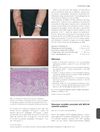
February 2010 in “British journal of dermatology/British journal of dermatology, Supplement” WNT10A mutations cause varied symptoms in patients with odonto-onycho-dermal dysplasia.
November 2025 in “OPAL (Open@LaTrobe) (La Trobe University)” DAB labeling effectively identifies collagen type III and PDGFR in horse skin, but may show false positives.
 October 2023 in “Benha Journal of Applied Sciences”
 PPAR-γ may be a key target for treating alopecia areata and other skin conditions.
9 citations
,
December 1991 in “Annals of the New York Academy of Sciences”  4 citations
,
May 2021 in “The journal of investigative dermatology/Journal of investigative dermatology”
4 citations
,
May 2021 in “The journal of investigative dermatology/Journal of investigative dermatology” ELL is crucial for gene transcription related to skin cell growth.
 April 2017 in “Journal of Investigative Dermatology”
 A boy with Oculodentodigital syndrome had a unique GJA1 gene mutation causing his symptoms.
January 2019 in “Dermatologic Surgery” Pulsed Dye Laser effectively treats skin lesions in Rosai–Dorfman Disease.
8 citations
,
January 2013 in “Australasian journal of dermatology” Trichodysplasia spinulosa is a rare skin condition caused by a virus, treatable with antiviral medication.
April 2026 in “Expert Opinion on Biological Therapy” Prurigo nodularis is hard to diagnose and treat, but new biologics offer hope for better management.
 August 2023 in “Frontiers in Endocrinology”
 Mutations in mitochondrial DNA might significantly contribute to the development of Polycystic Ovarian Syndrome.