 131 citations
,
March 2004 in “The American journal of pathology”
131 citations
,
March 2004 in “The American journal of pathology” Modulating BMP activity changes the number, size, shape, and type of ectodermal organs.

Insect eggshells form through specialized cell processes and gene regulation, with potential for pest control innovations.
2 citations
,
July 2019 in “Indian dermatology online journal” A 17-year-old girl and her brothers have a rare hair condition with long eyelashes, thick eyebrows, and easily pluckable hair.
January 2025 in “Arquivo Brasileiro de Medicina Veterinária e Zootecnia” Agoutis in captivity have more resting (telogen) hairs than growing (anagen) hairs, regardless of season or gender.
March 2011 in “Pigment Cell & Melanoma Research” The Agouti gene influences pigmentation and may have a developmental role in deer mice.
 September 2020 in “bioRxiv (Cold Spring Harbor Laboratory)”
 Different fish use the same genes to regrow teeth.
Pseudopelade is likely an independent disease due to its distinct features.
29 citations
,
December 2004 in “Developmental biology” cDermo-1 causes dense skin, feathers, and scales in chickens.
 June 2022 in “Indian journal of clinical and experimental opthalmology”
 The report shows a young man with Hutchinson-Gilford Progeria Syndrome had typical and additional eye problems related to the disease.
January 2009 in “Repositório Científico do Instituto Politécnico de Viseu (Instituto Politécnico de Viseu)” The skin lesion was diagnosed as a matrical cyst with unusual features.
 50 citations
,
October 1918 in “The journal of experimental zoology”
50 citations
,
October 1918 in “The journal of experimental zoology” Artificially inducing hair regrowth in mice can change the normal pattern and timing of hair growth, with minimal color differences between old and new fur.
January 2009 in “China Practical Medicine” Certain genes help dermal papillae cells in hair follicles grow and group together.
A new method allows detailed tracking of cell regeneration in crustacean legs.
February 2018 in “bioRxiv (Cold Spring Harbor Laboratory)” Rodent spiny hair traits are due to genetic factors other than the Edar gene.
March 2025 in “Multidisciplinary Science Journal” Sonic hedgehog (Shh) is crucial for gecko tail regeneration.
19 citations
,
October 1996 in “International Journal of Dermatology” Pseudopelade is a rare inherited hair loss condition with a genetic cause.
14 citations
,
September 1999 in “Mammalian genome” The scraggly mutation causes hair loss and skin defects in mice.
January 2014 in “The Journal of Dermatology” Korean adolescents with androgenetic alopecia often have a family history, milder symptoms than adults, and normal hormone levels.
 4 citations
,
April 2016 in “Experimental Dermatology”
4 citations
,
April 2016 in “Experimental Dermatology” AGA causes hair loss through follicle miniaturization and hair cycle changes; regrowth depends on anagen initiation in kenogen follicles.
1 citations
,
March 2024 in “PubMed” Surgery with a carbon-dioxide laser successfully treated a Labrador's tongue condition, but some hair regrew.
 56 citations
,
December 2011 in “The Plant Journal”
56 citations
,
December 2011 in “The Plant Journal” AGD1 is important for root hair development in Arabidopsis, working with phosphoinositide signaling and the actin cytoskeleton.
 1 citations
,
December 2022 in “bioRxiv (Cold Spring Harbor Laboratory)”
1 citations
,
December 2022 in “bioRxiv (Cold Spring Harbor Laboratory)” Pangolins have lost some skin-related genes, but kept others, showing complex skin evolution.
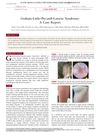 1 citations
,
January 2023 in “Journal of Drugs in Dermatology”
1 citations
,
January 2023 in “Journal of Drugs in Dermatology” Early detection of Graham-Little-Piccardi-Lasseur syndrome is key for better management.
August 1969 in “Archives of Dermatology” After calciphylaxis, rats showed incomplete skin and hair regeneration, resembling scar tissue with fewer hairs.
 15 citations
,
July 2004 in “Journal of morphology”
15 citations
,
July 2004 in “Journal of morphology” Monotreme hair structure and protein distribution are similar to other mammals, but their inner root sheath cornifies differently, suggesting a unique evolution from reptile skin.
249 citations
,
May 2003 in “Developmental Biology” Ectodysplasin-A1 is crucial for developing hair, teeth, and glands.
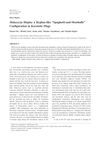 3 citations
,
January 2022 in “Medical Mycology Journal”
3 citations
,
January 2022 in “Medical Mycology Journal” Malassezia fungi in healthy noses can form a "spaghetti-and-meatballs" structure.
 4 citations
,
August 2023 in “Nature Communications”
4 citations
,
August 2023 in “Nature Communications” Mouse zigzag hair bends form due to a 3-day cycle of changes in hair progenitors and their environment.
December 2018 in “Bioscience Journal” Leporacarus gibbus mite was found in a domestic rabbit in Espírito Santo, Brazil, for the first time.
26 citations
,
August 2014 in “Veterinary Dermatology” Sphynx cats have abnormal hair follicles and keratinization affecting their skin.