17 citations
,
July 2019 in “Lupus Science & Medicine” Plucked hair follicles can help diagnose scalp lupus.
January 2026 in “JCEM Case Reports” Benign conditions can mimic serious ones in postmenopausal hyperandrogenism, requiring careful diagnosis.
 January 2023 in “International Journal of Pharmaceutical and Clinical Research”
 Follicular targeting could improve hirsutism treatment by focusing directly on hair follicles.
 April 2020 in “Arquivo Brasileiro De Medicina Veterinaria E Zootecnia”
 A horse in Brazil had seasonal hair loss possibly linked to light exposure and melatonin levels.
 13 citations
,
February 2004 in “Clinical and Experimental Ophthalmology”
13 citations
,
February 2004 in “Clinical and Experimental Ophthalmology” A baby boy with 13q deletion syndrome had eye cancer, a woman's vision improved after stopping a breast cancer drug, a man developed cataracts from using Propecia, and a rare skin disorder called Lipoid Proteinosis was discussed. Also, a tool called OCT is useful for diagnosing macular diseases.
37 citations
,
December 2001 in “Journal of Investigative Dermatology” Leptin may play a role in hair growth and hair follicle health.
95 citations
,
August 2013 in “Journal of Investigative Dermatology” HPT axis hormones boost mitochondrial function and growth in hair follicles, potentially aiding hair health.

Both trichoscopy and folliscopy accurately diagnose telogen effluvium, but trichoscopy is easier and faster.
 March 2024 in “IP Indian journal of clinical and experimental dermatology”
 Giant solitary trichoepithelioma is a rare, usually non-cancerous hair follicle tumor that can sometimes turn into skin cancer.
36 citations
,
January 1994 in “Cell and Tissue Research”  January 2020 in “Journal of Entomology and Zoology Studies”
 Canine hair follicle stem cells are located in the isthmus/bulge region of the hair follicle.
3 citations
,
May 2024 in “Skin Appendage Disorders” Trichoscopy helps diagnose and understand Discoid Lupus Erythematosus on the scalp by identifying specific patterns.
 8 citations
,
August 2014 in “Clinical and Experimental Dermatology”
8 citations
,
August 2014 in “Clinical and Experimental Dermatology” CTE and FPHL are different hair loss types with unique causes.
 January 2022 in “Consultant”
 The man's occipital hair loss was due to temporal triangular alopecia, not alopecia areata.
 135 citations
,
August 1994 in “Clinical Endocrinology”
135 citations
,
August 1994 in “Clinical Endocrinology” Most women with hirsutism or androgenic alopecia had polycystic ovaries, especially if they had irregular periods.
 1 citations
,
March 2024 in “Ophthalmic Plastic and Reconstructive Surgery”
1 citations
,
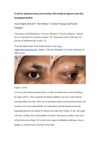
March 2024 in “Ophthalmic Plastic and Reconstructive Surgery” A pilomatrixoma in the eyebrow can cause hair loss and skin lightening.
489 citations
,
June 2005 in “The FASEB Journal” Human hair follicles can produce cortisol like the body's stress response system.
53 citations
,
September 2013 in “Journal of Investigative Dermatology” Hair follicle cells help protect against immune attacks by regulating T-cell activity.
 September 2023 in “Cutis”
 A baby girl has a hair disorder called monilethrix, causing fragile hair that may improve over time.
 February 2009 in “Journal of The American Academy of Dermatology”
 Yellow dots look different in various hair loss conditions and can help diagnose them.
2 citations
,
July 2016 in “Veterinary dermatology” Hyperaesthetic leucotrichia in horses causes painful, recurring skin lesions and hair color changes, especially in Arabian and American paint horses.
 98 citations
,
July 2014 in “Trends in Molecular Medicine”
98 citations
,
July 2014 in “Trends in Molecular Medicine” Hair follicles are hormone-sensitive and involved in growth and other functions, with potential for new treatments, but more research is needed.
32 citations
,
August 2016 in “Journal of the American Academy of Dermatology” Temporal triangular alopecia is a non-scarring hair loss in children, often linked to other health conditions.
7 citations
,
February 2019 in “Anais Brasileiros de Dermatologia” April 2019 in “Journal of the Endocrine Society” Bilateral ovarian hyperthecosis is a rare but treatable cause of increased facial hair in postmenopausal women.
 September 2017 in “Journal of Investigative Dermatology”
 Hair follicle cells change their DNA packaging during growth cycles and when grown in the lab.
 September 2017 in “Journal of Investigative Dermatology”
 The research concluded that hyaluronic acid affects the formation and growth of hair follicle-like structures in a lab setting.
May 2026 in “Annals of Internal Medicine Clinical Cases” Leydig cell tumors can cause hormone issues in postmenopausal women even if imaging looks normal.
October 2025 in “JMIR Dermatology” Exclamation-mark hairs and yellow dots indicate alopecia areata, while follicular ostia loss and white scarring indicate lichen planopilaris and discoid lupus erythematosus.