 2 citations
,
January 2011 in “Elsevier eBooks”
2 citations
,
January 2011 in “Elsevier eBooks” Early treatment of acne is crucial to prevent scarring and psychological effects.
 1 citations
,
April 2026 in “Aesthetic Plastic Surgery”
1 citations
,
April 2026 in “Aesthetic Plastic Surgery” Radiofrequency microneedling is safe and effective for improving various skin conditions.
 1 citations
,
June 2018 in “Advances in Cosmetic Surgery”
1 citations
,
June 2018 in “Advances in Cosmetic Surgery” PRP might help with hair growth and skin rejuvenation, but more research is needed to prove its effectiveness.
 1 citations
,
January 2006 in “Elsevier eBooks”
1 citations
,
January 2006 in “Elsevier eBooks” The conclusion is that different types of hair loss in dogs and cats can be cosmetic or serious, and affected animals should not be bred.
 May 2026 in “The EMBO Journal”
 Skin aging can be slowed by targeting cells, hormones, and the microbiome.
 March 2026 in “Aging Research”
 Personalized anti-aging strategies are important, considering genetics and lifestyle.

Elderly skin care needs personalized treatment, early intervention, and integrated psychiatric care.
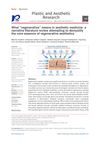 February 2026 in “Plastic and Aesthetic Research”
 Regenerative aesthetic medicine aims to restore tissue function, but needs more consistent evidence and standardized practices.
 February 2026 in “Clinical Cosmetic and Investigational Dermatology”
 Inverted Follicular Keratosis is rare but should be considered in scalp lesion diagnoses for all ages.
 November 2025 in “IECCMEXICO”
 Regenerative therapies are improving aesthetic surgery by enhancing tissue quality and healing.
 September 2025 in “Cureus”
 Personalized anti-aging treatments improve youthfulness and quality of life.
Early biotin treatment can reverse symptoms of congenital biotinidase deficiency.
 June 2025 in “Veterinární Medicína”
 Uveodermatological syndrome in dogs is hard to manage and can lead to blindness despite treatment.
 April 2025 in “International Journal of Research in Dermatology”
 Thyroid disorders are linked to skin issues and autoimmune skin diseases.
 March 2025 in “Asian Journal of Beauty and Cosmetology”
 Microspicule cosmetics improve skin whitening, pores, and barrier strength.
 March 2024 in “Intisari Sains Medis”
 PRP injections improve periorbital wrinkles and show promise as a treatment.
Plasma gel and PRP treatments improve skin and hair with minimal side effects.
 February 2023 in “Sibirskij onkologičeskij žurnal”
 Chemotherapy often causes hair loss in cancer patients, affecting their mental health, but scalp cooling can help prevent it.
 January 2022 in “Dermatology Review”
 Higher IL-31 levels are linked to worse itching in chronic kidney disease patients.
 November 2019 in “Harper's Textbook of Pediatric Dermatology”
 Understanding normal hair growth and loss in children is key to diagnosing and treating hair disorders.
 November 2019 in “Harper's Textbook of Pediatric Dermatology”
 The document is a detailed medical reference on skin and genetic disorders.

Using 5% minoxidil foam twice daily can help regrow hair, especially in younger men aged 20-30.

The document is a detailed guide on skin conditions and treatments for dermatologists.
Children with Parry Romberg Syndrome had successful facial fat-grafting surgeries after disease stabilization with no complications.
 January 2019 in “Springer eBooks”
 Platelet-rich plasma therapy may have benefits and is generally safe, but more research is needed to confirm its effectiveness and safety.
 October 2018 in “InTech eBooks”
 The most effective treatments for hair loss are minoxidil, finasteride, PRP, and hair transplants, with steroids and immunosuppressants for autoimmune types.
 January 2017 in “Springer eBooks”
 The document concludes that Cutaneous Lupus Erythematosus has different forms, is influenced by genetic and environmental factors, and can be treated with various medications, but more targeted therapies are needed.
 September 2016 in “Elsevier eBooks”
 Different types of hair loss in dogs and cats have various causes and treatments, with outcomes ranging from good to uncertain.
 January 2011 in “Elsevier eBooks”
 Alopecia in animals can be hereditary, congenital, or acquired, with treatments and outcomes varying widely.
 September 2009 in “Pediatric Dermatology”
 UVB is good for a skin condition in Asian kids, a lotion works for head lice, a drug helps with a skin blistering disorder, a foam reduces itchiness in skin inflammation, birthmarks can be more widespread, and criteria for a neurocutaneous disorder were agreed upon.