 January 2023 in “Journal of Ravishankar University”
 Hair loss can be caused by stress, aging, and harmful substances that create an imbalance in the body's natural processes.
January 2023 in “Minds at UW (University of Wisconsin)” More research is needed to understand how shampoo chemicals affect hair strength and structure.
 December 2022 in “Korean journal of medicinal crop science/Han-gug yagyong jagmul hag-hoeji”
 Natural extracts like ginseng, green tea, shiitake, and aloe vera may help prevent hair loss by protecting hair-related cells.
 June 2022 in “International Journal of Research -GRANTHAALAYAH”
 Antioxidants like catalase are important for preventing hair loss conditions like alopecia.
 April 2022 in “Health care of Tajikistan”
 Managing alopecia areata in children needs a personalized approach considering genetic, immune, and environmental factors.
February 2022 in “Institutional Repositories DataBase (IRDB)” Improper steroid use can cause skin issues like rosacea, which may improve after stopping the steroid and using benzoyl peroxide.
February 2022 in “DOAJ (DOAJ: Directory of Open Access Journals)” Retinoic acid reduces cell damage from oxidative stress.
 January 2022 in “Yonago Acta Medica”
 A woman got a skin condition from misusing a steroid cream, which improved after she stopped using it and started a new treatment.
November 2021 in “Anais brasileiros de dermatologia/Anais Brasileiros de Dermatologia” The woman has a rare, harmless skin condition specific to pregnancy that causes itchy bumps and will go away after she gives birth.
 May 2021 in “Open Access Macedonian Journal of Medical Sciences”
 People with premature hair graying have an imbalance between harmful and protective molecules in their body, hinting that antioxidants might help.
Pseudofolliculitis causes painful bumps and dark spots from shaving, especially in people with curly hair, and can be treated by changing shaving habits and using specific topical treatments.
 September 2019 in “Journal of Investigative Dermatology”
 Researchers developed a new method to deliver molecules to hair follicles to manage hair growth without damaging surrounding skin.
 January 2019 in “ARC journal of pharmaceutical sciences”
 Acne can be managed with various treatments and requires psychological support due to its emotional impact.
 October 2018 in “Springer eBooks”
 The document concludes that various topical medications are effective for skin conditions but often cause skin irritation as a side effect.
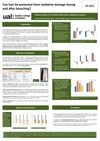 September 2018 in “University of the Arts London Research Online (University of the Arts London)”
 L-arginine, hydrolysed keratin, and cystine-silanol copolymer can help protect hair from damage during and after bleaching.
 April 2018 in “Journal of Investigative Dermatology”
 Mint water extract boosts protective enzymes in skin cells.
 April 2018 in “The journal of investigative dermatology/Journal of investigative dermatology”
 Ginseng and Albizia extracts may help prevent age-related hair thinning.
April 2017 in “Journal of Investigative Dermatology” Certain compounds can protect hair cells from aging and promote growth.
 March 2017 in “InTech eBooks”
 Acne vulgaris is a common skin condition that can cause low self-esteem and depression, and early treatment is important to prevent scarring.
 January 2017 in “Journal of Dermatology and Venereology”
 Naringenin and Hesperetin may help hair grow and protect hair cells from damage.
September 2016 in “Springer eBooks” Gray hair is caused by oxidative stress damaging hair cells.
 January 2016 in “Springer eBooks”
 Hyperandrogenism, often causing excessive hair growth and acne, can be treated with methods like weight reduction, hair removal, various medications, and in the case of acne, topical treatments.
January 2015 in “프로그램북(구 초록집)” Epiduo® is an effective first-line acne treatment that reduces inflammation and combats antibiotic resistance.
 September 2014 in “Springer eBooks”
 Aging causes hair to gray and thin, with the timing of graying varying by race, and factors like oxidative stress and genetics can lead to hair loss.
June 2009 in “Pigment Cell & Melanoma Research” Preventing hair graying may be possible by managing oxidative stress and activating melanocyte stem cells.
 April 2008 in “Medical & surgical dermatology”
 Certain hairstyles can cause scalp diseases, smoking is linked to hair loss, 5% minoxidil foam is effective for hair loss treatment, and various factors influence wound healing and hair growth.
 October 2007 in “Journal of Investigative Dermatology”
 The meeting highlighted the genetic basis of female pattern hair loss and various skin health insights.
May 2005 in “Molecular Carcinogenesis” mrp/plf-mRNA can indicate tumor-promoting effects in skin.
January 2005 in “The Chinese Journal of Dermatovenereology” High fluoride increases damage in hair follicles, but low selenium can reduce this damage at lower fluoride levels.
 June 2002 in “International Journal of Cosmetic Surgery and Aesthetic Dermatology”
 The document recommends several books on cosmetic surgery and complementary medicine, highlighting their detailed methods, multidisciplinary approaches, and valuable treatment insights.