 October 2025 in “Frontiers in Medicine”
 The minoxidil-finasteride combination is more effective for hair growth than minoxidil alone.

Combining nanotechnology with herbal medicine may improve PCOS treatment.
 June 2025 in “Samarra Journal of Pure and Applied Science”
 A new method accurately measures minoxidil in tablets.
 June 2025 in “Asia-Pacific Journal of Molecular Biology and Biotechnology”
 Papain from papaya may help treat cardiovascular diseases by breaking down fibrin.
 May 2025 in “Journal of Experimental Pharmacology”
 Allium ascalonicum L. extract may help improve insulin resistance.
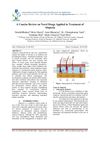
New therapies like JAK inhibitors, PRP, and stem cell treatments show promise for better alopecia management.
 January 2025 in “Directory of Open access Books (OAPEN Foundation)”
 PCOS affects women's hormones and metabolism, but can be managed with lifestyle changes and treatments.
 January 2025 in “Hospital Pharmacology - International Multidisciplinary Journal”
 Medications can cause eye problems, so regular eye check-ups are important.
 January 2025 in “MEDS Public Health and Preventive Medicine”
 Spermidine supplements can help extend the hair growth phase and may be useful for treating hair loss.

The new minoxidil gel may improve hair loss treatment by staying on the scalp longer and penetrating better.
Hit15 shows promise as a COVID-19 treatment by reducing virus infection and inflammation.
 October 2024 in “International Journal of Pharmaceutical Sciences Review and Research”
 A 5% minoxidil spray could effectively treat male baldness with fewer side effects and better patient comfort.
 September 2024 in “International Journal of Pharmaceutical Quality Assurance”
 Nanoemulgels improve skin disorder treatment by delivering drugs more effectively and reducing application frequency.
 July 2024 in “ADMET & DMPK”
 Surface-modified nanostructured lipid carriers can improve hair growth treatments.
 June 2024 in “Dermatology and Therapy”
 Baricitinib improves quality of life and reduces anxiety and depression in severe alopecia areata patients with hair regrowth.

The new gel for hair loss is safe, effective, and reduces side effects.
 May 2024 in “EAS Journal of Pharmacy and Pharmacology”
 Pomegranate peel compounds may help treat hair loss.
 April 2024 in “Frontiers in pharmacology”
 Cynoglossum amabile has medicinal potential but poses safety concerns due to liver toxicity.

Ayurvedic herbs may reduce side effects and improve effectiveness of cancer treatments.
 March 2024 in “Research Square”
 The model helps understand alopecia areata and suggests ways to improve treatment by targeting immune issues.
 March 2024 in “Bioimpacts”
 400 nm particles penetrate hair follicles best, but mouse models aren't fully reliable for human studies.
 February 2024 in “International Journal For Multidisciplinary Research”
 Nanostructured lipid carriers are effective for treating hyperpigmentation in women aged 30-40.
 January 2024 in “Research Square”
 The model helps understand alopecia areata and suggests treatment strategies.
 January 2024 in “RSC pharmaceutics”
 Removing the outer skin layer increases drug absorption and offers non-invasive treatment options, with some methods allowing for quick skin recovery.
 January 2024 in “Applied Mathematics and Nonlinear Sciences”
 The model helps understand alopecia areata and suggests better treatment strategies.
 January 2024 in “International Journal of Dermatology Venereology and Leprosy Sciences”
 Tofacitinib may be safe and effective for treating certain skin conditions in children.
 November 2023 in “Frontiers in pharmacology”
 Drug repositioning offers hope for new, affordable treatments for a genetic skin disorder called ARCI.
 June 2023 in “Trichology and cosmetology:”
 Ageratum Conyzoides, when taken orally, can effectively reduce hair loss and improve hair growth.
 December 2022 in “Sudan Journal of Medical Sciences”
 Vaccination is the most effective way to reduce COVID-19 transmission.
 October 2022 in “Journal of experimental and clinical medicine”
 Repurposing existing drugs for COVID-19 shows promise but requires more research to confirm effectiveness.