 1 citations
,
May 2016 in “Dermatologic Surgery”
1 citations
,
May 2016 in “Dermatologic Surgery” The document concludes that using a phototrichogram with a protractor and tapeline is a reliable and noninvasive way to measure hair loss.
 July 2021 in “Australasian Journal of Dermatology”
 The trichoscopy-assisted hair pull test is useful for diagnosing different types of hair loss.
September 2015 in “Photodiagnosis and Photodynamic Therapy” 3 citations
,
December 2024 in “Pediatric Dermatology” Lichen planopilaris can cause patchy hair loss in children and may respond to certain treatments.
14 citations
,
November 2022 in “Archives of Dermatological Research” The green-light LED microneedle patch effectively promotes hair growth.
February 2016 in “Seoul National University Open Repository (Seoul National University)” Photodynamic therapy can temporarily remove nonpigmented hair but is less effective than lasers for black hair.
 1 citations
,
April 2017 in “Journal of Investigative Dermatology”
1 citations
,
April 2017 in “Journal of Investigative Dermatology” A new one-step test can quickly identify skin cancer during surgery.
 3 citations
,
October 2019 in “Pharmaceutics”
3 citations
,
October 2019 in “Pharmaceutics” New technique implants pigment in scalp with less pain and damage.
1 citations
,
June 2023 in “Cosmoderma” Trichoscopy is better than the hair pull test for tracking alopecia areata.
 April 2023 in “Journal of Investigative Dermatology”
 The document's conclusion cannot be provided because the content is not accessible.
13 citations
,
July 2016 in “Indian Journal of Dermatology” DPR can show different hair characteristics, as seen in two brothers with normal hair.
9 citations
,
January 2021 in “Mediators of Inflammation” 15d‐PGJ2 cream protects against UVB-induced skin damage in mice.
March 2023 in “ACS Applied Materials & Interfaces” A new microneedle patch can help regrow hair over a long time.
 November 2025 in “International Journal of Advanced Research”
 Platelet-rich plasma therapy effectively treated laser-induced skin lightening.
 April 2017 in “Journal of Investigative Dermatology”
 Deep phenotyping helps distinguish between xeroderma pigmentosum and trichothiodystrophy, aiding in diagnosis and treatment.
January 2013 in “Touro Scholar (Touro College)” DPCP works best for alopecia areata, but more research is needed for better treatments.
14 citations
,
August 2020 in “Journal of cosmetic dermatology” Experts recommend using PN-HPT™ for skin rejuvenation in various body areas but have less agreement on initial facial treatment cycles.
97 citations
,
January 1999 in “International Journal of Dermatology” Pityriasis rubra pilaris is a rare skin disorder with reddish-orange patches and thickened skin, needing better treatment understanding.
January 1985 in “Clinical research” Topical alpha-terthienyl with UVA may safely treat psoriasis without cancer risk.
 5 citations
,
January 2014 in “Asian Journal of Chemistry”
5 citations
,
January 2014 in “Asian Journal of Chemistry” Researchers developed a quick and reliable method to test for betamethasone dipropionate and calcipotriol in ointments and drugs.
31 citations
,
June 2022 in “Scientific Reports” A new imaging method accurately measures burn severity by assessing collagen damage.
33 citations
,
December 2005 in “British Journal of Clinical Pharmacology” The new testosterone patch works as well as the gel.
April 2005 in “Journal of Investigative Dermatology” Vitamin D helps protect skin, PSORS1 gene's risk interval for psoriasis is expanded, hair follicles can be generated from mouse cells, and interferon-γ may cause pigmented skin lesions.
 34 citations
,
August 2002 in “British Journal of Dermatology”
34 citations
,
August 2002 in “British Journal of Dermatology” ALA-PDT is effective and safe for chronic X-ray dermatitis, providing complete or partial remission.
 27 citations
,
January 2005 in “American Journal of Clinical Dermatology”
27 citations
,
January 2005 in “American Journal of Clinical Dermatology” Azelaic acid and anthralin are similarly effective for treating patchy hair loss.
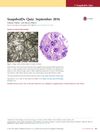 August 2016 in “Journal of Investigative Dermatology”
 Scalp psoriasis features reversible hair loss and specific immune activation, with no significant hair follicle damage.
 1 citations
,
December 2014 in “Scanning”
1 citations
,
December 2014 in “Scanning” Multiphoton microscopy effectively images rabbit skin structures in detail without staining and shows differences from human skin.
9 citations
,
July 2012 in “Dermatitis” Hair dye with para-phenylenediamine can cause skin depigmentation.
1 citations
,
August 2024 in “Journal of Cosmetic and Laser Therapy” Intralesional vitamin D3 is an effective and safe treatment for patchy alopecia areata with fewer side effects.
 10 citations
,
March 2014 in “International Journal of Dermatology”
10 citations
,
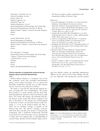
March 2014 in “International Journal of Dermatology” A hand-held dermatoscope helped differentiate between pressure-induced alopecia and alopecia areata in a young patient, who then experienced hair regrowth within a month.