 14 citations
,
January 2020 in “PloS one”
14 citations
,
January 2020 in “PloS one” Timing of light therapy affects horse coat growth, with photoperiod being crucial.
 9 citations
,
August 2017 in “Photochemistry and Photobiology”
9 citations
,
August 2017 in “Photochemistry and Photobiology” Red light at 627 nm can safely trigger IL-4 release in skin cells, potentially helping treat inflammatory skin conditions.
 1 citations
,
April 2018 in “Lasers in Surgery and Medicine”
1 citations
,
April 2018 in “Lasers in Surgery and Medicine” New treatments and technologies in laser medicine show promise for improving skin conditions, fat reduction, cancer treatment, wound healing, and hair restoration.
 May 2017 in “Journal of The American Academy of Dermatology”
 LED light helps human hair root cells grow and move by activating certain cell pathways.
25 citations
,
May 2016 in “Molecular biology of the cell” A protein in plants needs to bind two lipids to help with root hair growth, and this process is similar across different plant species.
 160 citations
,
December 2016 in “Journal of biophotonics”
160 citations
,
December 2016 in “Journal of biophotonics” Low-level laser therapy, now called photobiomodulation, is recognized for its broad medical applications and scientific backing.
 3 citations
,
November 2022 in “Frontiers in molecular biosciences”
3 citations
,
November 2022 in “Frontiers in molecular biosciences” Plasmalogens activate a channel in cells that may stimulate hair growth.
 1 citations
,
July 2023 in “Journal of Biophotonics”
1 citations
,
July 2023 in “Journal of Biophotonics” Red light at 8 mW/cm2 most effectively promotes hair cell growth and affects key growth pathways, especially in cells treated with a hair loss-related hormone.
July 2025 in “Journal of Investigative Dermatology” Monocyte-derived dendritic cells play a key role in UVB-induced skin sensitivity and inflammation.
 May 2008 in “The International Conference on Mathematics and Engineering Physics”
 Nanoparticles can increase light sensitivity in oil-producing skin glands.
 December 2020 in “Nippon Laser Igakkaishi”
 Photobiomodulation therapy is beneficial in plastic surgery and dermatology.
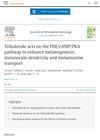 December 2023 in “Journal of ethnopharmacology”
 Tribuloside can increase skin pigmentation by enhancing melanin production and distribution.
 March 2026 in “BioScience Trends”
 UV radiation causes skin aging by damaging cells and triggering harmful processes.
April 2024 in “International journal of molecular sciences” Light-based treatment, Photobiomodulation, shows promise for non-invasive skin therapy with few side effects.
Light exposure is crucial for health, helping prevent and treat illnesses.
 12 citations
,
September 2007 in “Wound repair and regeneration”
12 citations
,
September 2007 in “Wound repair and regeneration” Smad2/3-dependent TGF-β signaling increases during wound healing.
3 citations
,
September 2023 in “Journal of Photochemistry and Photobiology A Chemistry” 19 citations
,
September 2023 in “Journal of Biomedical Science” Photobiomodulation may help heal diabetic wounds, but more research is needed.
November 2025 in “Photochemistry and Photobiology” Standardizing light therapy methods could improve spinal cord injury treatment.
11 citations
,
April 2022 in “International Journal of Molecular Sciences” Understanding the Wnt/β-catenin pathway and photobiomodulation could improve diabetic wound healing.
1 citations
,
January 1981 in “Elsevier eBooks” Melatonin stops melanin production after tyrosinase action, with cyclic GMP mimicking this effect.
 April 2026 in “Biosensors”
 Red light increases hair follicles and ATP in mouse skin.
January 2016 in “프로그램북(구 초록집)” LED light promotes hair growth by stimulating cell proliferation and reducing cell death.
13 citations
,
December 2021 in “Wound repair and regeneration” Photobiomodulation helps hair regrow in injured skin by aiding cell movement and secretion.
 16 citations
,
August 2015 in “Journal of Experimental & Clinical Cancer Research”
16 citations
,
August 2015 in “Journal of Experimental & Clinical Cancer Research” The photolyase-based device significantly changed the size and heat of potential skin cancer areas in patients.
 6 citations
,
September 2020 in “Advanced Biology”
6 citations
,
September 2020 in “Advanced Biology” Blue-light activation of TrkA improves hair-follicle stem cells' ability to become neurons and glial cells.
4 citations
,
April 2014 in “Lasers in Surgery and Medicine” TRASER effectively targets blood vessels and hair follicles for potential use in vascular and hair removal treatments.
 1 citations
,
September 1984 in “Journal of Biological Education”
1 citations
,
September 1984 in “Journal of Biological Education” Plants change their growth in response to shade based on light signals detected by phytochrome.
 520 citations
,
January 2017 in “AIMS biophysics”
520 citations
,
January 2017 in “AIMS biophysics” Photobiomodulation therapy using red and near-infrared light can reduce inflammation and aid in healing various conditions.
1 citations
,
June 2022 in “Photobiomodulation, photomedicine, and laser surgery”