 1 citations
,
August 2024 in “Polymers”
1 citations
,
August 2024 in “Polymers” The P25H5-O microneedles effectively deliver substances through hair follicles and are safe for skin cells.
 December 2012 in “Journal of undergraduate research in Alberta”
 Elongating cilia boosts SKP stem cell renewal, especially with PDGF.
 28 citations
,
February 2012 in “PLoS ONE”
28 citations
,
February 2012 in “PLoS ONE” A PKP1 gene mutation causes skin fragility and hair loss in Chesapeake Bay retriever puppies.
5 citations
,
May 2023 in “Microbial Cell Factories” A stable, active version of a growth factor was made in bacteria, showing promise for medical use.
June 2025 in “Food Science & Nutrition” Peimine helps heal skin wounds by activating a specific cell signaling pathway.
262 citations
,
May 2020 in “Advanced Functional Materials” The hydrogel promotes faster healing of infected wounds by enhancing tissue regeneration and preventing infection.
30 citations
,
August 2008 in “The journal of investigative dermatology/Journal of investigative dermatology” TGase 3 helps build hair structure by forming strong bonds between proteins.
 6 citations
,
October 2014 in “Experimental Dermatology”
6 citations
,
October 2014 in “Experimental Dermatology” Prostaglandins and the enzyme AKR1C3 could play a role in skin cancer and hair loss, and further research is needed to understand these mechanisms.
January 2024 in “Doria (University of Helsinki)” The study investigates the relationship between keratin intermediate filaments and glucose transporter 2 (GLUT2) in mouse pancreatic β-cells, focusing on how keratins affect GLUT2's membrane localization. Using Murine Insulinoma 6 (Min6) cells, researchers transfected cells with wild type and mutated keratin plasmids to observe changes in GLUT2 localization. Results showed that cells with intact keratins had more membranous GLUT2, while those with disrupted keratin filaments had more cytoplasmic GLUT2. However, in K18 knockout mice, the absence of K18 did not significantly impact GLUT2 localization. The study provides new insights into keratin-GLUT2 interactions and developed a STED imaging protocol for future research.
 June 2020 in “Nihon Ika Daigaku Igakkai Zasshi”
 aPKCλ is essential for hair follicle stem cell maintenance and wound healing.
2 citations
,
November 2006 in “Pump Industry Analyst” Pilomatricomas don't follow the usual hair follicle cell differentiation process.
87 citations
,
September 2006 in “Clinical Cancer Research” Protein Kinase C shows promise for cancer treatment, but more research is needed to develop effective inhibitors.
 5 citations
,
October 2015 in “The American journal of pathology”
5 citations
,
October 2015 in “The American journal of pathology” Mice with a mutated Dsg3 gene showed severe symptoms but not the typical blistering of pemphigus vulgaris.
2 citations
,
August 2022 in “Animals” Different versions of the KRTAP6-2 gene in goats can lead to thinner cashmere fibers.
17 citations
,
October 2023 in “Molecules” Plant-derived PDRN from ginseng roots effectively heals skin and improves its barrier.
 November 2023 in “Animal Bioscience”
 miR-133a-3p and miR-145-5p help goat hair follicle stem cells differentiate by controlling NANOG and SOX9.
December 2019 in “Reproduction Fertility and Development” A new method helps grow skin stem cells better, which could improve skin grafts for burn victims.
 September 2020 in “Acta Scientific Cancer Biology”
 Personalized treatment based on detailed tumor analysis successfully managed and reduced the patient's aggressive hair follicle cancer.
 26 citations
,
July 2016 in “The journal of investigative dermatology/Journal of investigative dermatology”
26 citations
,
July 2016 in “The journal of investigative dermatology/Journal of investigative dermatology” The protein Par3 is crucial for healthy skin, affecting the skin barrier, cell differentiation, and stem cell maintenance.
32 citations
,
November 1998 in “Journal of Biological Chemistry” Mouse and human keratin 16 can both form filaments, with differences likely due to the tail domain, not the helical domain.
 April 2026 in “Biomolecules”
 Curcumin-based polyurethanes with more PEG improve curcumin release and maintain strong antioxidant and antibacterial properties.

PmtHEE is a better model for studying pigmented skin because it includes melanocytes and shows improved cell differentiation.

Newly designed proteins can effectively degrade specific proteins in cells, offering a promising alternative for targeted protein degradation.
14 citations
,
January 2005 in “Cell Stress and Chaperones” 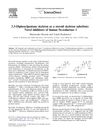 13 citations
,
August 2007 in “Bioorganic & medicinal chemistry letters”
13 citations
,
August 2007 in “Bioorganic & medicinal chemistry letters” A new compound effectively inhibits human 5α-reductase 1.
July 2025 in “Journal of Investigative Dermatology” 15 citations
,
June 2011 in “Journal of Investigative Dermatology” Overexpressing 14-3-3σ in mice skin reduces cell growth and hair density.
January 2026 in “Microsystems & Nanoengineering” New technologies replicate human skin for testing without animals.
5 citations
,
March 2017 in “Gene” CAP1 decreases the expression of a hair-related protein in young Tan sheep's skin.
6 citations
,
July 2020 in “The Kaohsiung Journal of Medical Sciences” Inhibiting the PI3K/Akt pathway may help prevent radiation-induced liver injury.