34 citations
,
July 2013 in “Clinical Cosmetic and Investigational Dermatology” Erosive pustular dermatosis is a rare skin disease that's hard to treat and affects the scalp or legs.
March 2021 in “CRC Press eBooks” Microneedling helps improve skin and hair by creating tiny, controlled skin injuries.
20 citations
,
January 1997 in “Dermatology” The patient with EEC syndrome had scarring alopecia due to deep folliculitis, possibly linked to abnormal hair structure.
 22 citations
,
August 2010 in “Annals of Plastic Surgery”
22 citations
,
August 2010 in “Annals of Plastic Surgery” The study concluded that reconstructive surgery for burn alopecia should be tailored to the scar's size and quality, with different methods recommended for different cases.
 1 citations
,
March 2023 in “Aggregate”
1 citations
,
March 2023 in “Aggregate” A new hydrogel with micronized amnion helps achieve better, scar-free skin healing.
 29 citations
,
September 2012 in “Birth Defects Research”
29 citations
,
September 2012 in “Birth Defects Research” Wounds heal without scarring in early development but later result in scars, and studying Wnt signaling could help control scarring.
 September 2019 in “Romanian Journal of Pediatrics”
 Fetal skin can heal without scars, offering insights for better wound treatments.
 September 2025 in “American Journal of Dermatopathology”
 Lupus panniculitis can cause patchy hair loss and was successfully treated with medication.

Microneedling may improve neck scars, but more research is needed.
January 2025 in “Tanzania journal of health research/Tanzania Journal of Health Research” Autologous mini-punch grafting can effectively repigment stable vitiligo, but has some risks and limitations.
 7 citations
,
August 2015 in “Journal der Deutschen Dermatologischen Gesellschaft”
7 citations
,
August 2015 in “Journal der Deutschen Dermatologischen Gesellschaft” Scalp-to-scalp skin grafts quickly heal and hide well under regrown hair, making them good for repairing large scalp defects.
May 2009 in “Faculty Opinions – Post-Publication Peer Review of the Biomedical Literature” PPARgamma is crucial for healthy hair follicles, and its loss causes scarring alopecia.

Reprogramming adult fibroblasts may enable scar-free healing.
 10 citations
,
September 2024 in “Journal of Nanobiotechnology”
10 citations
,
September 2024 in “Journal of Nanobiotechnology” The microneedle patch helps heal infected wounds quickly and without scars.
 30 citations
,
May 2014 in “American Journal of Clinical Dermatology”
30 citations
,
May 2014 in “American Journal of Clinical Dermatology” The conclusion is that better understanding and more research are needed to effectively manage follicular and scarring disorders in skin of color, with an emphasis on patient education and cultural awareness.
 6 citations
,
March 2008 in “Dermatologic Surgery”
6 citations
,
March 2008 in “Dermatologic Surgery” Transplanting chest hair into scars can effectively treat wide donor scars from hair restoration surgery.
June 2026 in “Journal of Cutaneous Pathology” Polarized light microscopy is better at distinguishing scarring from non-scarring alopecia than diffractive microscopy.
 September 2025 in “Journal of Cutaneous and Aesthetic Surgery”
 Scalp micropigmentation improves appearance and satisfaction in scarring alopecia but may require repeat sessions.
Pseudopelade is likely an independent disease due to its distinct features.
 2 citations
,
June 2012 in “Journal of Cosmetic Dermatology”
2 citations
,
June 2012 in “Journal of Cosmetic Dermatology” Hair transplant using beard hair made acne scars on cheeks less visible with minimal scarring in the donor area.
 June 2024 in “IP Indian journal of clinical and experimental dermatology”
 PRP therapy effectively treats alopecia areata and atrophic acne scars.
 1 citations
,
July 1973 in “British Journal of Dermatology”
1 citations
,
July 1973 in “British Journal of Dermatology” The document concludes that secondary syphilis cases are increasing and often misdiagnosed, pityriasis rubra pilaris can be distinguished from psoriasis by skin cell features, and different skin layers produce specific components during skin repair.
 January 2023 in “The Egyptian Journal of Hospital Medicine”
 Platelet-Rich Plasma (PRP) is a promising new treatment for skin strain scars, with no risk of dark spots or infection.
 2 citations
,
January 2023 in “Annals of Dermatology”
2 citations
,
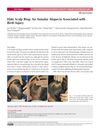
January 2023 in “Annals of Dermatology” A hairless patch on a boy's scalp from birth injury improved with minoxidil treatment.
72 citations
,
November 2000 in “Archives of Dermatology” Excision with primary closure is an excellent treatment for extensive acne keloidalis nuchae.
 19 citations
,
March 2013 in “Journal of Cutaneous Pathology”
19 citations
,
March 2013 in “Journal of Cutaneous Pathology” The study found unique skin changes in a rare type of alopecia linked to a skin condition called linear morphea.
13 citations
,
June 2011 in “PubMed” The patient improved significantly after treatment, with only one small scar remaining.
 54 citations
,
January 2009 in “British Journal of Dermatology”
54 citations
,
January 2009 in “British Journal of Dermatology” Scarring alopecia affects different hair follicle stem cells than nonscarring alopecia, and the infundibular region could be a new treatment target.
 44 citations
,
November 2011 in “The Journal of Dermatology”
44 citations
,
November 2011 in “The Journal of Dermatology” New understanding of the causes of primary cicatricial alopecia has led to better diagnosis and potential new treatments.
51 citations
,
September 2013 in “JEADV. Journal of the European Academy of Dermatology and Venereology/Journal of the European Academy of Dermatology and Venereology” FRMS is a safe and effective treatment for acne scars in Asians with minimal side effects.