 31 citations
,
March 2013 in “Gene”
31 citations
,
March 2013 in “Gene” Signaling pathways are crucial for hair growth in goats.
 November 2025 in “Repositorio Comunidad Politecnico Grancolombiano”
 Milagros enterprise Group S.A.S. plans to expand globally by exporting its Professional Intensive Repair Mask to Mexico, France, and the U.S.
 January 2024 in “Journal of Pharmacognosy and Phytochemistry”
 Catharanthus roseus and Schwenckia americana extracts are generally safe but may cause kidney and liver tissue damage.

Placental cell medium boosts blood vessel growth in lab tests.
 20 citations
,
September 2019 in “South African Journal of Botany”
20 citations
,
September 2019 in “South African Journal of Botany” Teucrium polium extracts are non-toxic and effectively speed up wound healing.
July 2026 in “Experimental Dermatology” Ashwagandha-derived nanovesicles may help promote hair growth.
 July 2024 in “Journal of Investigative Dermatology”
 Ashwagandha nanoparticles help hair grow by increasing a growth factor.
 2 citations
,
November 2022 in “Frontiers in Pharmacology”
2 citations
,
November 2022 in “Frontiers in Pharmacology” Local healers in Addis Ababa use 81 medicinal plants, mainly from the Asteraceae family, to treat skin and general diseases, with Echinops kebericho being an endangered plant important in their practices.
 7 citations
,
January 2017 in “Clinical and medical investigations”
7 citations
,
January 2017 in “Clinical and medical investigations” Suriname uses many plants for beauty, with potential for a beauty industry, but more evidence is needed for product effectiveness.
1 citations
,
July 2025 in “Cosmetics” Plant extracts could be effective natural skincare ingredients.
 August 2025 in “Pharmaceuticals”
 Hemp seed-derived exosomes help restore feather growth in chickens affected by DHT.
 August 2024 in “Applied Sciences”
 Plant extracts may help prevent or reverse hair graying.

Ashwagandha-derived nanoparticles can promote human hair growth.

A natural hair dye from cuttlefish ink and chitosan effectively colors hair black without harmful chemicals.
 2 citations
,
March 2019 in “Plastic and Reconstructive Surgery”
2 citations
,
March 2019 in “Plastic and Reconstructive Surgery” The letter suggests that a modified fat processing technique may increase regenerative cells but calls for more trials to confirm its effectiveness for skin and hair treatments.
 October 2025 in “Indian Journal of Plastic Surgery”
 Stem cells show promise in anti-aging and reconstructive surgery, but more research is needed.
 193 citations
,
February 2015 in “Nature Communications”
193 citations
,
February 2015 in “Nature Communications” Fungi-produced compounds can change plant root growth.
 75 citations
,
January 2014 in “Archiv Der Pharmazie”
75 citations
,
January 2014 in “Archiv Der Pharmazie” Jasmonic acid and its derivatives play important roles in plant health and have potential uses in medicine and agriculture.
 September 2025 in “Frontiers in Cell and Developmental Biology”
 TCM-derived nanovesicles show promise for wound healing and skin regeneration but need more research.
 November 2025 in “Journal of Ayurveda and Integrated Medical Sciences”
 Herbal hair dyes are safe, effective, and beneficial for hair health.
48 citations
,
May 2021 in “Molecules” Plant extracts from dry flowers can be used as safe, effective dyes in cosmetics, offering skin protection and anti-aging benefits.
17 citations
,
September 2024 in “Cosmetics” Cold-pressed plant oils have valuable natural antioxidants and skin care benefits.
 7 citations
,
January 2017 in “Biological & Pharmaceutical Bulletin”
7 citations
,
January 2017 in “Biological & Pharmaceutical Bulletin” Certain compounds from Panax ginseng can block proteins that affect hair growth, potentially helping treat hair loss.
5 citations
,
January 2024 in “Fermentation” The new placenta-derived liquid improves skin moisture better than traditional extracts.
 1 citations
,
September 2024 in “Jurnal Ilmiah JKA (Jurnal Kesehatan Aeromedika)”
1 citations
,
September 2024 in “Jurnal Ilmiah JKA (Jurnal Kesehatan Aeromedika)” Red galangal rhizome extract is effective against acne-causing bacteria.
1 citations
,
January 2017 in “Deleted Journal” Orthosiphon stamineus extract can significantly boost hair growth and cell proliferation in hair loss patients.
Bioactive compounds in neurocosmetics can improve skin health and emotional well-being.
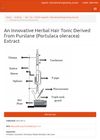
Portulaca-based hair tonics are promising eco-friendly and effective cosmetic alternatives.
 January 2025 in “International Journal of Molecular Biology and Biochemistry”
 The Shindai method effectively extracts keratin from human hair, with potential uses in bioplastics and biofertilizers.

The herbal hair dye using Platycladus orientalis effectively prevents hair loss, covers gray, and is gentle and safe for all ages.