January 2026 in “Jurnal Akta Trimedika” Microneedling with PRP effectively improved hair growth and thickness in androgenic alopecia without side effects.
April 2025 in “Russian Pediatric Journal” PRP therapy shows promise for healing in kids but needs more research.
 April 2022 in “The Egyptian Journal of Hospital Medicine”
 Platelet Rich Fibrin improves healing and reduces acne scars by slowly releasing growth factors.
4 citations
,
October 2019 in “Acta Médica Costarricense” More research is needed to standardize and prove the effectiveness of platelet-rich plasma treatments.
May 2026 in “Ibero-American Journal of Health Science Research” Regenerative therapies like PRP and stem cells are promising for skin rejuvenation and repair.
 5 citations
,
January 2021 in “IEEE Access”
5 citations
,
January 2021 in “IEEE Access” Electric pulses can effectively activate platelets and release growth factors, offering a better alternative to traditional methods.
September 2020 in “Revista Digital de Postgrado” Platelet-rich plasma helps heal skin by using growth factors.
PRP can help regrow hair and improve hair transplant results.
 April 2025 in “Journal of Skin and Stem Cell”
 PDRN from trout sperm helps skin and hair regeneration but is costly and complex to produce.
September 2024 in “Revista Foco” Platelet-Rich Plasma (PRP) is a safe and effective tool for facial rejuvenation and scar treatment.
October 2020 in “Вестник СурГУ. Медицина” PRP can help regrow hair and improve hair density in people with androgenetic alopecia.
 August 2025 in “Journal of Cosmetic Dermatology”
 Interest in new and personalized treatments for hair loss is growing.
New treatments for hair loss, including a compound called "ALRV5XR", platelet-rich plasma, and Adult Stem Cell-based therapy, are showing promise, but more trials are needed for confirmation.
 February 2024 in “Journal of dermatology”
 CGF therapy may help hair regrowth and improve scars in DLE patients.
 40 citations
,
March 2018 in “Aesthetic Surgery Journal”
40 citations
,
March 2018 in “Aesthetic Surgery Journal” New treatment combining PRP and SVF increases hair density in 6-12 weeks for androgenetic alopecia patients.
Combining microneedling with platelet-rich plasma enhances skin repair and collagen production but may not offer significant extra benefits.
 107 citations
,
August 2014 in “Dermatologic Surgery”
107 citations
,
August 2014 in “Dermatologic Surgery” PRP injections improve hair thickness for baldness.
 76 citations
,
December 2018 in “Aesthetic Plastic Surgery”
76 citations
,
December 2018 in “Aesthetic Plastic Surgery” Platelet-rich plasma may help in skin and hair treatments, and with muscle and joint healing, but more research is needed to fully understand its benefits and limitations.
Using microneedling with PRP improves skin and hair conditions more than microneedling alone.
 119 citations
,
January 2014 in “Indian Journal of Dermatology, Venereology and Leprology”
119 citations
,
January 2014 in “Indian Journal of Dermatology, Venereology and Leprology” Platelet-rich plasma might help with hair growth and skin conditions, but more research is needed to prove its effectiveness and safety.
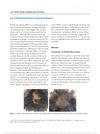 28 citations
,
August 2018 in “Dermatologic Surgery”
28 citations
,
August 2018 in “Dermatologic Surgery” Platelet-Rich Plasma (PRP) may help improve hair density in primary cicatricial alopecias (PCAs) patients, but more trials are needed to confirm its benefits.
 27 citations
,
July 2017 in “Facial Plastic Surgery”
27 citations
,
July 2017 in “Facial Plastic Surgery” Platelet-Rich Plasma (PRP) shows promise for hair growth and skin improvement in aesthetic surgery.
 6 citations
,
August 2014 in “Dermatologic Surgery”
6 citations
,
August 2014 in “Dermatologic Surgery” PRP injections may improve hair loss condition, but more research needed.
 January 2023 in “Journal of orthopedics & bone disorders”
 Platelet-rich plasma may not be very effective for bone healing and hair growth due to a substance it contains that blocks these processes.
 September 2017 in “Springer eBooks”
 PRP injection therapy shows promise for treating hair loss, increasing hair count and thickness with minimal side effects.
 June 2020 in “Journal of Evolution of medical and Dental Sciences”
 Platelet Rich Plasma (PRP) treatment effectively reduces hair fall and increases hair growth in patients with Androgenetic Alopecia (AGA), but it may cause pain.
 5 citations
,
December 2018 in “Journal of Cosmetic Dermatology”
5 citations
,
December 2018 in “Journal of Cosmetic Dermatology” PRP treatment improves hair count, density, and reduces hair loss in AGA patients.
 5 citations
,
December 2020 in “Wound Repair and Regeneration”
5 citations
,
December 2020 in “Wound Repair and Regeneration” PRP's effectiveness in wound healing is unclear due to varying compositions and methods.
 15 citations
,
August 2022 in “Daehan saengsik uihak hoeji/Clinical and experimental reproductive medicine”
15 citations
,
August 2022 in “Daehan saengsik uihak hoeji/Clinical and experimental reproductive medicine” Platelet-rich plasma may improve embryo genetics in IVF.
 January 2026 in “Forum Dermatologicum”
 Platelet-rich plasma helps improve skin and hair conditions.