 136 citations
,
June 2006 in “Journal of Dermatological Science”
136 citations
,
June 2006 in “Journal of Dermatological Science” PDGF isoforms can promote and sustain hair growth.
 February 2022 in “Research Square (Research Square)”
 A protein made in a plant stopped hair growth in mice.
 66 citations
,
April 1995 in “The journal of cell biology/The Journal of cell biology”
66 citations
,
April 1995 in “The journal of cell biology/The Journal of cell biology” A new protein was made to detect specific skin cell growth receptors and worked in normal skin but not in skin cancer cells.
 August 2019 in “Research Square (Research Square)”
 Certain long non-coding RNAs in cashmere goats affect hair growth when treated with a specific growth factor.
 January 2019 in “Springer eBooks”
 PRP and LLLT can improve hair growth in AGA, but more research needed.
July 2026 in “Frontiers in Endocrinology” PRLR mutations affect cattle growth and hair weight in hot climates.
82 citations
,
July 2012 in “Brain pathology” High LGR5 levels in glioblastoma indicate poor prognosis and are essential for cancer stem cell survival.
1 citations
,
October 2025 in “PLoS ONE” LncRNA RP11-818O24.3 may help treat hair loss by boosting hair follicle stem cell growth and differentiation.
Compound 6 is a promising candidate for better wound healing.
 154 citations
,
November 2017 in “Development”
154 citations
,
November 2017 in “Development” Fibroblast Growth Factors (FGFs) are important for tissue repair and regeneration, influencing cell behavior and other factors involved in healing, and are crucial in processes like wound healing, bone repair, and hair growth.
 1 citations
,
April 2018 in “Journal of Investigative Dermatology”
1 citations
,
April 2018 in “Journal of Investigative Dermatology” People respond differently to hair loss treatment with PRP because of individual differences in growth factors from platelets.
29 citations
,
March 2016 in “Dermatologic therapy” Platelet-rich plasma may successfully treat lichen planopillaris, as shown by one patient's symptom regression.
 1 citations
,
February 2021 in “Scholars international journal of anatomy and physiology”
1 citations
,
February 2021 in “Scholars international journal of anatomy and physiology” Different forms of FGF5 either promote or inhibit hair growth.
 5 citations
,
April 2014 in “The American Journal of Dermatopathology”
5 citations
,
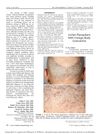
April 2014 in “The American Journal of Dermatopathology” Foreign-body granuloma may be a marker for late-stage Lichen Planopilaris and should be considered in diagnosis.
August 2025 in “Bioactive Materials” Ac-GFFY-IGF peptide is a promising, safe, and effective treatment for hair loss, better than current options.
 February 2022 in “Research Square (Research Square)”
 LGR5 is a marker found in hair follicle stem cells in various species and is important for hair growth and skin repair.
 October 2023 in “International Journal of Science and Research (IJSR)”
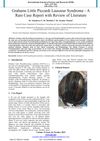
 Early diagnosis of GLPLS is crucial to prevent complications, but scarring alopecia is irreversible.
 10 citations
,
May 2016 in “Journal of Dermatological Science”
10 citations
,
May 2016 in “Journal of Dermatological Science” PDGF-BB helps young melanocytes grow but stops mature ones from growing, and it makes melanocytes more specialized.
13 citations
,
October 2016 in “Acta Biochimica et Biophysica Sinica” GhPLDα1 helps thicken cotton fiber walls by boosting cellulose production.
April 2022 in “Zenodo (CERN European Organization for Nuclear Research)” Combining PRP with LLLT is most effective for hair growth in androgenetic alopecia.
3 citations
,
January 2018 in “International Journal of Trichology” The new system helps detect and track early female hair loss better.

L-PGDS has specific binding sites for its functions and could help in drug delivery system design.
17 citations
,
April 2006 in “Brain Research” 5α-reduced neurosteroids may help regulate glial cell differentiation.
 3 citations
,
January 2005 in “Biological & Pharmaceutical Bulletin”
3 citations
,
January 2005 in “Biological & Pharmaceutical Bulletin” The peptide GPIGS helps hair cells grow and speeds up hair regrowth in mice.
May 2005 in “Molecular Carcinogenesis” mrp/plf-mRNA can indicate tumor-promoting effects in skin.
 19 citations
,
May 2016 in “Clinical, cosmetic and investigational dermatology”
19 citations
,
May 2016 in “Clinical, cosmetic and investigational dermatology” FGF-2&D/P nanoparticles can help treat hair loss.
Polyglutamic acid is a valuable, sustainable ingredient for skincare and haircare products.
2 citations
,
September 2023 in “PubMed” Laser-assisted prostaglandin analogs improve hypopigmented scars safely, but more research is needed.
January 2026 in “Biomacromolecules” A new method using nanolipogels with fucosterol can help regrow hair by targeting follicles, reducing inflammation, and improving blood flow.