October 2024 in “Skin Research and Technology” Pili annulati causes zebra-striped hair but doesn't affect hair strength or quality of life.
20 citations
,
August 2003 in “Clinical and Experimental Dermatology” A new genetic mutation in the hairless gene causes a rare hair loss disorder.
 2 citations
,
March 2023 in “Biomedicine & pharmacotherapy”
2 citations
,
March 2023 in “Biomedicine & pharmacotherapy” Platelet lysate effectively promotes hair growth and improves hair thickness in people with androgenetic alopecia.
April 2023 in “Journal of Investigative Dermatology” PRP can improve hair growth in people with hair loss, but more research is needed.
 January 2017 in “Brazilian Journal of Pharmaceutical Sciences”
 Arteannuin might work against cancer and Alzheimer's by targeting neprilysin.
 June 2023 in “British Journal of Dermatology”
 The protein called small nuclear ribonucleoprotein polypeptide E is identified as a cause of a type of hair loss without other symptoms.
 September 2025 in “Journal of Cosmetic Dermatology”
 PRP and microneedling both effectively improve hair growth and thickness for treating hair loss.
January 2011 in “The Chinese Journal of Dermatovenereology” Shorter GGN repeats in the androgen receptor gene are linked to androgenetic alopecia.
December 2025 in “International Journal of Pharmaceutics” PLGA-based microneedles show promise for painless, long-term drug delivery but need design and safety improvements.
1 citations
,
October 2023 in “European Journal of Dermatology” Combining hair transplantation with PRP is more effective for treating hair loss than hair transplantation alone.
1 citations
,
February 2025 in “Journal of Dairy Science” The SLICK1 allele in Holstein heifers affects hair and immune traits without altering prolactin signaling.
September 2018 in “European archives of medical research” 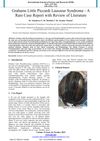 October 2023 in “International Journal of Science and Research (IJSR)”
 Early diagnosis of GLPLS is crucial to prevent complications, but scarring alopecia is irreversible.
 2 citations
,
March 2016 in “The Journal of Dermatology”
2 citations
,
March 2016 in “The Journal of Dermatology” The Facial Psoriasis Log-based Area and Severity Index is a more effective way to measure improvements in facial psoriasis than the traditional method.
 April 2017 in “The journal of investigative dermatology/Journal of investigative dermatology”
 HSD11b1 affects skin nerves and increases non-histaminergic itch.
26 citations
,
April 2007 in “Journal of clinical oncology” 1 citations
,
April 2021 in “Journal of the American Academy of Dermatology” Inconsistent platelet counts in PRP are due to varying blood volumes, preparation methods, and analyzer types.
7 citations
,
February 2024 in “The Journal of Physiology” Reduced plakoglobin and steroid abuse increase the risk of heart rhythm issues.
Defective protein folding due to a mutation is key in ANE syndrome.
47 citations
,
October 2021 in “Journal of Nanobiotechnology” HPDAlR nanoparticles greatly improve skin wound healing without toxicity.
 November 2022 in “Journal of Investigative Dermatology”
 Neutrophils quickly respond to skin injury.
8 citations
,
June 2024 in “Pharmaceutics” PEA-ENL improves skin delivery and reduces inflammation without side effects.
November 2024 in “Journal of Investigative Dermatology” Genetic defects in the Wnt/PCP pathway may cause congenital yellow nail syndrome.
Higher PSA levels can indicate prostate cancer, but there's overlap with non-cancerous conditions.
 January 2025 in “Journal of Materials Chemistry B”
 The new microneedle treatment could be a more effective and convenient option for hair loss.
1 citations
,
October 2023 in “PROTOPLASMA” February 2026 in “Pediatric Dermatology” September 2023 in “Middle East Fertility Society Journal” Nicotine may help treat both Parkinson's disease and infertility.
 98 citations
,
December 2008 in “Journal of Investigative Dermatology”
98 citations
,
December 2008 in “Journal of Investigative Dermatology” Prolactin affects hair growth and skin conditions, and could be a target for new skin disease treatments.
November 2025 in “Journal of Investigative Dermatology” A new genetic mutation causing Xeroderma Pigmentosum was found in an 8-year-old girl, affecting her DNA repair.