 25 citations
,
December 2018 in “Human Molecular Genetics”
25 citations
,
December 2018 in “Human Molecular Genetics” The document concludes that certain mutations may contribute to the inflammation in hidradenitis suppurativa and suggests that targeting TNFα could be a treatment strategy.

Hidradenitis Suppurativa has genetic links, with certain gene mutations more common in patients and a third of cases having a family history.
 3 citations
,
January 2019 in “Journal of Dermatology”
3 citations
,
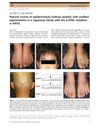
January 2019 in “Journal of Dermatology” The p.P25L mutation in the KRT5 gene causes a rare skin condition that worsens over time and may lead to hair loss starting in young adulthood.
 29 citations
,
March 2019 in “British Journal of Dermatology”
29 citations
,
March 2019 in “British Journal of Dermatology” Acne is significantly influenced by genetics, and understanding its genetic basis could lead to better, targeted treatments.
 March 2026 in “Folia Histochemica et Cytobiologica”
 LTBP1 is a key regulator in diseases and a potential target for new treatments.
Certain plasma proteins are linked to prostate cancer risk and could help in early detection and treatment.
58 citations
,
January 2015 in “Journal of the American Academy of Dermatology” Pioglitazone may help treat lichen planopilaris, but more research is needed.
 33 citations
,
October 2013 in “Journal of The American Academy of Dermatology”
33 citations
,
October 2013 in “Journal of The American Academy of Dermatology” Pioglitazone usually doesn't effectively treat or cure lichen planopilaris.
Researchers created a new mouse model, G4, that mimics human PCOS symptoms and links the condition to a specific gene.
24 citations
,
April 2008 in “Fertility and sterility” Pioglitazone improved insulin sensitivity and altered cortisol metabolism in PCOS patients.
March 2026 in “Animal Models and Experimental Medicine” Gorab deficiency speeds up skin aging by disrupting protein regulation and reducing collagen.
4 citations
,
July 2022 in “The Journal of Clinical Endocrinology & Metabolism” A specific genetic mutation causes POMC deficiency, leading to symptoms like weight gain and red hair.
3 citations
,
January 1984 14 citations
,
September 1999 in “Mammalian genome” The scraggly mutation causes hair loss and skin defects in mice.
 28 citations
,
February 2012 in “PLoS ONE”
28 citations
,
February 2012 in “PLoS ONE” A PKP1 gene mutation causes skin fragility and hair loss in Chesapeake Bay retriever puppies.
44 citations
,
January 1984 in “Molecular and Cellular Biochemistry” July 2025 in “Journal of Investigative Dermatology” Upadacitinib effectively treats pyoderma gangrenosum.
7 citations
,
April 2019 in “Animal biotechnology” The POMP gene is active in various goat tissues and affects hair growth, with certain treatments influencing its expression.
July 2020 in “Zenodo (CERN European Organization for Nuclear Research)” Pioglitazone combined with metformin or spironolactone improves PCOS symptoms and insulin resistance.
 February 2026 in “Frontiers in Medicine”
 Personalized sonidegib dosing can effectively treat Gorlin-Goltz syndrome with fewer side effects.

Enhanced stem cells from the placenta can reduce fat cell formation in eye disease.
103 citations
,
February 1972 in “Proceedings of the National Academy of Sciences” A unique enzyme in guinea pig hair follicles helps form protein cross-links in hair.
 April 2016 in “The journal of investigative dermatology/Journal of investigative dermatology”
 RPGRIP1L helps skin cells stick together by blocking PKCβII, which can prevent skin blistering like in pemphigus.
August 2020 in “Research Square (Research Square)” Enhanced stem cells can reduce fat buildup in eye tissue for Graves' disease.
 1 citations
,
June 2001 in “Annals of Internal Medicine”
1 citations
,
June 2001 in “Annals of Internal Medicine” Troglitazone increases subcutaneous fat in lipodystrophy patients.
3 citations
,
October 2021 in “The Application of Clinical Genetics” Certain gene changes in osteopontin are linked to higher risk of atopic dermatitis and asthma.
 May 2023 in “Journal of Pakistan Medical Association”
 People with polycystic ovary syndrome have higher levels of Gremlin-1.
 10 citations
,
March 2015 in “Journal of dermatology”
10 citations
,
March 2015 in “Journal of dermatology” The boy's severe skin disorder is caused by two new mutations in his TGM1 gene.
20 citations
,
November 2020 in “Stem Cell Research & Therapy” Enhanced stem cells from the placenta can help treat Graves' eye disease by stopping fat cell growth.
 6 citations
,
August 2023 in “BMC genomics”
6 citations
,
August 2023 in “BMC genomics” The study found that genetic differences related to hair growth and other traits help cashmere goats adapt to high-altitude environments.