2 citations
,
November 2025 in “International Journal of Molecular Sciences” Chitosan-based materials are promising for treating diseases and healing wounds due to their beneficial properties.
 1 citations
,
August 2023 in “Military Medical Research”
1 citations
,
August 2023 in “Military Medical Research” Smart hydrogel dressings could improve diabetic wound healing by adjusting to wound conditions and controlling drug release.
128 citations
,
February 2023 in “Molecules” Chitosan-based hydrogels effectively control bleeding and have promising medical uses.
 10 citations
,
August 2023 in “Advanced Science”
10 citations
,
August 2023 in “Advanced Science” Nitric Oxide has potential in medicine, especially for infections and heart treatments, but its short life and delivery challenges limit its use.
1 citations
,
December 2025 in “Inorganics” Silver nanoparticles help heal wounds by preventing infections and promoting tissue repair.
 April 2026 in “Pharmaceutics”
 Cellulose-based skin dressings show promise for wound healing but need more research and clinical trials.
7 citations
,
December 2024 in “Antibiotics” Cathelicidins could treat skin issues but face challenges like safety and resistance.
 6 citations
,
February 2023 in “Biomaterials Research”
6 citations
,
February 2023 in “Biomaterials Research” Special gels help heal diabetic foot sores and reduce the risk of amputation or death.
 February 2026 in “Biomedicines”
 Nanotechnology offers promising new treatments for hair loss by improving targeted delivery and addressing key causes.
238 citations
,
December 2022 in “Frontiers in Public Health” Combining ciprofloxacin with other treatments may improve its effectiveness against resistant bacteria.
 10 citations
,
July 2022 in “Journal of Medicinal Chemistry”
10 citations
,
July 2022 in “Journal of Medicinal Chemistry” Adding a second method to PROTACs could improve cancer treatment.
3 citations
,
September 2021 in “Data in brief” Bleaching hair changes its structure and weakens it, which is important for understanding hair damage and creating treatments.
 March 2026 in “Pharmaceutics”
 TheDES improve drug delivery through the skin but need more safety checks.
37 citations
,
December 2022 in “Acta Pharmaceutica Sinica B” Smart delivery methods for CRISPR gene editing are crucial for clinical success.
24 citations
,
March 2024 in “Small Science” Single-cell encapsulation shows promise for medical use but faces production challenges.
14 citations
,
September 2023 in “Foods” Microfluidics can create precise, efficient delivery systems for food and cosmetics, but scaling up is challenging.
 7 citations
,
August 2022 in “Journal of Nanobiotechnology”
7 citations
,
August 2022 in “Journal of Nanobiotechnology” Advancements in nanoformulations for CRISPR-Cas9 genome editing can respond to specific triggers for controlled gene editing, showing promise in treating incurable diseases, but challenges like precision and system design complexity still need to be addressed.
5 citations
,
August 2023 in “Preprints.org” Droplet-based microfluidics improves delivery of bioactive compounds in food using precise encapsulation and release.
 1 citations
,
April 2023 in “International Journal of Molecular Sciences”
1 citations
,
April 2023 in “International Journal of Molecular Sciences” New CRISPR/Cas9 variants and nanotechnology-based delivery methods are improving cancer treatment, but choosing the best variant and overcoming certain limitations remain challenges.
20 citations
,
January 2022 in “REVIEWS ON ADVANCED MATERIALS SCIENCE” Nanoparticles can make cosmetics more effective but have challenges like cost and safety.
 2 citations
,
December 2023 in “Advanced science”
2 citations
,
December 2023 in “Advanced science” Glycosaminoglycans help heal wounds but aren't yet ready for clinical use.
1 citations
,
October 2025 Smart hydrogels improve wound healing by adapting to needs and releasing medicine.
1 citations
,
January 2024 in “Fibrosis” Hydrogels show promise for scarless wound healing by reducing skin fibrosis.
 1 citations
,
August 2024 in “Polymers”
1 citations
,
August 2024 in “Polymers” Bacterial cellulose is a promising material for biomedical uses but needs improvements in antimicrobial properties and degradation rate.
July 2025 in “Nano Research” Nanotechnology can improve tissue healing by controlling immune responses.
24 citations
,
November 2023 in “Regenerative Biomaterials” Metal ions can help treat heart diseases by protecting cells and repairing tissues.

Polydopamine is promising for personalized medicine and biomedical technology due to its strong adhesion and biocompatibility.
 January 2025 in “Nanoscale”
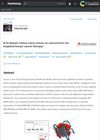
 Boron/nitrogen-doped carbon nano-onions improve targeted breast cancer treatment by enhancing drug delivery and reducing side effects.
61 citations
,
July 2022 in “Journal of Nanobiotechnology” Fucoidan-derived carbon dots can effectively treat root canal infections by killing bacteria and are safer than traditional disinfectants.
36 citations
,
August 2022 in “Molecular Therapy — Nucleic Acids” Gene therapy shows promise for healing chronic wounds but needs more research to overcome challenges.