34 citations
,
December 1984 in “Journal of Cutaneous Pathology” Monilethrix hair issues are due to problems in the hair's internodes.
 September 2023 in “International Journal of Cosmetic Science”
 Both shampoos increased scalp germ numbers but did not change the overall microbial community composition.
June 2025 in “Frontiers in Immunology” Sampling methods greatly affect skin microbiome data in acne studies.
8 citations
,
February 2025 in “Cell Systems” Engineered bacteria can deliver antioxidants to protect skin.
 3 citations
,
August 2014 in “Steroids”
3 citations
,
August 2014 in “Steroids” Fermentation of Finasteride with Ocimum sanctum L. creates new metabolite that inhibits tyrosinase.
20 citations
,
February 2017 in “European journal of pharmaceutical sciences” The MPA-ISO cocrystal improved solubility and dissolution rate, while the others did not.
September 2025 in “OPAL (Open@LaTrobe) (La Trobe University)” Researchers created an efficient method to extract DNA from marmoset hair, reducing blood chimerism.
January 2008 in “xPharm: The Comprehensive Pharmacology Reference” June 2026 in “Mendeley Data” June 2026 in “Mendeley Data”  May 2025 in “Annals of surgical case reports & images.”
 Certain gut bacteria may protect against hair loss, while others may increase the risk.
 1 citations
,
July 2024 in “Indian Journal of Case Reports”
1 citations
,
July 2024 in “Indian Journal of Case Reports” GAPO syndrome causes growth issues, hair loss, missing teeth, and vision problems.
 1 citations
,
September 2024 in “Scientific Reports”
1 citations
,
September 2024 in “Scientific Reports” Non-invasive swabbing is as effective as cutting hair for collecting scalp hair bacteria.
 July 2019 in “bioRxiv (Cold Spring Harbor Laboratory)”
 Kashmiri women with PCOS have more Bifidobacterium in their gut.
 December 2023 in “Urogenital tract infection”
 Seminal bacteria can lower sperm quality in subfertile men.
 2 citations
,
January 2012 in “Journal of The Chilean Chemical Society”
2 citations
,
January 2012 in “Journal of The Chilean Chemical Society” New method accurately measures finasteride in tablets and bulk.
7 citations
,
February 2005 in “Veterinary Dermatology” Horses with skin disease have more surface bacteria than healthy horses.
18 citations
,
March 2004 in “The Journal of Urology” Hypospadiac rats showed abnormal genital development, useful for studying human hypospadias.
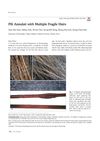 4 citations
,
January 2017 in “Annals of Dermatology”
4 citations
,
January 2017 in “Annals of Dermatology” Frequent hairdryer use may worsen hair fragility in people with Pili Annulati.
 17 citations
,
January 2014 in “Annals of Dermatology”
17 citations
,
January 2014 in “Annals of Dermatology” Malassezia folliculitis mainly affects the trunk in males and is better detected with d-PAS staining.
 August 2022 in “MEDICINUS”
 A 22-year-old homosexual man was diagnosed with secondary syphilis, genital warts, and HIV, highlighting the high STI risk in men who have sex with men.
7 citations
,
March 2021 in “Journal of Investigative Dermatology” Lipases, especially gehB, are crucial for Staphylococcus aureus to enter and colonize hair follicles.
2 citations
,
January 2002 in “Zhiwu Yanjiu” Capitate trichomes have more endoplasmic reticulum and vacuoles, while peltate trichomes have more plastids and larger subcuticular spaces.

Social hair plucking in rhesus macaques is an abnormal behavior with both social and aggressive traits and health impacts.

Social hair plucking in rhesus macaques is an abnormal behavior with both social and aggressive traits and health impacts.
 May 2026 in “International Journal of Scientific Research in Chemistry”
 Finasteride breaks down into new compounds under acidic conditions.
5 citations
,
July 2023 in “Microorganisms” The study found specific skin and cell changes in patients with monkeypox, helping diagnose and understand the disease.
 32 citations
,
January 2015 in “Annals of diagnostic pathology”
32 citations
,
January 2015 in “Annals of diagnostic pathology” The document concludes that recognizing oral lesions is important for diagnosing syphilis.
 2 citations
,
July 2020 in “International Journal for Research in Applied Science and Engineering Technology”
2 citations
,
July 2020 in “International Journal for Research in Applied Science and Engineering Technology” Pseudomonas DL17 can completely break down the harmful dye Sunset Yellow FCF in 48 hours.
90 citations
,
November 2014 in “Journal of Biomedical Optics” Silver nanoparticles can penetrate porcine skin up to about 15.6 μm, possibly through hair follicles.