1 citations
,
May 2021 in “InterConf” Post-COVID-19 hair loss is likely due to stress and inflammation.
May 2026 in “Skin Appendage Disorders” Trichoscopy and histopathology can help identify post-COVID-19 hair loss.
 January 2025 in “Dermatology Practical & Conceptual”
 Anemia increases the risk of hair loss in post-COVID-19 survivors.
 July 2023 in “Zenodo (CERN European Organization for Nuclear Research)”
 COVID-19 can cause temporary hair loss in some patients, affecting their quality of life.
 April 2023 in “Clinical dermatology review”
 COVID-19 infection may cause hair loss.
 3 citations
,
April 2022 in “Clinical, Cosmetic and Investigational Dermatology”
3 citations
,
April 2022 in “Clinical, Cosmetic and Investigational Dermatology” Different methods, including stress management, healthy diet, supplements, and treatments like minoxidil, can help hair grow back after COVID-19 related hair loss.
 September 2024 in “Journal of Bioscience and Applied Research/Journal of Bioscience and Applied Research ”
 COVID-19 can cause hair loss due to stress, with inflammation markers like D-dimer levels playing a role.

Many Egyptian women who were hospitalized for COVID-19 experienced significant hair loss afterwards.
April 2023 in “Al-Azhar International Medical Journal /Al-Azhar International Medical Journal” COVID-19 infection is linked to temporary hair loss in Egyptian women.

Hair loss after COVID-19 is common, starts sooner in severe cases, and often comes with scalp pain.
 4 citations
,
February 2022 in “Journal of Cosmetic Dermatology”
4 citations
,
February 2022 in “Journal of Cosmetic Dermatology” Monocytes might be linked to hair loss after COVID-19.
 32 citations
,
July 2021 in “Journal of The American Academy of Dermatology”
32 citations
,
July 2021 in “Journal of The American Academy of Dermatology” Hair loss from COVID-19 usually starts around 45 days after infection and lasts about 47.5 days.
 March 2022 in “Brazilian Journal of Health Review”
 COVID-19 can cause a type of hair loss that usually starts 3-6 months after the illness, and treatment includes stress reduction and hair care products like Minoxidil.
 September 2022 in “Journal of The American Academy of Dermatology”
 A woman's COVID-19 related hair loss improved after using a specific hair care routine for 30 days.
 May 2026 in “Journal of the Egyptian Womenʼs Dermatologic Society”
 Higher oxidative stress markers are linked to hair loss in post-COVID-19 patients.
 25 citations
,
December 2021 in “Journal of Medical Virology”
25 citations
,
December 2021 in “Journal of Medical Virology” COVID-19 can cause a type of hair loss that usually starts 74 days after infection, affecting mostly women, but most patients eventually recover.
 December 2021 in “Australasian Journal of Dermatology”
 Red stripes on nails and hair loss may occur after COVID-19.
 December 2023 in “Damianus Journal of Medicine”
 Post-COVID-19 patients are at risk for hair loss.
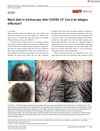 2 citations
,
July 2021 in “Dermatologic Therapy”
2 citations
,
July 2021 in “Dermatologic Therapy” A woman's hair loss after COVID-19 was likely due to a mix of pressure-induced alopecia and acute telogen effluvium.
 March 2024 in “Advancements in Homeopathic Research”
 Homoeopathy has helped treat hair loss after Covid-19, considering the patient's overall condition.
 April 2022 in “Journal of biotechnology and strategic health research”
 COVID-19 infection may cause hair loss a few months after recovery.
 January 2021 in “Journal of Pakistan Association of Dermatology”
 COVID-19 recovery can lead to temporary hair loss called telogen effluvium.

Topical Minoxidil is effective for hair loss after COVID-19.
 1 citations
,
December 2022 in “PubMed”
1 citations
,
December 2022 in “PubMed” COVID-19 may cause temporary hair loss, which usually gets better on its own, but reducing stress and managing health issues might help recovery.
 February 2024 in “Recima21”
 Covid-19 can cause hair loss due to immune and psychological factors.
 8 citations
,
February 2022 in “Journal of Clinical Medicine”
8 citations
,
February 2022 in “Journal of Clinical Medicine” Many COVID-19 patients experience temporary hair loss after infection, not linked to infection severity or treatment.
 3 citations
,
May 2023 in “Frontiers in Public Health”
3 citations
,
May 2023 in “Frontiers in Public Health” Most severe COVID-19 patients in Mexico experienced long-lasting symptoms that worsened their quality of life.
July 2024 in “Vestnik dermatologii i venerologii” Post-COVID-19 hair loss is different from androgenetic alopecia and can be identified by lower copper and higher selenium levels.

Post-COVID-19 hair loss is not linked to vitamin D or quality of life but is linked to hair graying.
 April 2024 in “REVISTA INTERDISCIPLINAR CIÊNCIAS MÉDICAS”
 COVID-19 increased hair loss, especially in women, linked to Azithromycin use and symptoms like fatigue and skin irritation.