 July 2022 in “Research Square (Research Square)”
 Lower PPARγ levels and specific gene variations are linked to more severe Frontal Fibrosing Alopecia.
March 2022 in “Experimental Eye Research” Parental uveitis causes hair loss in offspring of C57BL/6J mice.
July 2021 in “Authorea (Authorea)” Graham-Little Piccardi Lassueur Syndrome is a rare skin condition with specific hair loss and skin symptoms.
September 2019 in “The journal of investigative dermatology/Journal of investigative dermatology” PPARγ signaling modulation can protect hair follicle stem cells from chemotherapy-induced damage.
 September 2019 in “Journal of Investigative Dermatology”
 Mouse skin fibroblasts vary in function and adaptability based on their environment.
November 2018 in “Journal of Investigative Dermatology” Lichen Planopilaris causes irreversible hair loss due to immune attacks on hair stem cells, but modulating PPAR-γ might help treat it.
 July 2018 in “Elsevier eBooks”
 Lichen Planopilaris is a hair loss condition best treated early with various medications, including hydroxychloroquine, to prevent permanent baldness.
 April 2018 in “Journal of Investigative Dermatology”
 Macrophages are more involved in Lichen planopilaris than in Frontal fibrosing alopecia.
 April 2018 in “Journal of Investigative Dermatology”
 Different types of stem cells in the skin contribute to the variety of melanoma forms.
 November 2015 in “European Journal of Inflammation”
 Cicatricial alopecia, a permanent hair loss condition, is mainly caused by damage to specific hair follicle stem cells and abnormal immune responses, with gene regulator PPAR-y and lipid metabolism disorders playing significant roles.
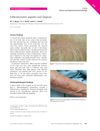 May 2014 in “Clinical and Experimental Dermatology”
 A 70-year-old woman with a rare skin condition improved after treatment with topical steroids and acitretin.
April 2023 in “Journal of Investigative Dermatology” AL136131.3 slows hair growth by affecting energy processes in hair loss.
238 citations
,
April 2012 in “Cell stem cell” Targeting and modifying the stem cell niche can improve regenerative therapies.
11 citations
,
March 2024 in “Current Issues in Molecular Biology” Ginsenoside compound K shows promise for treating metabolic diseases like diabetes and obesity.
9 citations
,
February 2023 in “Genes” lncRNAs influence cashmere fiber traits like diameter and color in goats.
5 citations
,
May 2024 in “Molecules” Glycyrrhetinic acid from licorice may help treat acne by reducing inflammation and oil production.
3 citations
,
July 2025 in “Stem Cell Research & Therapy” lncRNA VIM-AS1 helps heal diabetic wounds by boosting energy production and reducing cell aging.
1 citations
,
February 2024 in “Preprints.org” Ginsenoside compound K shows promise for treating metabolic diseases like obesity and diabetes, but more research is needed on its safety and effectiveness.
December 2022 in “Biochemical and Biophysical Research Communications” HtrA2 activity is crucial for normal hair growth by regulating fat cell development.
 59 citations
,
August 2021 in “Frontiers in Endocrinology”
59 citations
,
August 2021 in “Frontiers in Endocrinology” GLP-1 receptor agonists, like Dulaglutide, Liraglutide, and Semaglutide, have potential benefits beyond the pancreas, including neuroprotection, pain suppression, cardiovascular protection, obesity management, and cancer treatment, but there are concerns about pancreatitis and pancreatic cancer risks.
 105 citations
,
August 2010 in “Pharmacology & therapeutics”
105 citations
,
August 2010 in “Pharmacology & therapeutics” Formyl-peptide receptor agonists could be new anti-inflammatory drugs.
June 2026 in “Frontiers in Nutrition” GLP-1 receptor agonists can help manage PCOS metabolism but need careful use before conception.
 September 2025 in “Cureus”
 GLP-1 agonists may help treat certain skin conditions.
3 citations
,
July 2025 in “Obesity Facts” GLP-1 receptor analogs may help improve metabolism and reproductive health in people with PCOS and obesity.
5 citations
,
August 2024 in “Cureus” GLP-1 receptor agonists help women with PCOS lose weight and improve health, but more research is needed on long-term effects.
 August 2024 in “Nutrition Bulletin”
 GLP-1 receptor agonists help with weight loss but need to be combined with other treatments for best results.
 1 citations
,
September 2025 in “Dermatology and Therapy”
1 citations
,
September 2025 in “Dermatology and Therapy” GLP-1 RAs help with diabetes and skin issues but can cause skin reactions and surgery challenges.
1 citations
,
October 2005 in “Experimental and Clinical Endocrinology & Diabetes” Allopregnanolone and opioids together reduce stress hormone responses during pregnancy.
 142 citations
,
March 2019 in “Frontiers in Cellular Neuroscience”
142 citations
,
March 2019 in “Frontiers in Cellular Neuroscience” The document concludes that adenosine receptor agonists have potential for treating various conditions, but only a few are approved due to challenges like side effects and the need for selective activation.
 12 citations
,
June 2019 in “Psychoneuroendocrinology”
12 citations
,
June 2019 in “Psychoneuroendocrinology” Allopregnanolone is needed for certain brain processing issues caused by D1 dopamine receptor activation.