 March 2026 in “Frontiers in Medicine”
 Different types of alopecia cause hair loss due to immune system issues, with some allowing regrowth and others causing permanent loss.
 February 2026 in “Frontiers in Public Health”
 Lifestyle changes can help manage androgenetic alopecia.
 February 2026 in “Chinese Medicine”
 Natural products might help treat hair greying.

Understanding hair follicle signaling can improve hair disorder treatments.
 January 2026 in “Immune Network”
 Regulatory T cells adapt to different environments to control inflammation and support tissue repair.
 November 2025 in “Frontiers in Endocrinology”
 Apigenin and ellagic acid may help manage PCOS symptoms.
 November 2025 in “Frontiers in Cell and Developmental Biology”
 The study maps goat hair follicle cells, revealing key genes and pathways involved in hair growth and cell death.
 October 2025 in “Frontiers in Veterinary Science”
 Quercetin boosts hair follicle stem cell growth and survival in cashmere goats.
 June 2025 in “Journal of Endocrinological Investigation”
 Adrenal disorders often cause high blood pressure in young people.
 April 2025 in “Journal of Neonatal Surgery”
 PCOS is best managed with a personalized mix of lifestyle changes, medication, and herbal remedies.
 February 2025 in “Journal of Neonatal Surgery”
 Combining antidiabetic drugs, hormonal therapies, and lifestyle changes can improve health in women with PCOS.

Herbal supplements like Berberine, Cinnamon, and Fenugreek may be affordable alternatives for managing PCOS.
 January 2025 in “International Journal for Research Trends and Innovation”
 PCOS management benefits from combining traditional herbs, modern medicine, and lifestyle changes.
 December 2024 in “Deleted Journal”
 New therapies show promise for wound healing, but more research is needed for safe, affordable options.
 November 2024 in “International Journal of Agricultural Invention”
 Amla is a nutritious fruit with many health benefits, including boosting immunity and fighting diseases.
 May 2024 in “International Seven Journal of Multidisciplinary”
 More research is needed to better understand and treat Fibrosing Frontal Alopecia.
 April 2024 in “International journal of women's health”
 Adult female acne is a complex condition that can worsen with menopause, requiring holistic treatment and tailored skincare at different life stages.
 October 2023 in “Frontiers in endocrinology”
 Effective PCOS treatments require targeting specific signaling pathways.
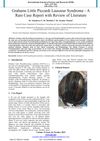 October 2023 in “International Journal of Science and Research (IJSR)”
 Early diagnosis of GLPLS is crucial to prevent complications, but scarring alopecia is irreversible.
 April 2023 in “Digital Library of Theses and Dissertations (Universidade de São Paulo)”
 Mesenchymal stem cells from laser-assisted liposuction are as effective and safe as those from conventional liposuction for cell therapy.

Mesenchymal stem cells from laser-assisted liposuction are as effective and safe as those from conventional methods for cell therapy.
 January 2023 in “Research Square (Research Square)”
 IGF2BP3 gene is up-regulated in keloid patients, suggesting potential targets for treatment.

Reducing iron levels didn't improve heart health or metabolism in women with certain ovarian issues.
 May 2022 in “Gastroenterology”
 Targeting NETs may help reduce fibrosis in Crohn's disease.
 February 2022 in “Research Square (Research Square)”
 Key genes influencing sheep hair follicle development were identified, aiding wool breeding and understanding human hair conditions.
 September 2021 in “International Journal of Biomedicine”
 Certain gene variations are linked to a higher risk of severe acne, suggesting a genetic influence on the condition.
 August 2021 in “Research Square (Research Square)”
 StemMACS media is better for growing therapeutic stem cells.
 June 2020 in “Journal of Dermatological Treatment”
 Use telemedicine and strict hygiene for safe hair and scalp treatments during COVID-19.
 May 2020 in “bioRxiv (Cold Spring Harbor Laboratory)”
 The study found that certain genes are important for hedgehog skin appendage development and immunity, with spines possibly evolving for protection and infection resistance.
 January 2020 in “Research Portal Denmark”
 A short male anogenital distance may indicate incomplete masculinization due to disrupted androgen action.