11 citations
,
April 2023 in “Skin Health and Disease” Psychological stress can worsen skin conditions like psoriasis and acne.
 10 citations
,
September 2022 in “Advanced Healthcare Materials”
10 citations
,
September 2022 in “Advanced Healthcare Materials” Current methods can't fully recreate skin and its features, and more research is needed for clinical use.
6 citations
,
November 2024 in “Frontiers in Immunology” Targeting autophagy can help treat skin disorders like vitiligo and atopic dermatitis.
 5 citations
,
June 2024 in “Developmental Cell”
5 citations
,
June 2024 in “Developmental Cell” Activating TRPV1 can boost hair growth by involving neurons, macrophages, and fibroblasts.
 5 citations
,
October 2021 in “Journal of Ovarian Research”
5 citations
,
October 2021 in “Journal of Ovarian Research” Cinnamon can help manage symptoms of polycystic ovary syndrome, improve menstrual cycles and fertility, and positively affect cholesterol and blood sugar levels, but more research is needed to confirm these effects and find the best dosage.
3 citations
,
September 2024 in “The FASEB Journal” Dermal white adipose tissue helps regulate hair growth, protect skin, and aid wound healing.
 3 citations
,
April 2022 in “Bioengineering”
3 citations
,
April 2022 in “Bioengineering” Ultrasound can help deliver genes to cells to stimulate tissue regeneration and enhance hair growth, but more research is needed to perfect the method.
2 citations
,
June 2020 in “Journal of Investigative Dermatology” 3D imaging of skin biopsies offers better accuracy but is time-consuming and can't clear melanin.
1 citations
,
April 2024 in “Cells” Corneal cells can potentially revert to stem cells, aiding in repair and regeneration.
1 citations
,
October 2019 in “PubMed” Removing the p75 gene in mouse skin cells didn't affect their skin or hair growth.

Single-cell omics can improve sheep and goat breeding by enhancing traits like wool quality and fertility.
March 2026 in “Skin Appendage Disorders” Belatacept may be a promising treatment for alopecia areata.

Reprogramming adult fibroblasts may enable scar-free healing.
 February 2026 in “Nature Communications”
 A specific group of immune and skin cells may cause chronic inflammation in atopic dermatitis.
 March 2025 in “Nature Communications”
 NSC167409 can effectively inhibit the virus causing hand, foot, and mouth disease.
 August 2024 in “Cell Death and Disease”
 Activating TLR9 helps heal wounds and regrow hair by using specific immune cells.
 November 2023 in “The journal of investigative dermatology/Journal of investigative dermatology”
 Skin cells and certain hair follicle areas produce hemoglobin, which may help protect against oxidative stress like UV damage.
 September 2023 in “Nature Communications”
 Immune cells are essential for skin regeneration using biomaterial scaffolds.

The research identified key molecules that help hair matrix and dermal papilla cells communicate and influence hair growth in cashmere goats.
 June 2023 in “Frontiers in Medicine”
 Protein tyrosine kinases are key in male pattern baldness, affecting skin structure, hair growth, and immune responses.
December 2016 in “The journal of investigative dermatology/Journal of investigative dermatology” Hedgehog signaling controls hair follicle development and can affect skin cancer growth.
February 2026 in “Advanced Science” TTNPB helps turn stem cells into neural stem cells, improving depression-like behaviors in rats.
Machine learning improves DNA predictions for eye and hair color, but challenges remain for skin tone and facial features.
FGF5 spliceosomes inhibit rabbit hair growth by affecting gene expression.
 August 2023 in “MOJ women's health”
 Brown Adipose Tissue (BAT) could potentially treat Polycystic Ovary Syndrome (PCOS) by controlling energy balance and lipid homeostasis, but more human research is needed.
 December 2022 in “IntechOpen eBooks”
 Forensic DNA Phenotyping accurately predicts physical traits and is used in investigations, but needs more diverse population data for confirmation.
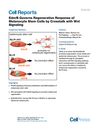 59 citations
,
April 2016 in “Cell Reports”
59 citations
,
April 2016 in “Cell Reports” EdnrB signaling helps melanocyte stem cells regenerate and could be targeted to treat pigmentation issues.
April 2023 in “Journal of Investigative Dermatology” Increased TEMRA cells can predict treatment outcomes in rapidly progressive alopecia areata.
 March 2026 in “Preprints.org”
 DRDE-07 shows promise for treating skin diseases due to its favorable properties.
92 citations
,
April 2009 in “Journal of Investigative Dermatology” The Celsr1 gene is crucial for normal hair patterning in mice.