 February 2025 in “International Journal of Molecular Sciences”
 Maternal melatonin improves offspring hair growth by affecting specific proteins and pathways.
 March 2024 in “International journal of molecular sciences”
 Zinc, copper, and iron are important for skin health and may help diagnose skin diseases.
January 2024 in “Medicina” Statins may help treat PCOS by lowering androgen levels and improving cholesterol.
November 2023 in “IntechOpen eBooks” Arsenic exposure from contaminated water severely damages the skin, causing hair loss, pigmentation changes, irritation, and can lead to skin cancer.
September 2023 in “Middle East Fertility Society Journal” Nicotine may help treat both Parkinson's disease and infertility.
March 2021 in “AACE clinical case reports” A man with both Klinefelter syndrome and primary hyperparathyroidism showed a rare combination of symptoms and genetic patterns.
63 citations
,
April 2017 in “Acta psychiatrica Scandinavica” Higher prenatal and adult androgen levels are linked to alcohol dependence and withdrawal severity.
54 citations
,
March 2012 in “International Journal of Andrology” Prenatal pesticide exposure may cause earlier breast development in girls.
45 citations
,
January 2010 in “Forensic science international” Neonatal hair can help determine drug exposure during pregnancy.
 39 citations
,
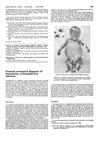
June 1982 in “The BMJ”
39 citations
,
June 1982 in “The BMJ” Blood tests confirmed a baby in the womb had a CMV infection.
37 citations
,
November 2002 in “Biology of Reproduction” Prenatal antiandrogen treatment altered hormone levels in adult spotted hyenas, affecting males and females differently.
 32 citations
,
February 2017 in “Human Reproduction”
32 citations
,
February 2017 in “Human Reproduction” Women with polycystic ovary syndrome tend to have a longer anogenital distance.
 28 citations
,
May 2015 in “Addiction Biology”
28 citations
,
May 2015 in “Addiction Biology” Prenatal stress changes how male and female rats enjoy rewards differently, linked to sex hormones.
 25 citations
,
June 2012 in “Endocrine”
25 citations
,
June 2012 in “Endocrine” PCOS may start before birth, involves metabolic issues, and can be treated with drugs like metformin and lifestyle changes.
25 citations
,
May 2004 in “Prenatal Diagnosis” Prenatal genetic diagnosis may not predict MELAS syndrome severity in offspring.
 17 citations
,
June 2017 in “Gene”
17 citations
,
June 2017 in “Gene” A rare genetic mutation found in an Indian family can be detected through prenatal screening.
9 citations
,
July 2022 in “International Journal of Molecular Sciences” Prenatal THC exposure may harm ovarian health and fertility.
 6 citations
,
October 2018 in “Endocrinology”
6 citations
,
October 2018 in “Endocrinology” Prenatally androgenized ewes can model increased hair diameter in women with PCOS.
5 citations
,
December 2016 in “Microscopy Research and Technique” EPI-NCSCs from hair follicles may help treat brain development issues in mice.
3 citations
,
March 2024 in “Frontiers in Cell and Developmental Biology” Prenatal and postnatal environments both affect PCOS development and gut microbiota in mice.
 1 citations
,
December 2025 in “Selçuk tıp dergisi/Selçuk Üniversitesi Tıp Fakültesi dergisi”
1 citations
,
December 2025 in “Selçuk tıp dergisi/Selçuk Üniversitesi Tıp Fakültesi dergisi” Lower 2D:4D finger ratios in HS patients suggest prenatal hormone influence on the disease.
October 2025 in “Environment International” Exposure to certain chemicals before birth and during childhood may affect puberty timing.
 February 2024 in “Psychoneuroendocrinology”
 Higher anxiety during pregnancy is linked to lower cortisol levels in newborns' hair.
 February 2024 in “Psychoneuroendocrinology”
 Higher prenatal anxiety is linked to lower cortisol levels in newborns' hair.
January 2019 in “Cell & developmental biology” 3D cultivation and prenatal stem cell exosomes improve stem cell treatment results, especially for hair loss and age-related issues.
August 2017 in “Journal of biotechnology” Topical corticosteroids are the best initial treatment for children with Alopecia Areata.
 October 2022 in “Amplla Editora eBooks”
 Pre-natal, internal, and external factors may contribute to the development of Autism Spectrum Disorder (ASD).
 11 citations
,
March 2020 in “Immunology”
11 citations
,
March 2020 in “Immunology” Human prenatal skin develops an immune network early on that helps with skin formation and healing without scarring.
 5 citations
,
May 2023 in “Science of the total environment”
5 citations
,
May 2023 in “Science of the total environment” PFAS exposure in adolescence may delay puberty in females.