January 2019 in “Institutional Repositories DataBase (IRDB)” Hair follicles and skin structures were successfully regenerated in the lab using specific cell arrangements and mechanical conditions.
 30 citations
,
December 2017 in “Advanced Healthcare Materials”
30 citations
,
December 2017 in “Advanced Healthcare Materials” Nanoencapsulation creates adjustable cell clusters for hair growth.
1 citations
,
September 2025 in “PLoS ONE” Actin and alpha-smooth muscle actin help skin heal in mouse fetuses.
32 citations
,
February 2002 in “Veterinary Dermatology” Canine dermal papilla cells and fibroblasts have distinct growth patterns and protein expressions.
January 2006 in “Chinese Journal of Dermatology” Amelanotic melanocytes from hair follicles are immature and likely don't transfer melanosomes to keratinocytes.
 3 citations
,
September 2018 in “Journal of Biomaterials Science, Polymer Edition”
3 citations
,
September 2018 in “Journal of Biomaterials Science, Polymer Edition” Different materials affect the growth of brain cells and fibroblasts, with matrigel being best for brain cell growth.
Spiny mice have resilient, large mitochondria that help them regenerate tissue.
5 citations
,
November 2024 in “Cells” Fish cell spheroids are a promising tool for replicating real-life conditions in research.
January 2011 in “Shiyong kouqiang yixue zazhi” Dermal papilla cells and bulge stem cells can help reconstruct hair follicles.
Encapsulating hair follicle cells in a special gel boosts their activity.
106 citations
,
April 1986 in “British Journal of Dermatology” Dermal papilla cells from human hair follicles form unique structures and don't live as long as other skin cells in lab conditions.
The method effectively creates uniform, viable cell spheroids for 3D cell culture.
45 citations
,
January 2022 in “Lab on a Chip” The platform effectively grows lung cancer cell spheroids for drug testing.
 June 2020 in “Journal of Investigative Dermatology”
 The technique effectively shows how human skin and hair cells form into ball-like structures.
March 1995 in “The Journal of Dermatology” Immature hair cells can grow and change into different types of hair cells over time.
27 citations
,
December 1997 in “Archives of Dermatological Research” Rat dermal papilla cells have unique properties and interact differently with their environment compared to other skin cells.
14 citations
,
July 1983 in “Acta Dermato Venereologica” A method was developed to grow millions of hair cells from a single hair for research and storage.
August 2016 in “The journal of investigative dermatology/Journal of investigative dermatology” Different types of skin cells create unique support structures that can affect skin cell growth and could help in skin repair.
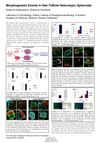
Researchers developed a method to create artificial hair follicles that may help with hair loss treatment and research.
 17 citations
,
December 2019 in “Stem Cell Research & Therapy”
17 citations
,
December 2019 in “Stem Cell Research & Therapy” Grouping certain skin cells together activates a growth pathway that helps create new hair follicles.
4 citations
,
February 2023 in “Stem Cell Research & Therapy” Mouse skin cells can become sperm-like cells in the lab.
July 2026 in “Acta Biomaterialia” A method was developed to create early-stage hair structures in lab-grown skin.
 34 citations
,
August 1966 in “Experimental cell research”
34 citations
,
August 1966 in “Experimental cell research” Keratin fibrils in hair form and stop growing at specific points in the follicle.
 46 citations
,
September 2014 in “Tissue engineering. Part A”
46 citations
,
September 2014 in “Tissue engineering. Part A” Researchers created hair-inducing human cell clusters using a 3D culture method.
January 2019 in “CLINICAL AND EXPERIMENTAL MORPHOLOGY” 7 citations
,
January 2017 in “Sub-cellular biochemistry/Subcellular biochemistry” 56 citations
,
November 1958 in “The Journal of Cell Biology” A unique skin cell similar to hair bulb melanocytes was identified, with better preservation using permanganate fixation.
 January 2012 in “Institutional Repositories DataBase (IRDB)”
 Cells from skin and lung can help regenerate hair follicles.
5 citations
,
February 2019 in “bioRxiv (Cold Spring Harbor Laboratory)” 3D cell cultures produce extracellular vesicles similar to those in the body.
36 citations
,
September 1996 in “PubMed” DP and DS cells are different from DF cells in structure and function.