 3 citations
,
May 2019 in “International journal of research in dermatology”
3 citations
,
May 2019 in “International journal of research in dermatology” Platelet rich plasma is an effective treatment for alopecia areata.
 November 2021 in “International Journal for Research in Applied Science and Engineering Technology”
 Lyophilized platelet-rich plasma is beneficial and effective for various medical treatments, including tissue regeneration and hair regrowth.
848 citations
,
October 2020 in “International Journal of Molecular Sciences” PRP shows promise in treating joint and spine issues, but translating lab results to humans is challenging.
 June 2020 in “Aesthetic Surgery Journal”
 Estradiol-rich plasma can increase hair density faster and more effectively in male pattern baldness treatment than regular plasma.
 April 2023 in “Bulletin of the National Research Centre”
 The document concludes that more research is needed to understand how PRP affects the ovaries and to standardize its use in treatment.
 April 2024 in “The Journal of urology/The journal of urology”
 SRD5A2 methylation in blood can predict how well someone will respond to finasteride treatment.
1 citations
,
January 2021 PRP is effective for treating patchy alopecia areata.
 4 citations
,
May 2025 in “npj Parkinson s Disease”
4 citations
,
May 2025 in “npj Parkinson s Disease” PINK1 is important for controlling gut immune responses linked to early Parkinson's disease.
 5 citations
,
October 2021 in “Dermatologic Surgery”
5 citations
,
October 2021 in “Dermatologic Surgery” Platelet-rich plasma (PRP) can significantly improve melasma, a skin pigmentation disorder, but may not add benefits when used with certain other treatments.
June 2017 in “Journal of the American Academy of Dermatology” Plucked hair can help diagnose pemphigus vulgaris early.
 January 2018 in “Journal of dermatological research”
 The document suggests a clinical trial to accurately determine if PRP is an effective treatment for a common type of hair loss in men.
July 2025 in “Journal of Clinical Medicine” Platelet-rich concentrates can be an alternative treatment for oral lichen planus, especially when steroids don't work.
 5 citations
,
April 2019 in “Phytochemical Analysis”
5 citations
,
April 2019 in “Phytochemical Analysis” The new ELISA method is reliable and eco-friendly for checking the quality of Pueraria candollei.
 4 citations
,
October 2024 in “American Journal of Clinical Dermatology”
4 citations
,
October 2024 in “American Journal of Clinical Dermatology” Ritlecitinib improved hair regrowth and emotional well-being in some alopecia areata patients.
4 citations
,
September 2024 in “PubMed” There's not enough evidence to prove platelet-rich plasma works for facial rejuvenation.
 October 2023 in “Aesthetic Plastic Surgery”
 Platelet-rich plasma treatment for hair loss may improve patients' quality of life.
December 2021 in “International Journal of Research in Dermatology” PRP shows promise for treating hair loss but needs standardized methods to confirm its effectiveness.
August 2016 in “Anaplastology” The new controlled release PRP therapy shows promise for hair growth in women.
 January 2015 in “Surgical and Cosmetic Dermatology”
 Platelet-rich plasma injections are an effective treatment for hair loss with minimal side effects.
1 citations
,
January 2016 PRP is a promising non-surgical option for skin and hair rejuvenation.
December 2022 in “Plastic and Reconstructive Surgery” PRP is an effective and safe treatment for hair loss.
 January 2026 in “Zenodo (CERN European Organization for Nuclear Research)”
 PRP therapy can improve hair growth in early to moderate hair loss but needs standardized methods for consistent results.
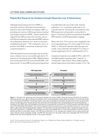 5 citations
,
April 2017 in “Dermatologic Surgery”
5 citations
,
April 2017 in “Dermatologic Surgery” PRP treatment satisfies 58% of female hair loss patients, with most noticing fuller, thicker hair and less shedding.
2 citations
,
September 2025 in “Scientific Reports” Women with PCOS are more likely to have thyroid antibodies than those without.
 136 citations
,
April 2016 in “Dermatologic Surgery”
136 citations
,
April 2016 in “Dermatologic Surgery” PRP treatment helps hair growth and density in androgenetic alopecia patients.
 March 2024 in “Intisari Sains Medis”
 PRP injections improve periorbital wrinkles and show promise as a treatment.
PRP injections can effectively and safely treat alopecia areata.
 1 citations
,
December 2017 in “Journal of clinical and investigative dermatology”
1 citations
,
December 2017 in “Journal of clinical and investigative dermatology” Platelet-Rich Plasma (PRP) treatment can significantly increase hair count and thickness in people with Androgenetic Alopecia (AGA) with minimal side effects.
January 2020 in “SSRN Electronic Journal” Different autoantibody groups in pediatric SLE are linked to specific symptoms and disease outcomes.
1 citations
,
May 2024 in “Human Genomics” Polygenic risk scores can predict the risk and outcomes of benign prostatic hyperplasia.