 April 2022 in “Diabetes Therapy”
 Low testosterone does not prevent prostate cancer in men with type 1 diabetes.
June 2021 in “F1000Research” Plant-based compounds may offer safer prostate cancer treatment with fewer side effects.
The role of 5α-reductase-3 in prostate cancer is unclear and needs more research.
January 2020 in “Journal of Men s Health” The combination treatment reduced prostate size and improved testosterone deficiency symptoms but was less effective for sexual function.
 April 2019 in “The Journal of Urology”
 Some common medications can lower PSA levels in 45-year-old German men.
 March 2019 in “European Urology Supplements”
 Some common medications like metformin, insulin, and ACE inhibitors can lower PSA levels, while statins don't, and low dose finasteride significantly reduces PSA.
 January 2018 in “Figshare”
 There might be a link between male pattern baldness and a higher risk of prostate cancer and testicular cancer.
August 2017 in “Revista de la Facultad de Ciencias Médicas (Quito)/Revista de la Facultad de Ciencias Médicas” Early baldness in men may indicate a higher risk of prostate cancer.
August 2017 in “Revista de la Facultad de Ciencias Médicas (Quito)/Revista de la Facultad de Ciencias Médicas” Early-onset male baldness may indicate a higher risk of prostate cancer.
 February 2017 in “Cancer Causes & Control”
 Swedish men with the E213 A-allele of the androgen receptor have a lower risk of prostate cancer.
 January 2016 in “International Journal of Medical Research and Health Sciences”
 Baldness (androgenic alopecia) could be a risk factor for prostate cancer.
October 2015 in “Digital Library of Theses and Dissertations (Universidade de São Paulo)” Finasteride reduces prostate size and PSA levels in young men with hair loss.

Finasteride can reduce prostate cancer risk but may delay diagnosis and cause sexual side effects.
March 2013 in “Faculty Opinions – Post-Publication Peer Review of the Biomedical Literature” Prostate cancer screening doesn't significantly reduce death rates and has risks like overdiagnosis and side effects.

Higher cholesterol levels increase aggressive prostate cancer risk.
 August 2012 in “Expert Review of Dermatology”
 Men with early hair loss may have a higher risk of enlarged prostate and possibly prostate cancer due to shared hormonal factors.
 April 2012 in “The Journal of Urology”
 Eating more omega-3 and less omega-6 fatty acids may lower the risk of developing prostate cancer.
 April 2012 in “The Journal of Urology”
 Male pattern baldness may predict prostate cancer risk.
 April 2012 in “The Journal of Urology”
 Patients with metabolic syndrome had lower Gleason scores when diagnosed with prostate cancer.
 March 2012 in “Dermatology Times E-News”
 Men with pattern baldness may have a higher risk of prostate issues.
 February 2012 in “Expert Review of Endocrinology & Metabolism”
 The document suggests more research is needed to understand the link between baldness and prostate cancer.
 September 2011 in “Cancer”
 Men who start losing hair at 20 may have a higher chance of getting prostate cancer later.
 March 2011 in “European Urology Supplements”
 CEC levels may be a useful marker for predicting prostate cancer progression.
 March 2011 in “European Urology Supplements”
 Blood tests for tumor cells could improve prostate cancer diagnosis and treatment; hair loss severity linked to a gene affecting prostate conditions.
 October 2010 in “Journal of Men's Health”
 Larger prostate size in older men may be linked to poorer semen quality and fertility issues.
 September 2010 in “European Urology Supplements”
 Opioid use may lower PSA levels, suggesting a possible role in prostate cancer control; PSA testing is useful for detecting prostate cancer; serum triglycerides are not linked to prostate cancer risk; and higher urethral PSA levels may be associated with local hormone activity.
 September 2010 in “European Urology Supplements”
 The document does not confirm if radical prostatectomy is the best treatment for locally advanced prostate cancer.
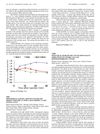 April 2010 in “The Journal of Urology”
 Human prostate cells produce more WISP1/CCN4 when there's not enough oxygen.
 April 2010 in “The Journal of Urology”
 The research found that androgens help control blood flow in the rat prostate through a specific binding site.
 September 2009 in “European Urology Supplements”
 Surgery for high-risk prostate cancer is challenging but doesn't lead to more complications, and additional treatment is often needed.