 May 2025 in “Plastic & Reconstructive Surgery Global Open”
 Photothermal biomodulated PRP extends hair graft viability by 2 hours compared to standard solutions.
 July 2023 in “New phytologist”
 The BUZZ gene is important for root hair growth and overall root structure in the plant Brachypodium distachyon.
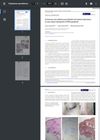 June 2023 in “Journal of cosmetic dermatology”
 A woman developed skin lesions after PRP injections, possibly linked to COVID-19 infection and vaccination.
 May 2023 in “Elsevier eBooks”
 Platelet-rich plasma may help heal injuries.
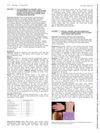
A TNFAIP3 gene mutation can cause unusual and varied symptoms of lupus and Sjogren's syndrome.
December 2021 in “Figshare” BBS7 is crucial for maintaining healthy gums by regulating important signaling pathways.
 1 citations
,
June 2022 in “Journal of Wrist Surgery”
1 citations
,
June 2022 in “Journal of Wrist Surgery” PRP is unlikely to effectively treat wrist ganglia.
 February 2025 in “Intisari Sains Medis”
 PDRN from salmon may slow skin aging by improving skin quality and reducing inflammation.
 April 2023 in “Journal of Investigative Dermatology”
 Terminalia chebula fruit extract has strong anti-aging and antioxidant effects.
August 2015 in “Han'gug dongmul jawon gwahag hoeji/Han-guk dongmul jawon gwahak hoeji/Journal of animal science and technology” TRα and CRABPII genes change their activity levels during goat fetal skin development.
21 citations
,
July 2011 in “Journal of the American Academy of Dermatology” A man developed a rash similar to pityriasis rubra pilaris after starting sorafenib for cancer, possibly due to the drug's effect on skin cells.
21 citations
,
February 2023 in “Bioengineering” Standardizing PRP therapy practices and regulations in Europe is crucial for safe and effective treatment.
June 2026 in “British Journal of Dermatology” A rare genetic mutation in the EGFR gene caused severe skin issues and other health problems in a Slovakian girl, who is now 4 years old and receiving care.
14 citations
,
May 2017 in “Journal of Investigative Dermatology” A rare gene mutation causes skin fragility and itching without affecting hair or nails.
 April 2026 in “Cellular and Molecular Immunology”
 SPT6 prevents excessive skin inflammation by blocking a feedback loop.
 7 citations
,
April 2019 in “Aesthetic Surgery Journal”
7 citations
,
April 2019 in “Aesthetic Surgery Journal” Repeated use of platelet-rich plasma in rats caused increased pain sensitivity.
1 citations
,
April 2025 in “BMC Veterinary Research” PSAT1 is key for hair growth and stem cell function in cashmere goats.
1 citations
,
May 2018 in “Plastic and reconstructive surgery. Global open” The congress discussed fat grafting, stem cells, and safety in plastic and regenerative surgery, with plans for a future meeting in Chicago.
1 citations
,
November 2021 in “Jurnal Tadris IPA Indonesia” PRP can improve skin beauty naturally but doesn't last as long as plastic surgery.
The scant hair in snthr-1Bao mice is likely caused by a deletion affecting the Plcd1 gene.
July 2022 in “Journal of Investigative Dermatology” TRPS1 loss in balding scalp areas contributes to hair loss in androgenic alopecia.
September 1999 in “Hair transplant forum international”  May 2016 in “Portuguese National Funding Agency for Science, Research and Technology (RCAAP Project by FCT)” March 2010 in “European Journal of Cancer Supplements” 76 citations
,
January 1998 in “Mammalian Genome” October 2014 in “Archivio Istituzionale della Ricerca (Universita Degli Studi Di Milano)”
May 2016 in “Portuguese National Funding Agency for Science, Research and Technology (RCAAP Project by FCT)” March 2010 in “European Journal of Cancer Supplements” 76 citations
,
January 1998 in “Mammalian Genome” October 2014 in “Archivio Istituzionale della Ricerca (Universita Degli Studi Di Milano)” A new type of nerve cell involved in itch perception was discovered.
September 2025 in “Global Journal of Pharmacy & Pharmaceutical Sciences” PDRN from salmon sperm DNA can improve skin health and appearance.

The paper suggests that a decrease in estrogen receptor activity may cause sexual dysfunction syndromes and proposes hormonal treatments.
44 citations
,
June 2024 in “Regenerative Therapy” PRP therapy may cause infections and other issues, needing more research for safety.
 22 citations
,
August 2019 in “Environmental research”
22 citations
,
August 2019 in “Environmental research” Pseudomonas sp. T5-6-I bacteria increase selenium uptake in Brassica oleracea plants by 130%.