 23 citations
,
December 2013 in “British Journal of Dermatology”
23 citations
,
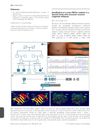
December 2013 in “British Journal of Dermatology” A new gene mutation linked to a skin condition was found in a Spanish family.
January 2010 in “Acta Laboratorium Animalis Scientia Sinica” The UHS promoter is specific to mouse hair follicles.
 October 2022 in “Rheumatology (Bulgaria)”
 Accurate diagnosis of progressive supranuclear palsy requires thorough neurological assessments and MRI.
 9 citations
,
May 2024 in “Cureus”
9 citations
,
May 2024 in “Cureus” PRP may improve fertility treatment success but needs more research for safe use.
3 citations
,
May 2015 in “Journal of archives in military medicine” Platelet-rich plasma (PRP) shows promise in military medicine but its effectiveness varies.
January 2009 in “China Animal Husbandry & Veterinary Medicine” The B2C promoter works in sheep cells but not in mouse embryos.
A single dose of Platelet Rich Plasma effectively reduces symptoms of early knee osteoarthritis.
188 citations
,
June 1998 in “Molecular cell” Researchers created a mouse with the same mutation as humans with trichothiodystrophy, showing similar symptoms and confirming the condition is due to defects in DNA repair and gene activity.
January 2025 in “Amplify A Journal of Writing-as-Activism” Rupert Raj supported trans individuals by sharing vital information and resources, boosting their confidence and security.
June 2014 in “Professional Beauty”  4 citations
,
November 2021 in “Journal of Cosmetic Dermatology”
4 citations
,
November 2021 in “Journal of Cosmetic Dermatology” QR678 and QR678 Neo treatments, combined with corticosteroid injections, work better for alopecia areata than corticosteroid injections alone.
4 citations
,
June 2020 in “DOAJ (DOAJ: Directory of Open Access Journals)” A woman with Rhupus and Rowell syndrome was treated successfully with medication adjustments.
1 citations
,
August 2024 in “Animals” KRT85 gene variations can help improve wool traits in sheep through selective breeding.
 105 citations
,
August 2010 in “Pharmacology & therapeutics”
105 citations
,
August 2010 in “Pharmacology & therapeutics” Formyl-peptide receptor agonists could be new anti-inflammatory drugs.
CRISPR/Cas9 gene-editing shows promise for livestock breeding but faces challenges like low efficiency and off-target effects.
 June 2025 in “Aesthetic Cosmetology and Medicine”
 Polydeoxyribonucleotides may help with healing and anti-aging, but more research is needed.
 March 2021 in “Research Square (Research Square)”
 Patients with RASopathies have a higher risk of autoimmune disorders and should be routinely screened.
1 citations
,
September 2024 in “Animals” Specific gene variants affect wool traits in Chinese Tan sheep.
 4 citations
,
January 2025 in “Translational Psychiatry”
4 citations
,
January 2025 in “Translational Psychiatry” Remote photobiomodulation improves brain injury outcomes and behavior in rats.
179 citations
,
November 2022 in “Frontiers in Plant Science” WRKY transcription factors help plants manage stress and support growth.
 April 2025 in “Journal of Medical Residency Review”
 PRP combined with other treatments shows promise for skin rejuvenation.
 September 2020 in “Medicina Moderna - Modern Medicine”
 A simple, cost-effective method to prepare high-quality PRP is suitable for smaller medical institutions.
January 1997 in “International Society of Hair Restoration Surgery” 1 citations
,
January 2021 Platelet-rich fibrin matrix improves tissue regeneration better than platelet-rich plasma.
 March 2009 in “The Journal of Urology”
 Shorter PSADT after prostate surgery is linked to higher risk of death.
34 citations
,
January 2022 in “Human Reproduction Open” PRP injections did not significantly improve ovarian function in women with low ovarian reserve.
 April 2019 in “Journal of Investigative Dermatology”
 Combining platelet-rich plasma injections and gel may effectively treat morphea, improving skin elasticity and reducing pain.
Genetic analysis of rabbits identified key genes for traits like coat color, body size, and fertility.
 October 2023 in “Journal of dermatological science”
 New mutations in MBTPS2 reduce its function and cause IFAP syndrome with unusual symptoms.
9 citations
,
October 2017 in “Frontiers in plant science” The peach gene CTG134 helps control the interaction between auxin and ethylene, which could lead to new agricultural chemicals.