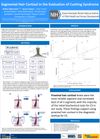
 May 2016 in “Endocrine Abstracts”
 Proximal hair cortisol is a reliable tool for diagnosing Cushing's Syndrome.
 7 citations
,
October 2017 in “Behavioural Pharmacology”
7 citations
,
October 2017 in “Behavioural Pharmacology” Fluoxetine's effectiveness as an antidepressant in mice depends on a specific protein activity and a 5-minute pretest.
 16 citations
,
February 2018 in “BMC Genomics”
16 citations
,
February 2018 in “BMC Genomics” Certain genetic markers linked to reproductive potential were identified by their impact on a protein's ability to bind to genes.
 May 2025 in “Archives of Dermatological Research”
 Patient-reported hair improvements align with actual hair density changes, not hair width.
 11 citations
,
August 2018 in “Medicine”
11 citations
,
August 2018 in “Medicine” Hair loss in Chinese college students leads to various psychological issues, so treatment should address both hair loss and mental health.
 June 2024 in “Nature Cell and Science”
 The Scalp Coverage Scoring method reliably measures hair density from images.
9 citations
,
March 2023 in “GeroScience” May 2024 in “International journal of medicine and psychology.” Ganser syndrome may result from both organic and psychogenic factors.
 16 citations
,
June 2017 in “PLoS ONE”
16 citations
,
June 2017 in “PLoS ONE” A 6-group hair classification is more reliable for drug testing than an 8-group system.
89 citations
,
April 2023 in “Forensic Science International Genetics” Forensic DNA Phenotyping can now better predict appearance, ancestry, and age from DNA, but more research is needed for precise police use.
Adolescents with PCOS have lower quality of life due to diagnosis, binge eating, and body image concerns.
 November 2023 in “Curēus”
 Higher stress levels are linked to more skin problems, especially in young women.
22 citations
,
January 1992 in “PubMed” Higher CSF 5-HIAA levels may predict better response to serotonin re-uptake inhibitors in trichotillomania.
February 2026 in “Skin Appendage Disorders” Pseudofolliculitis barbae is linked to higher rates of anxiety and depression.
1 citations
,
December 2022 in “Skin Research and Technology” The technique helps measure how hair styling ingredients affect hair's stiffness and flexibility.
16 citations
,
May 2020 in “Psychoneuroendocrinology” People with Parkinson's disease have higher levels of cortisone in their hair, which may indicate chronic stress hormone dysfunction.
The review suggests the study on male pattern baldness needs to improve in areas like sample size, methodology, and bias for better quality and credibility.
63 citations
,
February 2024 in “BMC Psychology” Emotion recognition tech helps devices understand emotions, but more research is needed for complex situations.
November 2025 in “European Journal of Endocrinology” Hair steroid profiling is a feasible, non-invasive alternative to serum analysis for assessing hormone levels and metabolism.
 December 2014 in “Annals of psychophysiology”
 Power-enhancing drugs can cause mood swings, aggression, anxiety, and physical side effects, questioning their overall benefits.
 16 citations
,
October 2012 in “The Journal of Dermatology”
16 citations
,
October 2012 in “The Journal of Dermatology” The BASP classification is more reliable than the Norwood-Hamilton for classifying hair loss in men and women.
101 citations
,
January 2014 in “Journal of Visualized Experiments” The method effectively measures long-term stress levels using hair samples.
April 2019 in “Faculty Opinions – Post-Publication Peer Review of the Biomedical Literature” PCOS shares similar genetic traits across different diagnosis criteria and is linked to other health conditions.
18 citations
,
September 1972 in “British Journal of Pharmacology” PCPA induces hypersexual behavior in male rats regardless of age or castration status.
The tool accurately measures hair count and size on scalps with 79.45% and 68.19% accuracy, respectively.
 58 citations
,
December 2018 in “Nature Communications”
58 citations
,
December 2018 in “Nature Communications” Male pattern baldness is mostly inherited, involves many genes, and is linked to other traits like early puberty and strong bones.
January 2013 in “Journal of Practical Dermatology” Hair loss, especially alopecia areata, is linked to poor sleep and emotional stress.
Personality affects stress response more than social rank in zebrafish.
January 2026 in “Open MIND” Psychological factors significantly impact alopecia areata.