 2 citations
,
July 2013 in “Veterinary dermatology”
2 citations
,
July 2013 in “Veterinary dermatology” Dog skin with hair loss, when transplanted to mice, regrew hair, suggesting the hair loss cause is likely body-wide, not skin-specific.
 August 2018 in “Journal of the American Academy of Dermatology”
 Patients often experience long-lasting changes to their hair after stem cell transplants.
September 2018 in “Dermatologic Surgery”  2 citations
,
November 2016 in “PubMed”
2 citations
,
November 2016 in “PubMed” Robotic hair restoration is efficient, minimally invasive, reduces scarring, and leads to quick healing with high patient satisfaction.
1 citations
,
February 1971 in “JAMA” Triamcinolone acetonide helps scalp grafts grow hair successfully.
1 citations
,
October 1996 in “Dermatologic clinics” Adiponectin reduces inflammation and bone loss in joint replacements.
 June 2023 in “JAAD Case Reports”
 A man had a rare skin cancer that looked like a bald spot.
26 citations
,
January 2016 in “Journal of cutaneous and aesthetic surgery” Hair transplant combining scalp and beard hair with PRP was successful for scarring alopecia.
17 citations
,
January 2014 in “Dermatology Online Journal” The Artas robotic system is effective and reliable for hair transplants.
5 citations
,
January 1991 in “Acta Dermato Venereologica” Topical cyclosporin promotes hair growth.
4 citations
,
January 2000 in “Durham e-Theses (Durham University)” Hair follicles help wounds heal faster, especially in active growth phase skin.
11 citations
,
March 2023 in “Stem Cell Research & Therapy” Epidermal stem cells improve skin graft survival by promoting early blood vessel formation.
 15 citations
,
January 2016 in “Journal of cell science & therapy”
15 citations
,
January 2016 in “Journal of cell science & therapy” Using a patient's own tissue for micro-grafts may effectively treat non-healing leg ulcers and relieve pain.
 4 citations
,
May 2019 in “Journal of The European Academy of Dermatology and Venereology”
4 citations
,
May 2019 in “Journal of The European Academy of Dermatology and Venereology” Hair loss treatment caused more hair loss in a man.
 76 citations
,
May 2011 in “Liver transplantation”
76 citations
,
May 2011 in “Liver transplantation” Liver transplantation is a viable option for children with propionic acidemia, improving quality of life and diet, but does not remove all risks and long-term brain outcomes are uncertain.
 53 citations
,
May 2010 in “Dermatologic Surgery”
53 citations
,
May 2010 in “Dermatologic Surgery” Hair transplantation may not work for Frontal Fibrosing Alopecia as transplanted hair was lost when the disease came back.
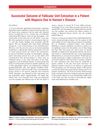 January 2021 in “Journal of Cutaneous and Aesthetic Surgery”
 Follicular unit extraction successfully restored hair growth in a leprosy patient without disease relapse.
 45 citations
,
May 2003 in “Journal of Cell Science”
45 citations
,
May 2003 in “Journal of Cell Science” α3β1-integrin is crucial for maintaining normal hair follicle shape and function but not needed for the development of the surrounding skin.
 6 citations
,
July 2015 in “Journal of Investigative Dermatology”
6 citations
,
July 2015 in “Journal of Investigative Dermatology” Chicken feather gene mutation helps understand human hair disorders.
 February 2010 in “Journal of The American Academy of Dermatology”
 A woman with Degos disease managed her condition for nine years with medications and had two healthy pregnancies, while a separate finding suggests a possible link between female pattern hair loss and high blood pressure.
 18 citations
,
November 2013 in “Molecules and Cells”
18 citations
,
November 2013 in “Molecules and Cells” New culture method keeps human skin stem cells more stem-like.
 17 citations
,
May 2010 in “Journal of Dermatological Science”
17 citations
,
May 2010 in “Journal of Dermatological Science” Erythropoietin helps hair grow and could be a potential treatment for hair loss.
 5 citations
,
September 1986 in “Pediatric Dermatology”
5 citations
,
September 1986 in “Pediatric Dermatology” A family showed a new condition with inherited hair loss and skin changes, possibly due to one genetic disorder.
75 citations
,
October 2012 in “Journal of Investigative Dermatology” Alopecia areata can be triggered by specific immune cells without genetic or environmental factors.
4 citations
,
November 2018 in “Journal of comparative pathology” The three adipokines—leptin, adiponectin, and resistin—are present in various cells of normal dog skin.
48 citations
,
March 2020 in “Stem Cell Research & Therapy” Using a collagen sponge scaffold helps stem cells become more like skin cells.
 44 citations
,
July 2016 in “Stem Cells Translational Medicine”
44 citations
,
July 2016 in “Stem Cells Translational Medicine” Scientists discovered that certain stem cells from mice and humans can be used to grow new hair follicles and skin glands when treated with a special mixture.
13 citations
,
March 2020 in “Acta veterinaria Scandinavica” Stem cells from fat improve dog wound healing better than standard treatment.
March 2025 in “Tissue and Cell” Frozen-thawed fibroblast sheets enhance wound healing and hair growth in mice.
 50 citations
,
October 1986 in “European journal of pediatrics”
50 citations
,
October 1986 in “European journal of pediatrics” A boy with severe Vitamin D-resistant rickets did not respond to treatment and lacked a common symptom, suggesting a need for alternative treatments.