 2 citations
,
November 2007 in “Hair transplant forum international”
2 citations
,
November 2007 in “Hair transplant forum international” The conclusion is that hair transplant surgery should use microscopically dissected natural hair groupings and some new terms were suggested for clarity.
 June 2026 in “Journal of Cutaneous and Aesthetic Surgery”
 FUE is effective for improving hair regrowth and appearance in scarred areas.
 December 2023 in “Dermatologic Surgery”
 The skin-responsive device improved beard and body hair transplant success and increased surgeons' willingness to perform the procedure.
Transplanted rat hair follicles grew hair and had increased but not fully restored nerve connections in mice.
 October 2023 in “Journal of cosmetic dermatology”
 Timely treatment and prevention are crucial to avoid serious complications in hair transplants.
 January 2023 in “Operative Techniques in Otolaryngology-Head and Neck Surgery”
 Hair transplants help transgender patients look more like their gender identity, with different procedures for trans women and men.
 October 2022 in “IntechOpen eBooks”
 Hair loss due to scarring can be treated by reducing inflammation, removing scar tissue, and transplanting hair. The Follicular Unit Extraction technique is effective but requires skill and time. Future focus should be on scar-less healing methods.
11 citations
,
March 2023 in “Stem Cell Research & Therapy” Epidermal stem cells improve skin graft survival by promoting early blood vessel formation.
 August 2024 in “Current Protocols”
 The C3H/HeJ mouse model is useful for studying and testing treatments for alopecia areata.
 15 citations
,
January 2016 in “Journal of cell science & therapy”
15 citations
,
January 2016 in “Journal of cell science & therapy” Using a patient's own tissue for micro-grafts may effectively treat non-healing leg ulcers and relieve pain.
 1 citations
,
May 2015 in “Dermatologic Therapy”
1 citations
,
May 2015 in “Dermatologic Therapy” The microstrip technique for hair transplantation is effective and discreet for patients needing fewer than 1500 grafts.
 2 citations
,
June 2000 in “Journal of Oral and Maxillofacial Surgery”
2 citations
,
June 2000 in “Journal of Oral and Maxillofacial Surgery” Hair transplantation techniques have improved over time, leading to natural-looking results and high graft survival rates, making it a popular treatment for hair loss.
 14 citations
,
March 2017 in “Plastic and reconstructive surgery. Global open”
14 citations
,
March 2017 in “Plastic and reconstructive surgery. Global open” Hair follicle damage happens during hair transplants and can impact success; better surgical methods are needed.
 January 2019 in “Springer eBooks”
 Transplanting skin cells is a safe, effective, and affordable treatment for vitiligo.
 4 citations
,
May 2019 in “Journal of The European Academy of Dermatology and Venereology”
4 citations
,
May 2019 in “Journal of The European Academy of Dermatology and Venereology” Hair loss treatment caused more hair loss in a man.
 27 citations
,
January 1989 in “The Journal of dermatologic surgery and oncology”
27 citations
,
January 1989 in “The Journal of dermatologic surgery and oncology” Using topical minoxidil before and after hair transplant surgery can reduce shedding and improve hair regrowth.
 8 citations
,
January 2015 in “Journal of Cutaneous Medicine and Surgery”
8 citations
,
January 2015 in “Journal of Cutaneous Medicine and Surgery” Hair restoration techniques have improved but still rely on limited donor hair, with new methods like cloning and gene therapy being explored.
 28 citations
,
March 1987 in “Journal of The American Academy of Dermatology”
28 citations
,
March 1987 in “Journal of The American Academy of Dermatology” Minoxidil may help hair growth after transplant surgery.
 8 citations
,
March 2006 in “Seminars in Cutaneous Medicine and Surgery”
8 citations
,
March 2006 in “Seminars in Cutaneous Medicine and Surgery” Hair transplantation has improved to look more natural, but managing patient expectations and using precise techniques are key for the best outcomes.
 16 citations
,
April 2016 in “PLoS ONE”
16 citations
,
April 2016 in “PLoS ONE” Negative pressure treatment improved skin thickness, blood vessel growth, and hair growth.
 13 citations
,
August 2002 in “Dermatologic Surgery”
13 citations
,
August 2002 in “Dermatologic Surgery” FUE is a less invasive hair transplant method suitable for many patients, but it has limitations and may not replace traditional techniques.
 15 citations
,
May 2004 in “Facial Plastic Surgery Clinics of North America”
15 citations
,
May 2004 in “Facial Plastic Surgery Clinics of North America” New techniques in hair restoration surgery can fix unnatural results from old methods, improving patient self-esteem.
 1 citations
,
May 2021 in “International Journal of Dermatology”
1 citations
,
May 2021 in “International Journal of Dermatology” Long hair follicular unit excision is effective for hair transplants, providing quick, natural-looking results with less pain but needs more time, staff, and skill.
 76 citations
,
May 2011 in “Liver transplantation”
76 citations
,
May 2011 in “Liver transplantation” Liver transplantation is a viable option for children with propionic acidemia, improving quality of life and diet, but does not remove all risks and long-term brain outcomes are uncertain.
 8 citations
,
February 2016 in “The American Journal of Dermatopathology”
8 citations
,
February 2016 in “The American Journal of Dermatopathology” Hair transplants can make hair follicles larger and hair shafts thicker.
 3 citations
,
June 2005 in “Ophthalmology Clinics of North America”
3 citations
,
June 2005 in “Ophthalmology Clinics of North America” Follicular unit transplantation treats hair loss and restores eyebrows with short recovery and natural results.
 1 citations
,
January 2010 in “DOAJ (DOAJ: Directory of Open Access Journals)”
1 citations
,
January 2010 in “DOAJ (DOAJ: Directory of Open Access Journals)” Hair transplantation surgery has improved, becoming more popular and efficient, but patient dissatisfaction remains due to unrealistic expectations.
 1 citations
,
January 2006 in “Dermatologic Surgery”
1 citations
,
January 2006 in “Dermatologic Surgery” The SAFE System may reduce hair transplant transection rates but has been critiqued for not being as minimally invasive as claimed.
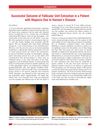 January 2021 in “Journal of Cutaneous and Aesthetic Surgery”
 Follicular unit extraction successfully restored hair growth in a leprosy patient without disease relapse.
 March 2009 in “Medical & surgical dermatology”
 Women with androgenetic alopecia have fewer terminal hairs, phenol in nail surgery is safe, and a new hair transplant method is faster and less damaging.