 1 citations
,
June 2023 in “Radiation oncology journal”
1 citations
,
June 2023 in “Radiation oncology journal” Low-dose radiation therapy may improve brain function in some Alzheimer's patients and is generally well-tolerated.
13 citations
,
December 2017 in “Stem cells” Low-dose radiation affects hair stem cell function and survival by changing their genetic material's structure.
 October 2004 in “Radiotherapy and oncology”
 Active vitamin D3 might protect hair follicles from radiation damage.
 September 2009 in “European Urology Supplements”
 Cone beam computed tomography can allow for smaller safety margins around the target area in prostate cancer radiation treatment if used for ongoing treatment checks.
 14 citations
,
January 2014 in “Cells Tissues Organs”
14 citations
,
January 2014 in “Cells Tissues Organs” Ionizing radiation causes irreversible skin damage, with single doses leading to acute injury and hair graying, and fractional doses causing more severe long-term tissue damage.
24 citations
,
August 2020 in “JAMA dermatology” Persistent radiation-induced hair loss is dose-dependent, and treatments like topical minoxidil can be effective.
 19 citations
,
February 2017 in “Journal of radiation research”
19 citations
,
February 2017 in “Journal of radiation research” High-dose radiation speeds up aging in skin stem cells.
 November 2019 in “Neuro-oncology”
 Rind-based techniques can lower scalp radiation dose and reduce hair loss in brain cancer treatment.
Boosting certain cell signals can prevent hair loss from chemotherapy and radiation.
Boosting certain cell signals can prevent hair loss from chemotherapy and radiation.
Activating certain cells in hair follicles can prevent hair loss caused by cancer treatments.
 14 citations
,
January 2013 in “Journal of Cutaneous Medicine and Surgery”
14 citations
,
January 2013 in “Journal of Cutaneous Medicine and Surgery” Some cancer treatments can cause permanent hair loss.
1 citations
,
November 2022 in “International journal of molecular sciences” Human fetal placental stromal cell injections speed up healing and improve skin and hair recovery after radiation damage.
 April 2023 in “Journal of Investigative Dermatology”
 Sunlight simulation causes skin inflammation, with different skin types reacting at different levels of exposure.
June 2026 in “EJC Paediatric Oncology” High-dose thiotepa and twice-daily treatments increase the risk of permanent hair loss in children receiving craniospinal irradiation.
 48 citations
,
January 2014 in “Dermatology Online Journal”
48 citations
,
January 2014 in “Dermatology Online Journal” New treatments for Dissecting cellulitis show promise, but more research is needed to understand the disease and establish a standard treatment plan.
37 citations
,
February 2008 in “PubMed” Keeping radiation doses under 16 Gy may reduce permanent hair loss.
22 citations
,
September 1986 in “Journal of Investigative Dermatology” Low-dose topical alpha-terthienyl may be a safer option for treating skin conditions with light therapy.
 6 citations
,
August 1993 in “Archives of Dermatology”
6 citations
,
August 1993 in “Archives of Dermatology” The study found that polymorphous light eruption varies among patients and can be distinguished from benign summer light eruption by the time it takes for symptoms to appear after sun exposure.
 40 citations
,
August 2006 in “Current Drug Safety”
40 citations
,
August 2006 in “Current Drug Safety” Some drugs can cause hair loss, excessive growth, or color changes, often reversible but sometimes permanent.
9 citations
,
January 2007 in “mediaTUM – the media and publications repository of the Technical University Munich (Technical University Munich)” Microbeam radiation therapy's dose distribution changes with depth.
35 citations
,
February 2002 in “Journal of Radiological Protection” Caffeine reduces radiation skin damage but doesn't affect tumor treatment.
1 citations
,
April 1961 in “OSTI OAI (U.S. Department of Energy Office of Scientific and Technical Information)” Radiation affects plant growth differently, with high doses being harmful, but some lower doses can increase yield.
 5 citations
,
March 2012 in “Microscopy Research and Technique”
5 citations
,
March 2012 in “Microscopy Research and Technique” UVB radiation changes the chemical makeup and dries out human hair but doesn't alter its appearance or texture.
 1 citations
,
March 2015 in “Journal of Cutaneous Medicine and Surgery”
1 citations
,
March 2015 in “Journal of Cutaneous Medicine and Surgery” Eyebrow hair transplants can regrow after high-dose radiation therapy.
 April 2019 in “Radiotherapy and oncology”
 HPV infection is linked to better survival in advanced anal cancer, higher radiation doses improve survival, especially in HPV-negative patients, and prostaglandin E₂ pretreatment can protect mouse hair follicles from radiation damage.
 17 citations
,
January 2010 in “International journal of trichology”
17 citations
,
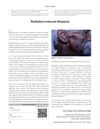
January 2010 in “International journal of trichology” A man experienced hair loss from radiotherapy, which can be temporary or permanent depending on radiation dose, with potential treatments available.
September 2017 in “The journal of investigative dermatology/Journal of investigative dermatology” Different types of human skin cells respond uniquely to various colors and doses of light, which could lead to specialized light treatments for skin conditions.
 1 citations
,
June 2003 in “Obstetrical & Gynecological Survey”
1 citations
,
June 2003 in “Obstetrical & Gynecological Survey” This new method makes checking for female infertility less painful, less invasive, and doesn't use radiation.
16 citations
,
February 2019 in “Journal of Cellular and Molecular Medicine” Researchers created a rat model to study skin damage caused by radiation, which could help develop new treatments.