5 citations
,
February 2012 in “Australasian Journal of Dermatology” Two red-haired men with alopecia areata regrew black hair instead of red.
 12 citations
,
July 2016 in “Forensic science international”
12 citations
,
July 2016 in “Forensic science international” The research found that postmortem root bands in hair are likely caused by the breakdown of a specific part of the hair's inner structure after death.
Loss of the p53 gene alone causes tumors, and losing both p53 and Rb genes speeds up aggressive skin cancer.
 November 2022 in “Journal of Investigative Dermatology”
 Scientists developed a new way to study mutations in a skin condition using blood cells, which may help diagnose and treat the disease.
 1 citations
,
May 2013 in “Journal of the Egyptian Women's Dermatologic Society (Print)”
1 citations
,
May 2013 in “Journal of the Egyptian Women's Dermatologic Society (Print)” Women with idiopathic hirsutism and PCOS have higher RBP4 levels, and PCOS is linked to greater insulin resistance; weight management may help both conditions.
 August 2026 in “Journal of Personalized Medicine”
 Effective vitiligo treatment requires targeting multiple biological factors, not just immune suppression.
 37 citations
,
April 2010 in “FEBS Letters”
37 citations
,
April 2010 in “FEBS Letters” The study concludes that the EDA2R gene is activated by p53 during chemotherapy but is not necessary for chemotherapy-induced hair loss.
 40 citations
,
November 2021 in “npj Regenerative Medicine”
40 citations
,
November 2021 in “npj Regenerative Medicine” Adult spiny mice recover better from heart attacks than common lab mice.
 21 citations
,
January 2018 in “Journal of Investigative Dermatology”
21 citations
,
January 2018 in “Journal of Investigative Dermatology” Rats can't grow new hair follicles after skin wounds, unlike mice, due to differences in gene expression and response to WNT signaling.
29 citations
,
March 2022 in “Biomedicines” Enhancing antioxidant responses can improve treatments for various diseases.
 April 2019 in “Journal of Investigative Dermatology”
 Merkel cell carcinoma is most likely to recur within two years of diagnosis, and factors like immune suppression, being over 75, and male sex increase this risk.
26 citations
,
September 2009 in “Clinical genetics” Arab APS1 patients have unique and recurrent AIRE gene mutations.
 June 2020 in “Journal of Investigative Dermatology”
 FDA-cleared devices often fail to produce high-quality platelet-rich plasma consistently.
41 citations
,
April 2009 in “Journal of comparative neurology” P2X3-IR fibers are widespread in rat skin and likely help detect pain.
8 citations
,
January 2024 in “Journal of Materials Chemistry B” ADM hydrogels help heal radiation skin injuries.
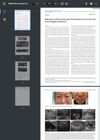 July 2022 in “Skin research and technology”
 Skin CT can help diagnose rosacea by identifying specific skin features, but should be used with clinical signs to avoid misdiagnosis.
 40 citations
,
October 2009 in “Journal of Biomedical Nanotechnology”
40 citations
,
October 2009 in “Journal of Biomedical Nanotechnology” Pyrene excimer nucleic acid probes are promising for detecting biomolecules accurately with potential for biological research and drug screening.
December 2025 in “Journal of Human Immunity” JAK inhibitors may help improve symptoms in adults with APECED.
November 2024 in “Rheumatology Advances in Practice” Visceral leishmaniasis can mimic rheumatoid arthritis symptoms, especially in immunocompromised patients.
 1 citations
,
May 2022 in “Голова и шея.”
1 citations
,
May 2022 in “Голова и шея.” p53 protein may help protect or kill neurons under stress.
MFN2 mutations cause mitochondrial problems, unusual fat distribution, and low leptin despite high body fat.
 March 2026 in “Frontiers in Immunology”
 Regulatory T cells help heal skin wounds by reducing inflammation and promoting tissue repair.
9 citations
,
June 2021 in “Biological reviews/Biological reviews of the Cambridge Philosophical Society” Understanding molecular pathways is key to improving organ regeneration.
16 citations
,
December 2015 in “Journal of Investigative Dermatology” Alopecia areata involves persistent gene abnormalities and immune activity, even in regrown hair, suggesting a risk of relapse.
May 2024 in “Reactions weekly”  May 2026 in “Scientific Reports”
 Overexpression of LRIG3 in skin causes hair loss.
64 citations
,
February 2008 in “Cancer Research” Inactivating both p53 and Rb genes in mice speeds up aggressive skin cancer development.
1 citations
,
July 2025 in “Cancer Medicine” Colorectal cancer cells can adapt without losing their traits or drug sensitivity.
22 citations
,
September 2011 in “Journal of Investigative Dermatology” TCF/Lef1 is essential for skin barrier function by regulating lipid metabolism.
3 citations
,
February 2018 in “Experimental and Molecular Medicine/Experimental and molecular medicine” A protein called PCBP2 controls the production of a hair growth protein by interacting with its genetic message and is linked to hair loss when this control is disrupted.