34 citations
,
December 2009 in “Journal of the American Academy of Dermatology” Improper use of ceramic flat irons can cause severe hair damage.
18 citations
,
March 2016 in “Journal of Investigative Dermatology” Vitamin D and calcium are essential for normal hair growth.
14 citations
,
April 2023 in “International Journal of Molecular Sciences” The hydrogel significantly speeds up skin wound healing.
5 citations
,
April 2024 in “ACS Chemical Neuroscience” A new method accurately measures nine neuroactive steroids in small blood samples, helping to study brain diseases.
2 citations
,
December 2024 in “Neural Regeneration Research” Exosome therapy could revolutionize stroke treatment, but more research is needed for human use.
 2 citations
,
August 2022 in “Clinical Case Reports”
2 citations
,
August 2022 in “Clinical Case Reports” A 17-year-old girl had severe, on-and-off hair loss, likely due to COVID-19. She was treated with Vitamin D3, biotin, and other supplements, and saw some improvement within a month.
 1 citations
,
October 2020 in “Research Square (Research Square)”
1 citations
,
October 2020 in “Research Square (Research Square)” Men with male pattern baldness had worse COVID-19 symptoms, but early treatment with certain drugs improved outcomes for all.
 May 2026 in “Dove Medical Press (Taylor and Francis Group)”
 Buffy coat PRP is more effective for hair growth in androgenetic alopecia than apheresis PRP.
 May 2026 in “Clinical Cosmetic and Investigational Dermatology”
 The buffy coat method slightly outperformed apheresis in patient-reported hair improvement for treating hair loss.
December 2025 in “Aesthetic Surgery Journal” Exosomes are promising tools in aesthetic medicine for skin and hair regeneration.
 May 2025 in “International Journal of Trichology”
 Dutasteride mesotherapy can cause hair loss in some people.
 March 2024 in “Journal of Evidence-Based Integrative Medicine”
 Teak leaf extract may effectively and safely promote hair growth in males with androgenic alopecia.
Ebola affected children less severely than adults, but better control measures and data collection are needed.
38 citations
,
May 2021 in “International Journal of Infectious Diseases” Low testosterone may indicate severe COVID-19 in men.
132 citations
,
September 2021 in “Frontiers in Public Health” COVID-19 affects multiple body systems, not just the lungs.
 32 citations
,
July 2021 in “Journal of The American Academy of Dermatology”
32 citations
,
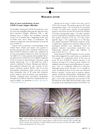
July 2021 in “Journal of The American Academy of Dermatology” Hair loss from COVID-19 usually starts around 45 days after infection and lasts about 47.5 days.
 2 citations
,
March 2018 in “The Journal of Dermatology”
2 citations
,
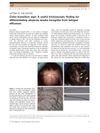
March 2018 in “The Journal of Dermatology” The "color-transition sign" helps tell apart alopecia areata incognita from telogen effluvium by looking at hair color changes.
 September 2016 in “Elsevier eBooks”
 Different types of hair loss in dogs and cats have various causes and treatments, with outcomes ranging from good to uncertain.
 January 2011 in “Elsevier eBooks”
 Alopecia in animals can be hereditary, congenital, or acquired, with treatments and outcomes varying widely.
 17 citations
,
December 2013 in “Journal of Investigative Dermatology Symposium Proceedings”
17 citations
,
December 2013 in “Journal of Investigative Dermatology Symposium Proceedings” Bimatoprost is safe and effective for treating eyelash loss caused by chemotherapy.
 7 citations
,
May 2014 in “Clinical practice”
7 citations
,
May 2014 in “Clinical practice” Cooling the scalp may prevent hair loss from chemotherapy, hair often grows back after treatment, and nail issues usually improve after stopping the drug.
 2 citations
,
July 2021 in “Dermatologic Therapy”
2 citations
,
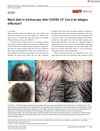
July 2021 in “Dermatologic Therapy” A woman's hair loss after COVID-19 was likely due to a mix of pressure-induced alopecia and acute telogen effluvium.
 2 citations
,
May 2018 in “Australasian Journal of Dermatology”
2 citations
,
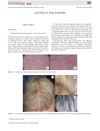
May 2018 in “Australasian Journal of Dermatology” Some patients' hair grew back black and white after chemotherapy.
 June 2026 in “International Journal of Homoeopathic Sciences”
 Personalized homeopathic treatment reduced hair fall and improved hair density in a patient with PCOS and hypothyroidism.
 June 2024 in “Archives of dermatological research”
 Dietary supplements might help prevent post-COVID hair loss, but serum ferritin is not a reliable indicator.
 73 citations
,
January 2013 in “Annals of Dermatology”
73 citations
,
January 2013 in “Annals of Dermatology” People with hair loss, especially those with certain types, have lower zinc levels, and zinc supplements might help.
 45 citations
,
March 2010 in “Journal der Deutschen Dermatologischen Gesellschaft”
45 citations
,
March 2010 in “Journal der Deutschen Dermatologischen Gesellschaft” A systematic approach is crucial for managing hair loss in women.
 30 citations
,
May 1991 in “Psychosomatics”
30 citations
,
May 1991 in “Psychosomatics” Some psychiatric medications can cause reversible hair loss.
 24 citations
,
January 2006 in “Skin Pharmacology and Physiology”
24 citations
,
January 2006 in “Skin Pharmacology and Physiology” Finasteride reverses early hair loss and promotes growth.
 21 citations
,
January 2016 in “Skin appendage disorders”
21 citations
,
January 2016 in “Skin appendage disorders” Alfredo Rebora suggested a new, easier way to classify hair loss in Telogen Effluvium, adding a type possibly related to autoimmune diseases.